 BirdPedy
Comunidad de Madrid · todo el añoCommunity of Madrid · all year round
Dónde ver aves en Madrid: 9 lugares y qué ver en cada estaciónWhere to see birds in Madrid: 9 places and what to see each season
Hecha con 400.056 registros de Observation.org, eBird e iNaturalist de 2020 a 2024, las mismas fuentes que usa el planificador de BirdPedy, y con la información oficial de cada espacio.Built from 400,056 records from Observation.org, eBird and iNaturalist between 2020 and 2024, the same sources BirdPedy's planner uses, plus the official information for each site.
Revisado el 1 de octubre de 2026Reviewed on 1 October 2026
Madrid tiene sierra, estepas cerealistas, humedales del Jarama y el Tajuña y grandes parques urbanos. En los nueve lugares de esta guía se han registrado 257 especies distintas del catálogo de BirdPedy. Para cada uno verás qué aves se registran todo el año y cuáles son propias de cada estación, con enlace a su ficha.Madrid has mountains, cereal steppes, wetlands along the Jarama and Tajuña rivers and large city parks. 257 different species from the BirdPedy catalogue have been recorded across the nine places in this guide. For each one you will see which birds are recorded all year round and which belong to each season, with a link to their species page.
Esta guía te cuenta qué se suele ver en cada sitio y en cada época. Lo que se ha visto esta misma semana, y dónde, te lo enseña la app de BirdPedy.This guide tells you what is usually seen at each place and in each season. What has been seen this very week, and where, is what the BirdPedy app shows you. Ver cómo funcionaSee how it works
Cómo se ha hecho esta guíaHow this guide was made
- Para cada lugar se toma un punto y un radio y se cuentan los registros de aves de Observation.org, eBird e iNaturalist publicados en GBIF entre 2020 y 2024For each place we take a point and a radius and count the bird records from Observation.org, eBird and iNaturalist published on GBIF between 2020 and 2024[1].
- Todo el año: especies con registros en las cuatro estaciones en al menos 3 de los 5 años. Propias de cada estación: con registros en esa estación al menos 3 de los 5 años y con al menos el 60 % de todos sus registros en ella. Así una rareza que pasó una vez no aparece como algo que se ve cada año.All year round: species recorded in all four seasons in at least 3 of the 5 years. Belonging to a season: recorded in that season in at least 3 of the 5 years and with at least 60% of all their records in it. That way a rarity that turned up once does not appear as something you see every year.
- Fuera quedan las especies accidentales en España y las introducidas o escapadas, como las cotorras, el pato joyuyo y el tarro canelo, cuya presencia en Madrid refleja un origen no natural según el Atlas de las aves de SEO/BirdLifeAccidental species in Spain and introduced or escaped ones are left out, such as parakeets, the Wood Duck and the Ruddy Shelduck, whose presence in Madrid reflects a non-natural origin according to the SEO/BirdLife breeding bird atlas[15].
- Un registro no es un ave: diez personas que ven el mismo milano el mismo día son diez registros. Las cifras dicen qué se ve y cuándo, no cuántas aves hay.A record is not a bird: ten people seeing the same kite on the same day make ten records. The figures tell you what is seen and when, not how many birds there are.
Madrid
Casa de Campo
Parque de la ciudad de MadridCity of Madrid park
El gran parque forestal de la ciudad. El Ayuntamiento ha organizado en él paseos ornitológicos guiados, a pie y en bici, con reserva previa, y destaca especies como herrerillos, pinzones, ruiseñores, garzas, petirrojos y mitos.The city's great woodland park. Madrid City Council has run guided birdwatching walks and bike rides here, booked in advance, and highlights species such as tits, chaffinches, nightingales, herons, robins and long-tailed tits. [2]
- Especies con registrosSpecies recorded
- 169
- RegularesRegular
- 114
- Registros 2020-2024Records 2020-2024
- 48.03748,037
InviernoWinter (diciembre a febrero)(December to February)
PrimaveraSpring (marzo a mayo)(March to May)
VeranoSummer (junio a agosto)(June to August)
OtoñoAutumn (septiembre a noviembre)(September to November)
Madrid
Parque del Retiro
Parque de la ciudad de MadridCity of Madrid park
Según el Centro de Educación Ambiental de El Retiro, además de las aves de toda la ciudad, aquí se ven otras difíciles de encontrar fuera de un entorno tan arbolado, como el picogordo, el reyezuelo listado, el autillo o el cárabo.According to the El Retiro Environmental Education Centre, besides the birds found all over the city, here you can see others that are hard to find away from such a wooded setting, such as the Hawfinch, Firecrest, Scops Owl and Tawny Owl. [3]
- Especies con registrosSpecies recorded
- 150
- RegularesRegular
- 95
- Registros 2020-2024Records 2020-2024
- 95.54395,543
InviernoWinter (diciembre a febrero)(December to February)
PrimaveraSpring (marzo a mayo)(March to May)
VeranoSummer (junio a agosto)(June to August)
OtoñoAutumn (septiembre a noviembre)(September to November)
Manzanares el Real
Embalse de Santillana
Parque Regional de la Cuenca Alta del ManzanaresCuenca Alta del Manzanares Regional Park
El Parque Regional hace dos censos al mes de sus aves acuáticas. En 2022 la mayor variedad se dio en la primera quincena de mayo, con 32 especies, en pleno paso de limícolas: ese año se vieron 16 especies de limícolas, además de grullas, garzas imperiales y cigüeñas negras. En invierno es uno de los principales dormideros de gaviotas de la Comunidad de Madrid, sobre todo de reidora y sombría.The regional park counts its waterbirds twice a month. In 2022 the greatest variety came in the first half of May, with 32 species, at the height of wader passage: 16 wader species were seen that year, as well as cranes, purple herons and black storks. In winter it is one of the main gull roosts in the Community of Madrid, mostly Black-headed and Lesser Black-backed Gulls. [4]
- Especies con registrosSpecies recorded
- 228
- RegularesRegular
- 173
- Registros 2020-2024Records 2020-2024
- 87.11687,116
InviernoWinter (diciembre a febrero)(December to February)
PrimaveraSpring (marzo a mayo)(March to May)
VeranoSummer (junio a agosto)(June to August)
OtoñoAutumn (septiembre a noviembre)(September to November)
Rascafría
Peñalara y el Alto Lozoya
Parque Nacional de la Sierra de Guadarrama · ZEPA Alto LozoyaSierra de Guadarrama National Park · Alto Lozoya SPA
El Parque Nacional tiene inventariadas 135 especies de aves con presencia regular. El punto de esta guía, la laguna Grande de Peñalara, está dentro de la ZEPA Alto Lozoya, el espacio de la Red Natura 2000 con mayor población reproductora de buitre negro.The National Park lists 135 bird species that occur regularly. This guide's point, the Laguna Grande de Peñalara, lies within the Alto Lozoya Special Protection Area, the Natura 2000 site with the largest breeding population of Cinereous Vulture. [5][6][7]
- Especies con registrosSpecies recorded
- 121
- RegularesRegular
- 83
- Registros 2020-2024Records 2020-2024
- 9.3829,382
InviernoWinter (diciembre a febrero)(December to February)
Con estos datos, ninguna especie es propia de esta estación: lo que se registra en ella se registra también en otras.With this data, no species belongs to this season alone: what is recorded in it is also recorded in others.
PrimaveraSpring (marzo a mayo)(March to May)
Con estos datos, ninguna especie es propia de esta estación: lo que se registra en ella se registra también en otras.With this data, no species belongs to this season alone: what is recorded in it is also recorded in others.
VeranoSummer (junio a agosto)(June to August)
OtoñoAutumn (septiembre a noviembre)(September to November)
Daganzo de Arriba
Estepas cerealistas del Jarama y el Henares
ZEPA Estepas cerealistas de los ríos Jarama y HenaresJarama and Henares cereal steppes SPA
En la ZEPA se han inventariado 36 especies de aves de la Directiva Aves, 18 de ellas esteparias. Entre las amenazadas, el plan de gestión cita el aguilucho cenizo, la avutarda común, la carraca europea, el cernícalo primilla, la ganga ortega, el sisón común y la terrera común. Son campos de cultivo: se recorren por caminos públicos.36 bird species from the Birds Directive have been recorded in the SPA, 18 of them steppe birds. Among the threatened ones, the management plan lists Montagu's Harrier, Great Bustard, European Roller, Lesser Kestrel, Black-bellied Sandgrouse, Little Bustard and Lesser Short-toed Lark. This is farmland: explore it along public tracks. [8][7]
- Especies con registrosSpecies recorded
- 180
- RegularesRegular
- 131
- Registros 2020-2024Records 2020-2024
- 44.28844,288
InviernoWinter (diciembre a febrero)(December to February)
PrimaveraSpring (marzo a mayo)(March to May)
VeranoSummer (junio a agosto)(June to August)
Con estos datos, ninguna especie es propia de esta estación: lo que se registra en ella se registra también en otras.With this data, no species belongs to this season alone: what is recorded in it is also recorded in others.
OtoñoAutumn (septiembre a noviembre)(September to November)
Rivas-Vaciamadrid
Lagunas de El Porcal
Parque Regional del Sureste · ZEPA Cortados y cantiles de los ríos Jarama y ManzanaresSouth-East Regional Park · Jarama and Manzanares cliffs SPA
Un humedal de 226 hectáreas de titularidad privada. Se restauró en el marco de un acuerdo de custodia del territorio que la cementera firmó en 2002 con la asociación naturalista Naumanni, que lleva 20 años haciendo su seguimiento.A privately owned 226-hectare wetland. It was restored under a land stewardship agreement that the cement company signed in 2002 with the naturalist association Naumanni, which has monitored it for 20 years. [9][10][7]
Antes de ir: Before you go: Es una Reserva Integral del Parque Regional del Sureste, con acceso restringido. Solo se visita en actividades guiadas con reserva previa, como las que organiza el Centro de Educación Ambiental El Campillo.It is a strict reserve within the South-East Regional Park, with restricted access. It can only be visited on guided activities booked in advance, such as those run by the El Campillo Environmental Education Centre.
- Especies con registrosSpecies recorded
- 209
- RegularesRegular
- 154
- Registros 2020-2024Records 2020-2024
- 77.31377,313
InviernoWinter (diciembre a febrero)(December to February)
PrimaveraSpring (marzo a mayo)(March to May)
VeranoSummer (junio a agosto)(June to August)
OtoñoAutumn (septiembre a noviembre)(September to November)
San Martín de la Vega
Reserva Ornitológica de Los Albardales
Reserva Ornitológica de SEO/BirdLife · Parque Regional del SuresteSEO/BirdLife bird reserve · South-East Regional Park
Un carrizal de unas ocho hectáreas que SEO/BirdLife gestiona en custodia con el Ayuntamiento de San Martín de la Vega. En invierno reúne grandes grupos de escribanos palustres, pardillos, trigueros y gorriones morunos, y en los pasos, golondrinas, aviones y bisbitas.A reedbed of about eight hectares that SEO/BirdLife manages under a stewardship agreement with San Martín de la Vega council. In winter it holds large flocks of Reed Buntings, Linnets, Corn Buntings and Spanish Sparrows, and during migration swallows, martins and pipits. [11][7]
- Especies con registrosSpecies recorded
- 185
- RegularesRegular
- 125
- Registros 2020-2024Records 2020-2024
- 22.18522,185
InviernoWinter (diciembre a febrero)(December to February)
Con estos datos, ninguna especie es propia de esta estación: lo que se registra en ella se registra también en otras.With this data, no species belongs to this season alone: what is recorded in it is also recorded in others.
PrimaveraSpring (marzo a mayo)(March to May)
VeranoSummer (junio a agosto)(June to August)
OtoñoAutumn (septiembre a noviembre)(September to November)
Chinchón
Laguna de San Juan
Refugio de fauna (Decreto 5/1991)Wildlife refuge (Decree 5/1991)
Humedal del río Tajuña protegido como Refugio de Fauna desde 1991. La Comunidad de Madrid abrió en 2022 un observatorio de aves y cita especies como la garza imperial, el aguilucho lagunero, el avetoro y el calamón.A Tajuña river wetland protected as a wildlife refuge since 1991. The Community of Madrid opened a bird hide in 2022 and mentions species such as Purple Heron, Western Marsh Harrier, Eurasian Bittern and Western Swamphen. [12][13]
- Especies con registrosSpecies recorded
- 173
- RegularesRegular
- 108
- Registros 2020-2024Records 2020-2024
- 13.02313,023
InviernoWinter (diciembre a febrero)(December to February)
PrimaveraSpring (marzo a mayo)(March to May)
VeranoSummer (junio a agosto)(June to August)
Con estos datos, ninguna especie es propia de esta estación: lo que se registra en ella se registra también en otras.With this data, no species belongs to this season alone: what is recorded in it is also recorded in others.
OtoñoAutumn (septiembre a noviembre)(September to November)
Aranjuez
Mar de Ontígola
Reserva Natural El Regajal-Mar de Ontígola · ZEPA Carrizales y sotos de AranjuezEl Regajal-Mar de Ontígola Nature Reserve · Aranjuez reedbeds and riverside woods SPA
Zona húmeda protegida como Reserva Natural desde 1994. Es de gran importancia para las aves acuáticas, que encuentran refugio en su abundante vegetación palustre.A wetland protected as a nature reserve since 1994. It is very important for waterbirds, which find shelter in its abundant marsh vegetation. [14][7]
- Especies con registrosSpecies recorded
- 140
- RegularesRegular
- 71
- Registros 2020-2024Records 2020-2024
- 3.1693,169
InviernoWinter (diciembre a febrero)(December to February)
PrimaveraSpring (marzo a mayo)(March to May)
VeranoSummer (junio a agosto)(June to August)
Con estos datos, ninguna especie es propia de esta estación: lo que se registra en ella se registra también en otras.With this data, no species belongs to this season alone: what is recorded in it is also recorded in others.
OtoñoAutumn (septiembre a noviembre)(September to November)
Con estos datos, ninguna especie es propia de esta estación: lo que se registra en ella se registra también en otras.With this data, no species belongs to this season alone: what is recorded in it is also recorded in others.
Por qué no está el embalse de San JuanWhy the San Juan reservoir is not here
El embalse está en la ZEPA Encinares del río Alberche y río Cofio. El incendio forestal de la Sierra Oeste de julio de 2026 afectó a San Martín de Valdeiglesias y a Pelayos de la Presa, los municipios de su orilla madrileñaThe reservoir lies within the Alberche and Cofio holm oak woodlands SPA. The Sierra Oeste wildfire of July 2026 affected San Martín de Valdeiglesias and Pelayos de la Presa, the municipalities on its Madrid shore [16], y el 31 de julio la Confederación Hidrográfica del Tajo, en coordinación con la Comunidad de Madrid, prohibió en él el baño, la navegación y la actividad recreativaand on 31 July the Tagus River Basin Authority, together with the Community of Madrid, banned swimming, boating and recreational activity there [17]. Con datos de 2020 a 2024 describiríamos un lugar que hoy no es igual, así que lo dejamos fuera hasta tener datos posteriores al incendio.With data from 2020 to 2024 we would be describing a place that is not the same today, so we leave it out until there is data from after the fire.
Preguntas frecuentesFrequently asked questions
¿Cuál es el mejor sitio para ver aves en Madrid?What is the best place to see birds in Madrid?
Depende de la época y de lo que busques. Por número de especies regulares, el lugar más variado de esta guía es Embalse de Santillana (173). Para aves esteparias, las estepas del Jarama y el Henares; para aves de montaña, Peñalara; y sin salir de la ciudad, la Casa de Campo y El Retiro.It depends on the season and on what you are after. By number of regular species, the most varied place in this guide is Embalse de Santillana (173). For steppe birds, the Jarama and Henares steppes; for mountain birds, Peñalara; and without leaving the city, the Casa de Campo and El Retiro.
¿Se puede visitar libremente la laguna de El Porcal?Can I visit the El Porcal lagoons freely?
No. Es una Reserva Integral del Parque Regional del Sureste con acceso restringido. Se visita en actividades guiadas con reserva previa, como las del Centro de Educación Ambiental El Campillo.No. It is a strict reserve within the South-East Regional Park with restricted access. It can be visited on guided activities booked in advance, such as those run by the El Campillo Environmental Education Centre.
¿Qué significan los “registros” de esta guía?What do the “records” in this guide mean?
Cada registro es una observación de Observation.org o de iNaturalist, o una especie anotada en una lista de eBird. No es un recuento de aves: diez personas que ven el mismo milano en un día son diez registros. Sirve para saber qué se ve y cuándo, no cuántas aves hay.Each record is an observation on Observation.org or iNaturalist, or a species noted on an eBird checklist. It is not a count of birds: ten people seeing the same kite on one day make ten records. It tells you what is seen and when, not how many birds there are.
¿Por qué no aparece el embalse de San Juan?Why is the San Juan reservoir not included?
El incendio forestal de la Sierra Oeste de julio de 2026 afectó a los municipios de su orilla madrileña, y desde el 31 de julio están prohibidos en el embalse el baño, la navegación y la actividad recreativa. Con datos de 2020 a 2024, su ficha describiría un lugar que hoy no es igual.The Sierra Oeste wildfire of July 2026 affected the municipalities on its Madrid shore, and since 31 July swimming, boating and recreational activity have been banned on the reservoir. With data from 2020 to 2024, its entry would describe a place that is not the same today.
FuentesSources
- GBIF.org (01/10/2026), búsqueda de registros de aves (2020-2024) desearch of bird records (2020-2024) from EOD – eBird Observation Dataset (CC BY 4.0), iNaturalist Research-grade Observations (CC BY-NC 4.0) yand Observation.org, Nature data from around the World (CC BY-NC 4.0).
- Ayuntamiento de Madrid (29/08/2016). Conoce las aves de la Casa de Campo.
- Centro de Educación Ambiental de El Retiro, Ayuntamiento de Madrid (05/03/2021). Webcam para observar aves del Retiro en directo.
- Comunidad de Madrid. Memoria de actividades del Parque Regional de la Cuenca Alta del Manzanares 2022.
- Parque Nacional de la Sierra de Guadarrama. Aves.
- Comunidad de Madrid. Espacios Protegidos Red Natura 2000.
- Agencia Europea de Medio Ambiente, límites de los espacios Natura 2000 (con ellos se comprobó en qué ZEPA cae cada punto).European Environment Agency, Natura 2000 site boundaries (used to check which SPA each point falls in). Natura 2000 Network Viewer.
- Comunidad de Madrid, Portal de Transparencia. Plan de Gestión de la ZEPA “Estepas cerealistas de los ríos Jarama y Henares” (Decreto 172/2011).
- Comunidad de Madrid. El Porcal. Información extraída del Inventario de Humedales de la Comunidad de Madrid y revisión 2021-22.
- Comunidad de Madrid (2025). Avistamiento en las Lagunas de El Porcal. Día Mundial de las Aves Migratorias.
- SEO/BirdLife. Reservas ornitológicas: Los Albardales.
- Comunidad de Madrid, Portal de Transparencia. Plan de Gestión del refugio de fauna de la Laguna de San Juan y su entorno (Decreto 5/1991).
- Comunidad de Madrid (02/08/2022). La Comunidad de Madrid estrena un observatorio de aves en la Laguna de San Juan.
- Inventario Español del Patrimonio Natural y de la Biodiversidad. Reserva Natural El Regajal-Mar de Ontígola (Decreto 68/1994).
- SEO/BirdLife. Atlas de las aves en época de reproducción en España: Tarro canelo.
- Comunidad de Madrid (23/07/2026). La Comunidad de Madrid vive una situación crítica de incendios forestales múltiples y de extrema gravedad.
- Europa Press, en Última Hora (31/07/2026). Prohibido el baño, la navegación y la actividad recreativa en el pantano de San Juan por seguridad tras el incendio.

El día que vayas, míralo en BirdPedyOn the day you go, check BirdPedy
Esta guía resume cinco años de registros. Lo que se está viendo ahora y dónde buscar cada especie este mes te lo dice la app. Estas capturas son de BirdPedy con la búsqueda en Madrid, el 1 de octubre de 2026.This guide sums up five years of records. What is being seen right now, and where to look for each species this month, is what the app tells you. These screenshots are from BirdPedy with the search set to Madrid, on 1 October 2026.
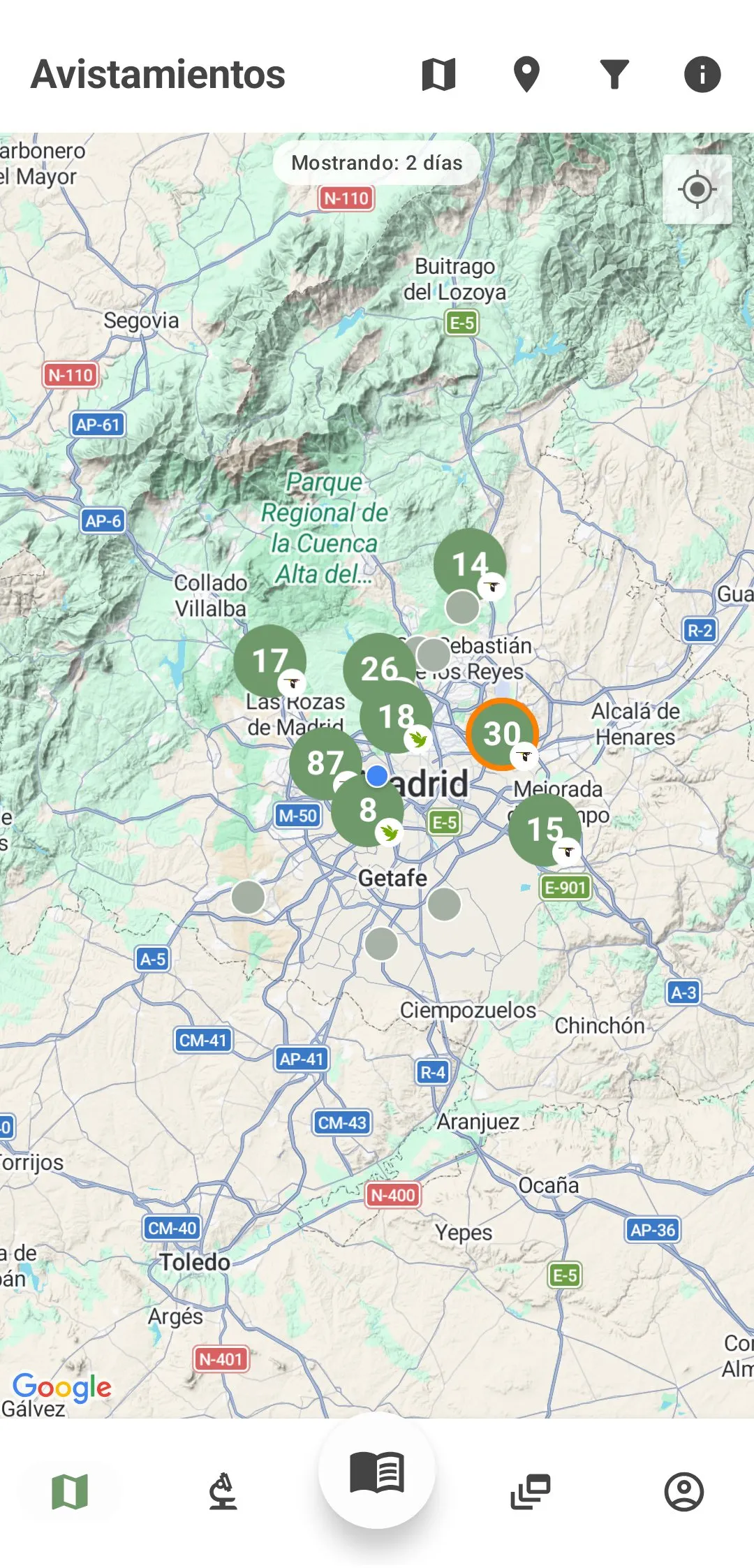
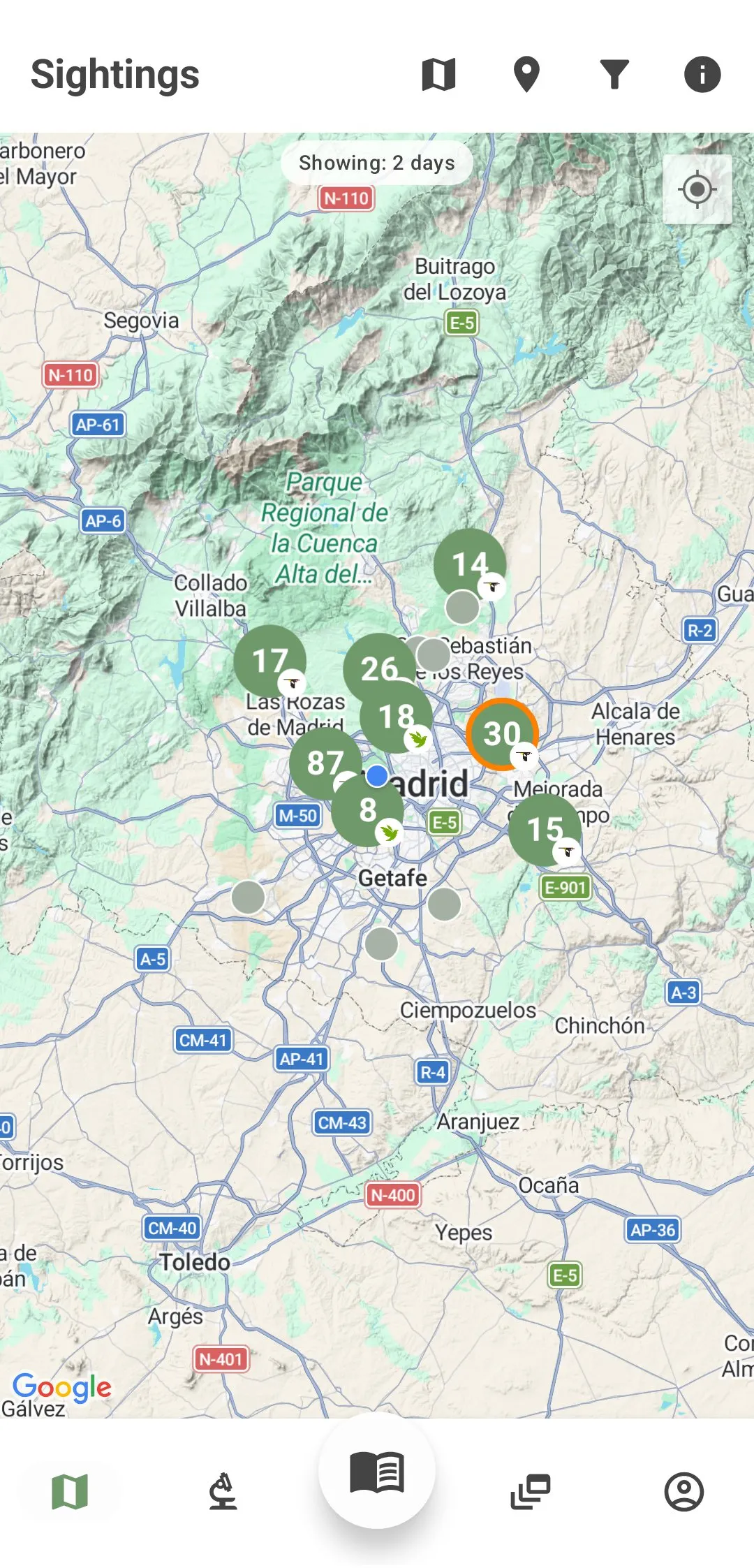
Qué se ha visto estos díasWhat has been seen these daysEl mapa junta los avistamientos recientes de BirdPedy, eBird, iNaturalist y MINKA a tu alrededor, de hasta 7 días atrás.The map brings together recent sightings from BirdPedy, eBird, iNaturalist and MINKA around you, from up to 7 days back. 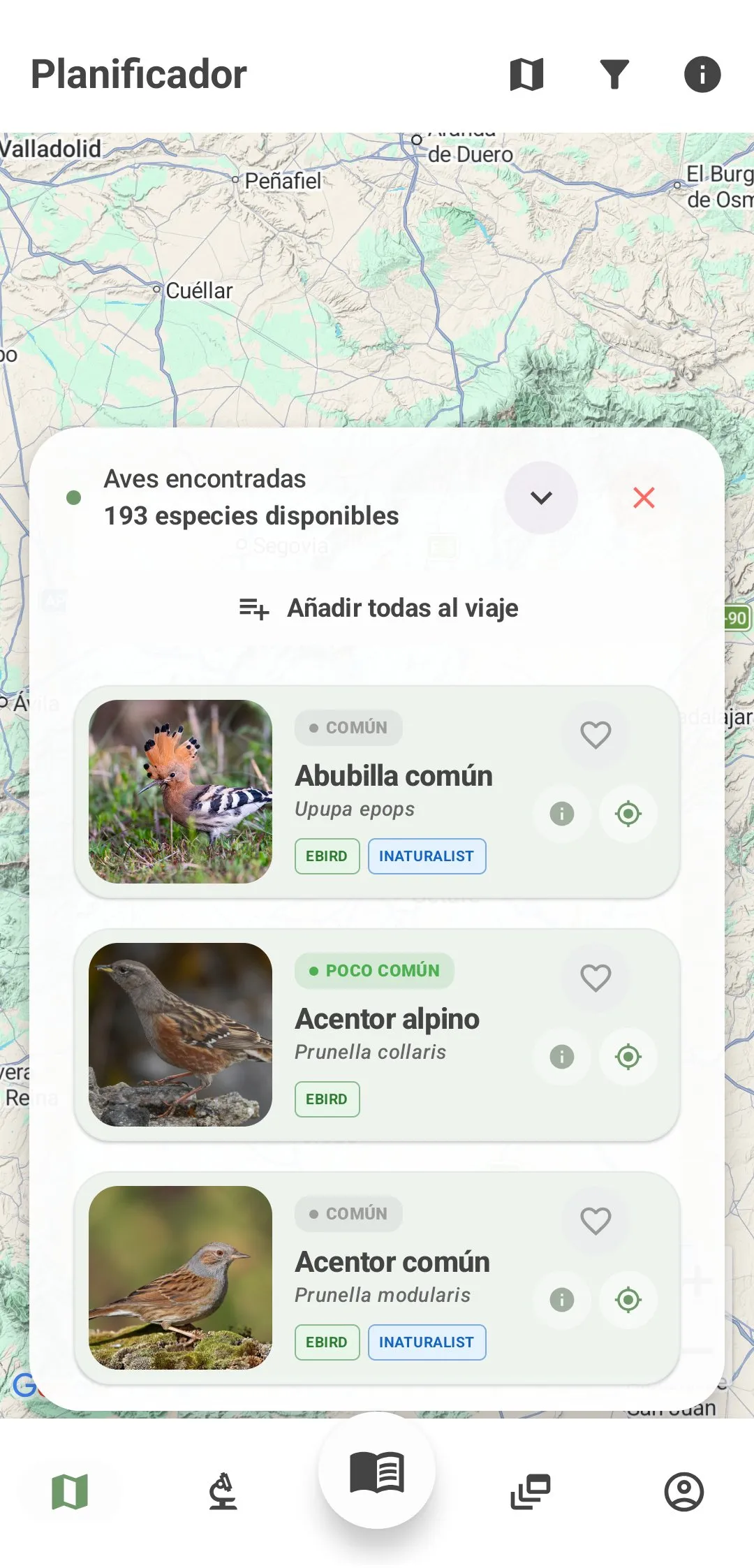
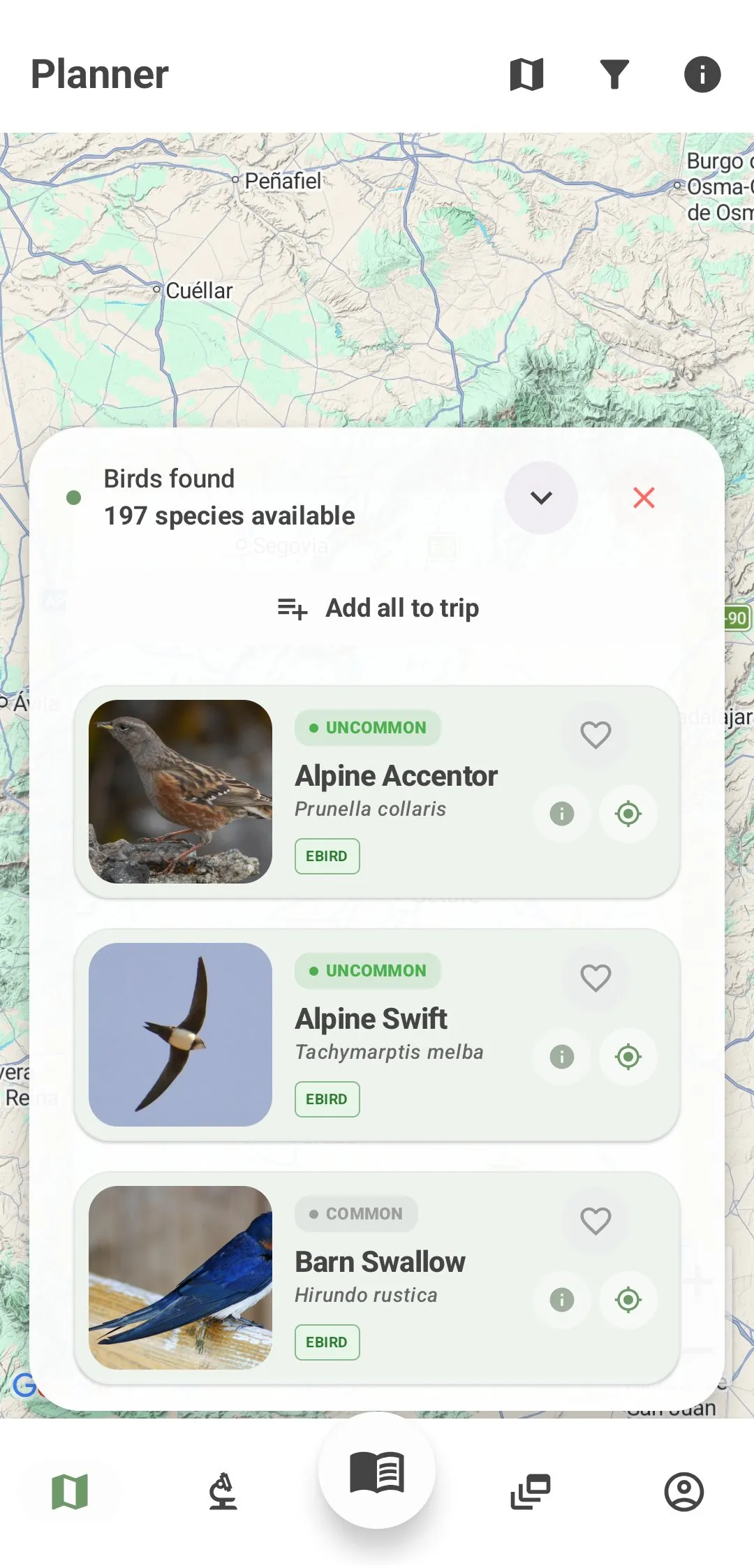
Qué especies hay ese mesWhich species are around that monthElige provincia y mes, y el planificador te da la lista de especies, con su rareza y la fuente de cada una.Pick a province and a month, and the planner gives you the list of species, with their rarity and the source of each one. 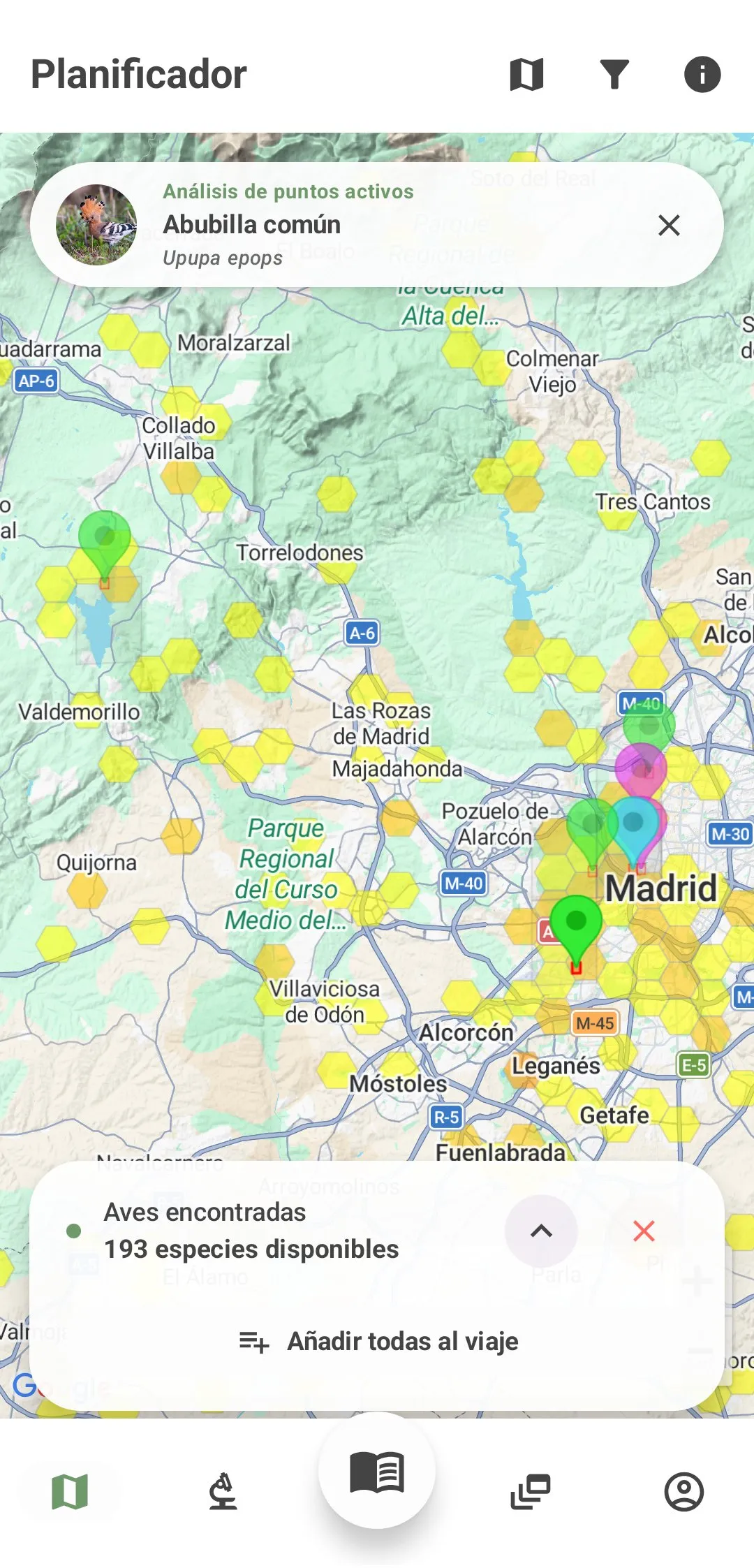
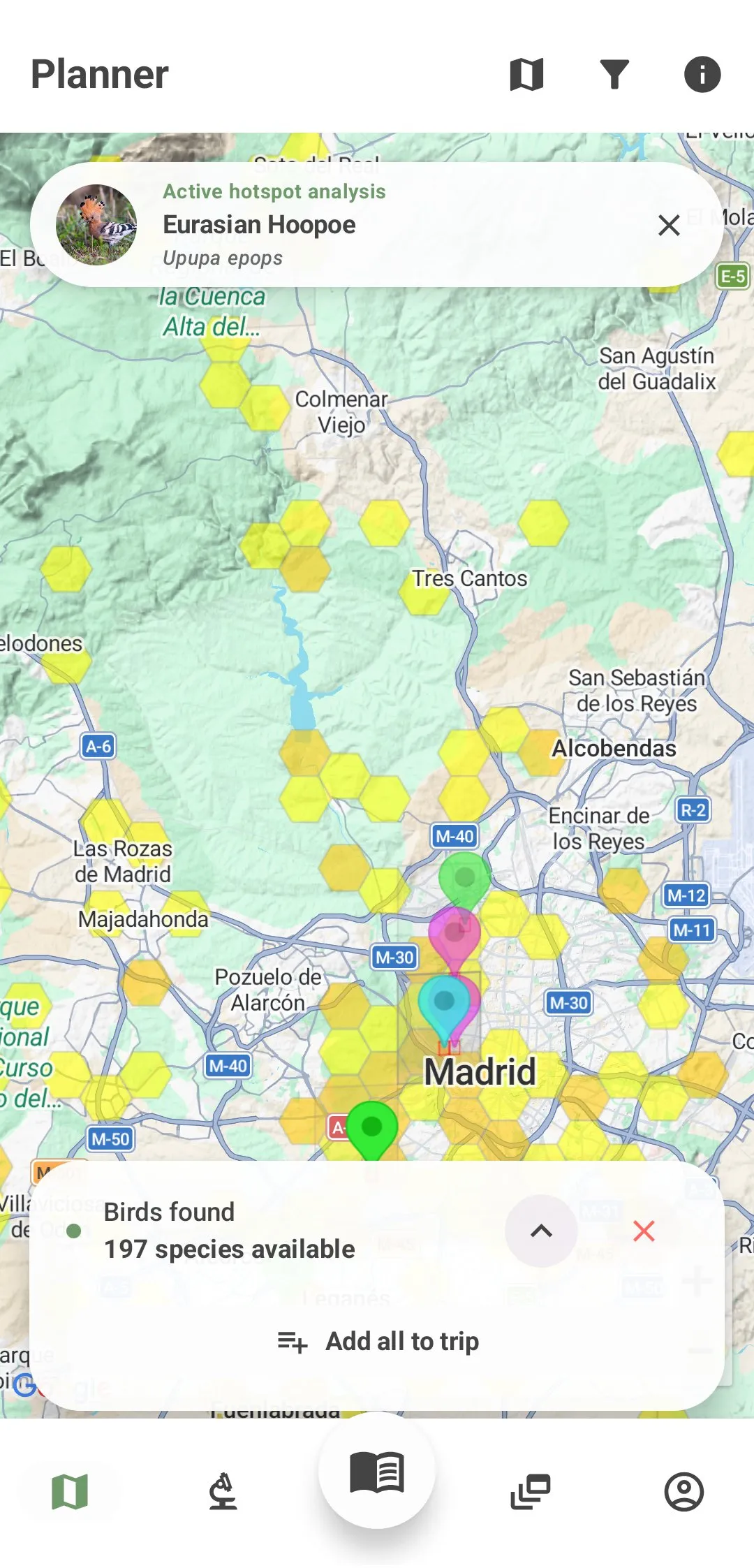
Dónde ver cada especieWhere to see each speciesElige una especie de la lista y el mapa marca dónde más se ha visto ese mes. Aquí, la abubilla en octubre.Pick a species from the list and the map marks where it has been seen most that month. Here, the Hoopoe in October. 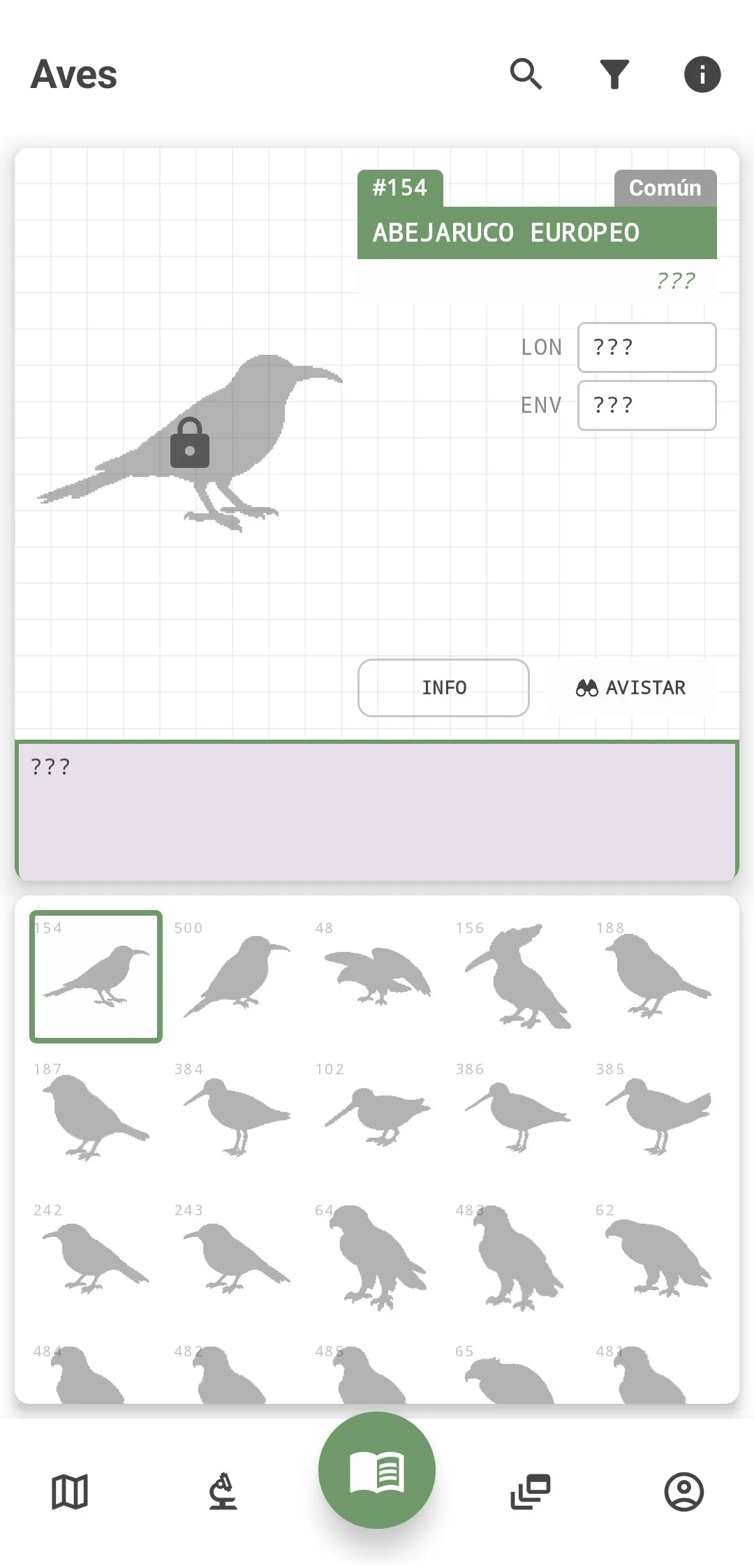
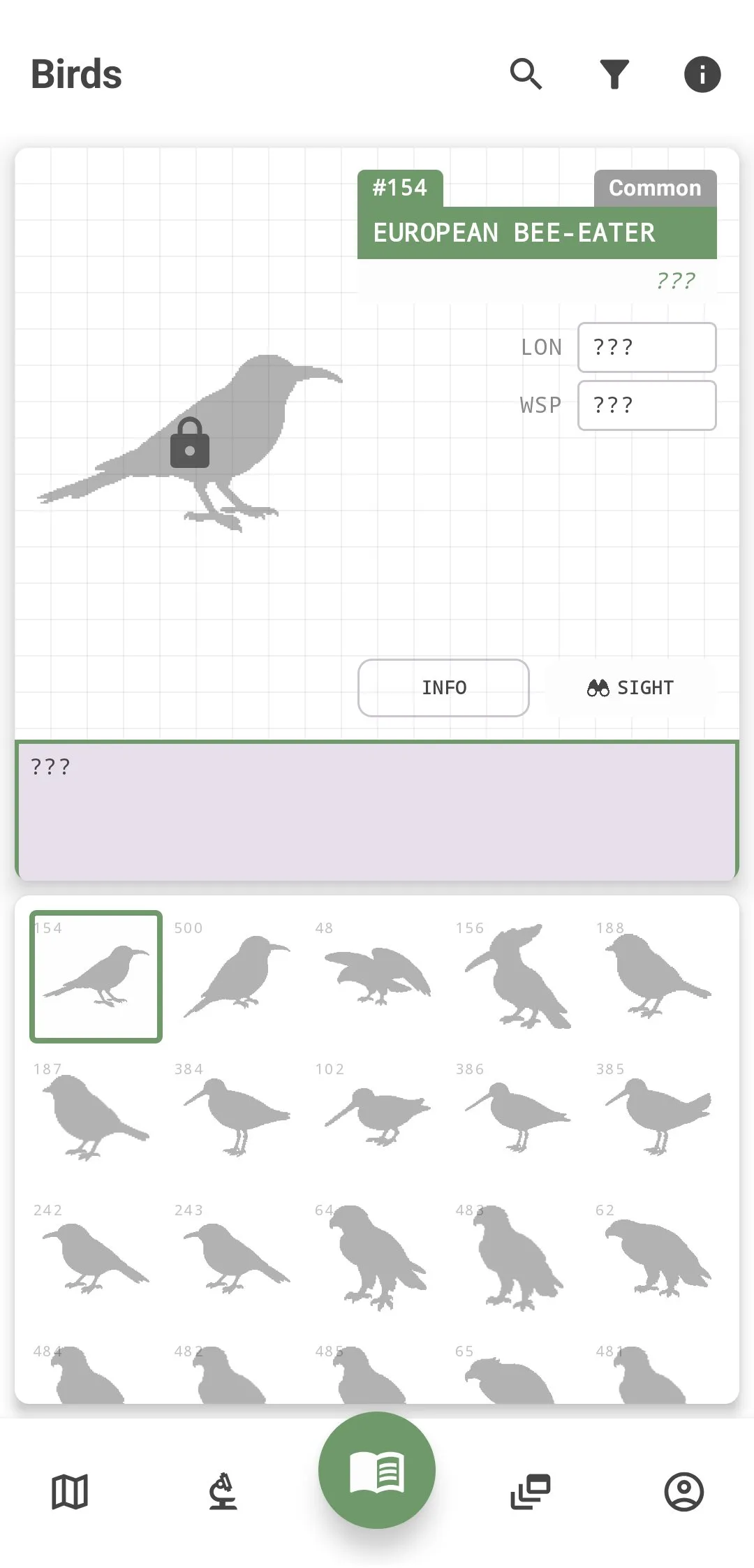
Tu álbum de 642 especiesYour album of 642 speciesCada ave que ves se desbloquea en tu álbum al marcarla o al registrar el avistamiento, de las comunes a las legendarias.Every bird you see is unlocked in your album when you tick it off or record the sighting, from common ones to legendary ones.
Es gratis, sin anuncios ni compras.It is free, with no ads and no purchases.
Descargar BirdPedy para AndroidGet BirdPedy for Android