 BirdPedy
Golondrina comúnBarn Swallow
En 52 provincias en marzo y en 40 en eneroIn 52 provinces in March and 40 in January
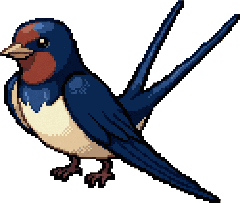
Reporte de rarezaRarity report
Por qué es comúnWhy it is commonAve estival emblemática y muy abundante, extraordinariamente ligada a medios rurales, cortijos y establos de toda España. Su presencia es ubicua durante el periodo estival.Emblematic and very abundant summer bird, linked to rural areas and farms throughout Spain. Ubiquitous.
Cada carrizo es un mes: su altura, las provincias con registros de 2020 a 2024.Each reed is a month: its height, the provinces with records from 2020 to 2024.- Provincias con registrosProvinces with records
- 52 de 52of 52
- En la appIn the app
- Febrero a octubreFebruary to October
- EnvergaduraWingspan
- 33 cm33 cm
- LongitudLength
- 18 cm18 cm
- Lista Roja de EspañaSpanish Red List
- VU VulnerableVulnerable

Información generalGeneral Information
Es una de las aves más conocidas popularmente y de las mejor estudiadas. Las golondrinas han sido claves para desentrañar aspectos de la migración, de la selección sexual y de la reproducción en las aves. Por su proximidad al hombre, forman parte de la cultura popular, y su llegada, cada vez más temprana como consecuencia del cambio climático, se considera anuncio de la primavera. A pesar de su abundancia, se trata de una especie en declive, sobre todo por culpa de los cambios en el medio rural y de las políticas y técnicas agrarias. En 2014 la golondrina común ha sido nombrada Ave del Año por SEO/BirdLife.Barn Swallows are deeply linked to human tradition, nesting almost exclusively in buildings like stables, porches, and balconies. They are an essential part of the rural ecosystem, consuming vast quantities of flies and mosquitoes. Despite their popularity, they are in a concerning decline due to changing agricultural practices and the modernization of rural architecture. It was SEO/BirdLife's 'Bird of the Year' in 2014.
IdentificaciónIdentification
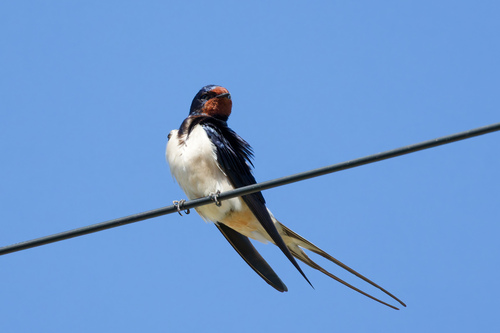
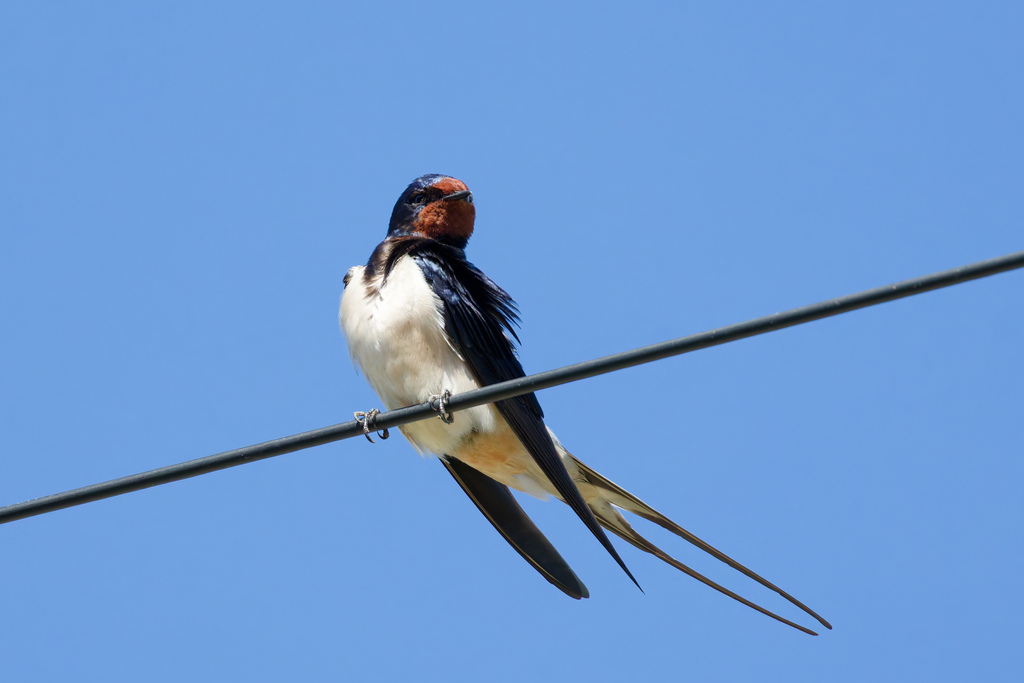
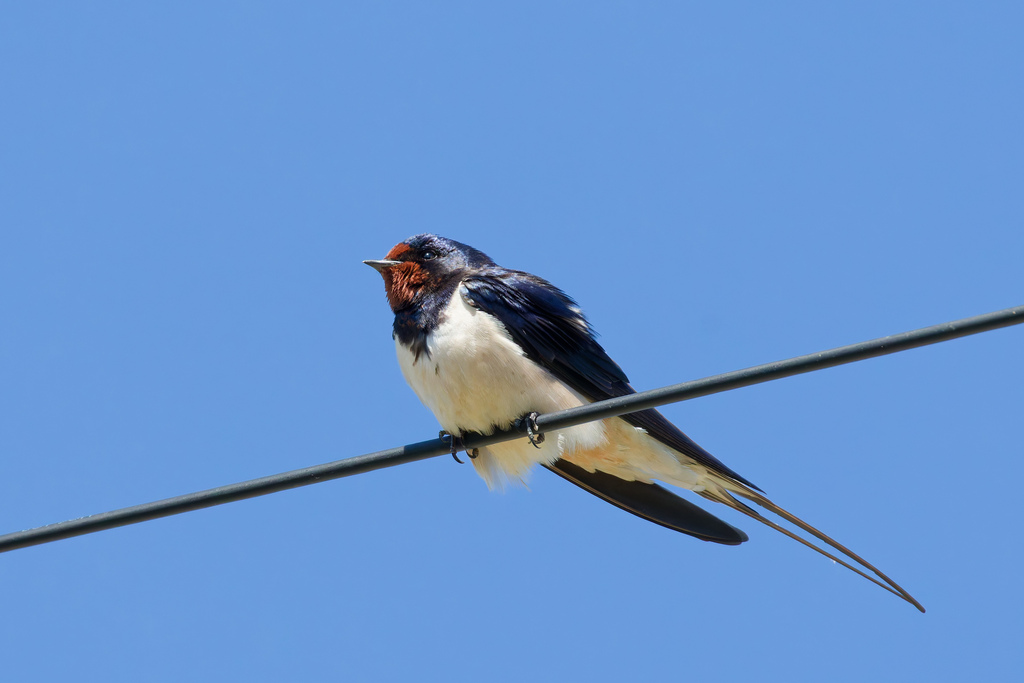
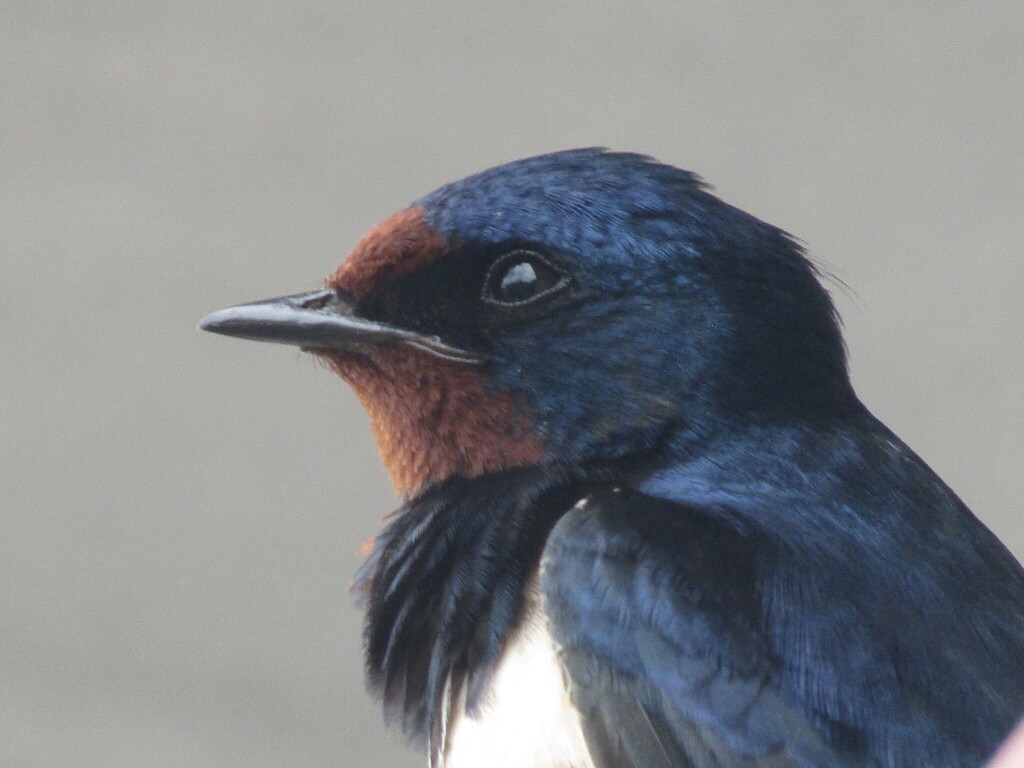
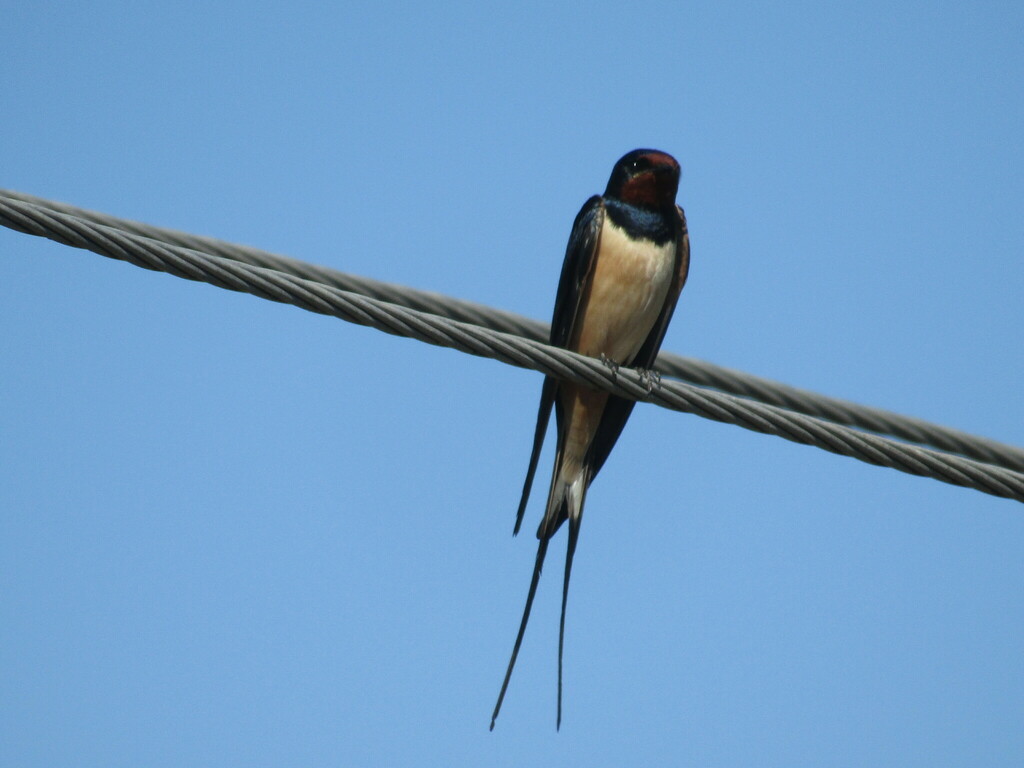
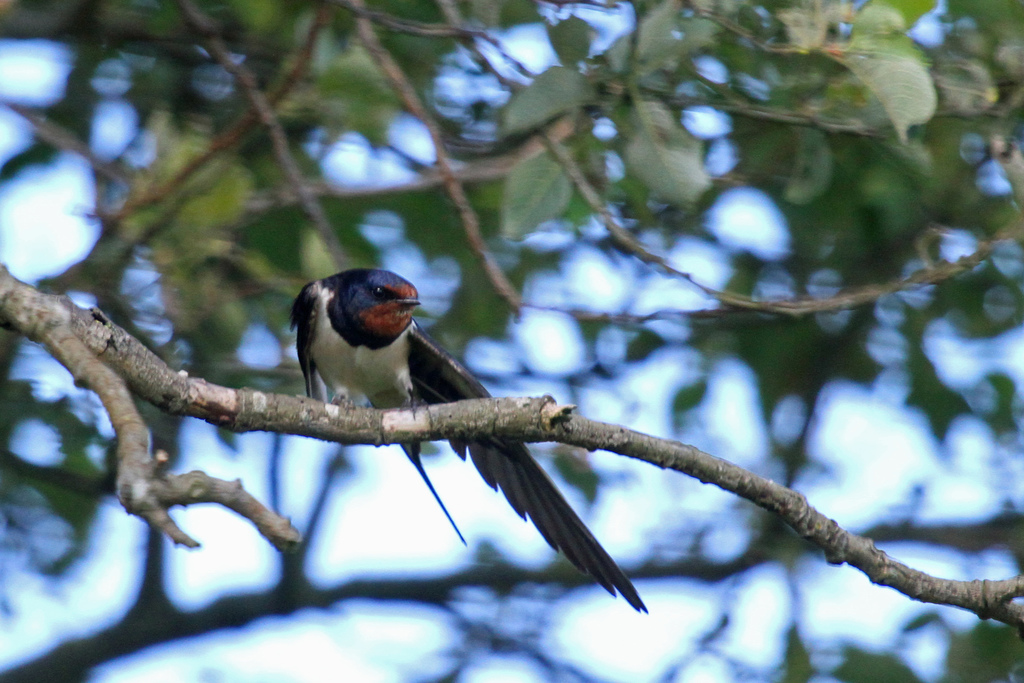
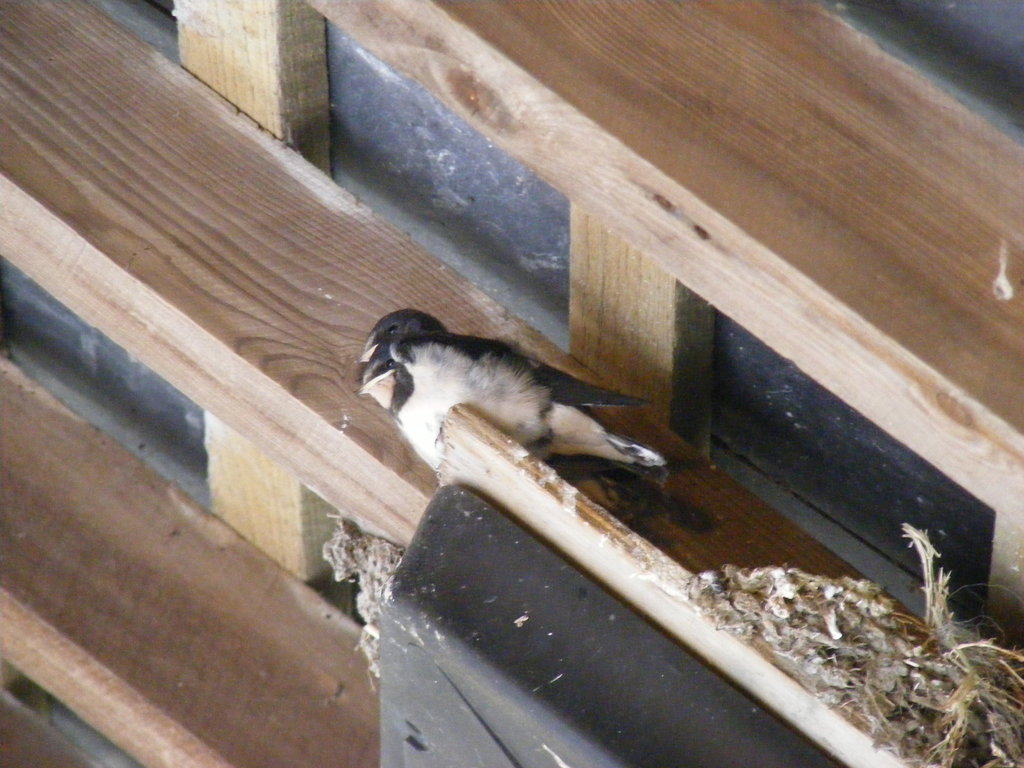
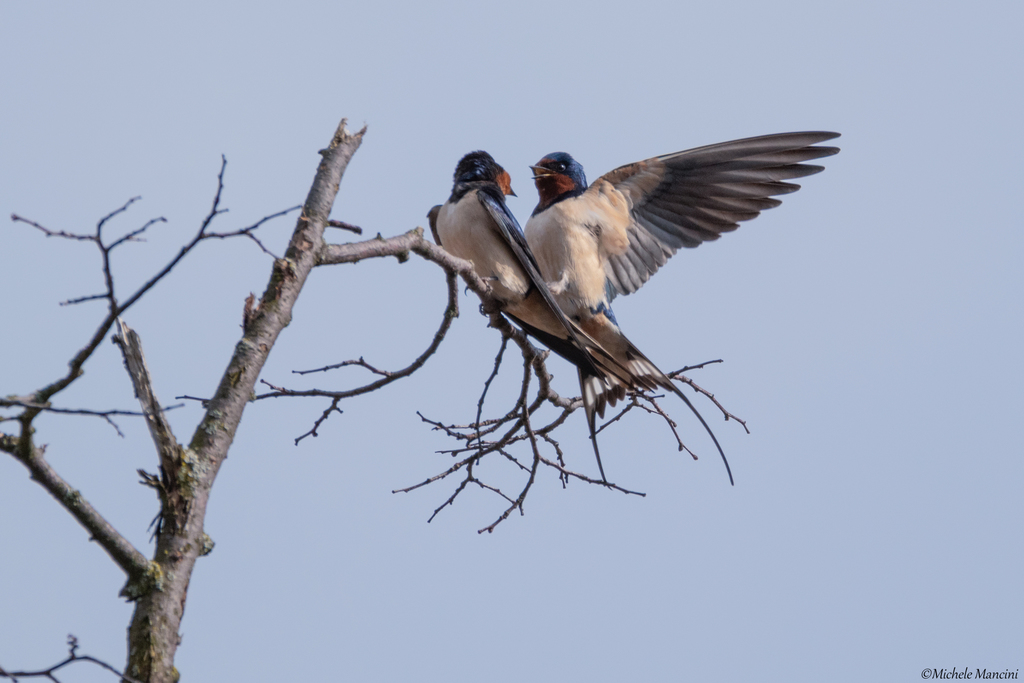
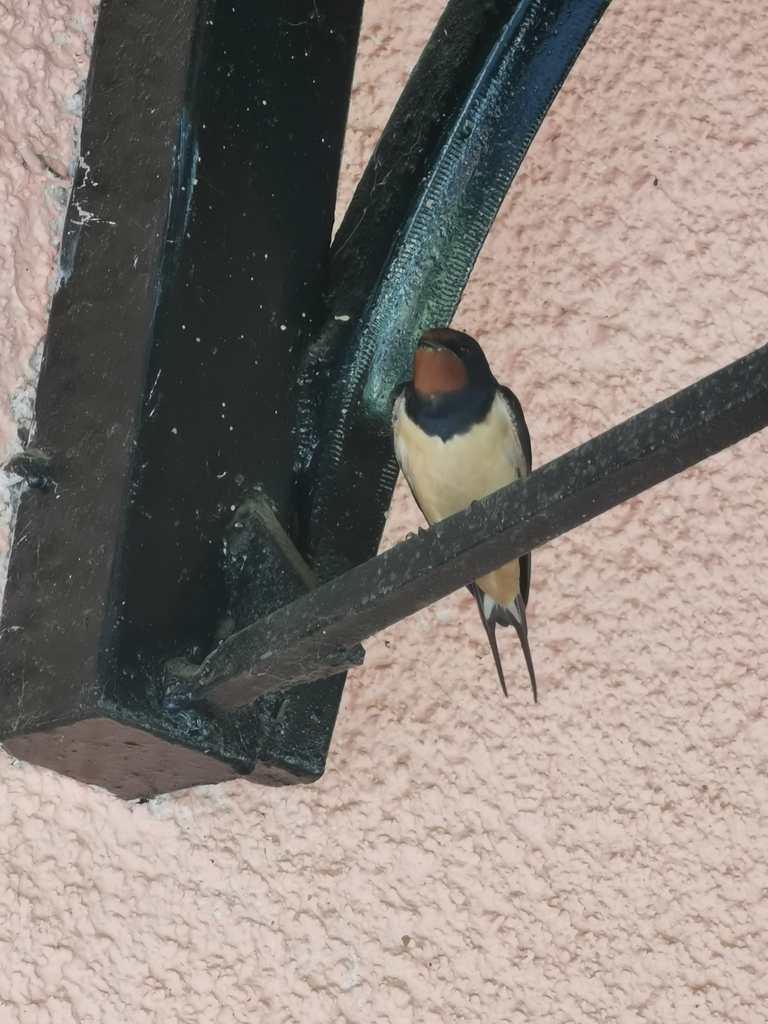
La golondrina común es un ave delicada, grácil y aerodinámica, de color negro, con reflejos azules metálicos por arriba y blancos crema en las partes inferiores. Tiene la frente y la garganta rojas y un collar negro. Las alas, largas y apuntadas, muestran tonos blancos en la parte inferior delantera. Su cola, muy larga y ahorquillada, es de color negro, con pequeños óvalos blancos cuando la extiende. Posee patas cortas sin emplumar, boca muy ancha, y pico corto, plano y negro. Presenta variación latitudinal en el tamaño corporal y en la longitud de la cola, que son menores hacia el sur. Aunque ambos sexos se parecen, la hembra es menos brillante, más blanca por abajo y con la cola más corta. Los jóvenes lucen tonos negros mate, tienen la frente y la garganta naranjas y una cola mucho más corta. De vuelo ágil, rápido y acrobático, la golondrina común ocupa en el espacio aéreo las capas bajas, por debajo de aviones y vencejos.The iconic swallow, featuring deep metallic blue-black upper parts, creamy-white (sometimes pinkish) underparts, and a contrasting blood-red forehead and throat bordered by a black band. Its tail is exceptionally long and deeply forked with long 'streamers.' It is as a master of low-level aerial acrobatics. Its arrival is the traditional signal of spring in the Spanish countryside.
DistribuciónDistribution
Se encuentra ampliamente distribuida en época de cría y en paso por toda la Península, Baleares, Ceuta y Melilla. Inverna en muy pequeño número en el sur, principalmente en el bajo Guadalquivir. En Canarias, donde es común en paso, recientemente se ha localizado criando en Gran Canaria. La subespecie rustica es la única presente en España, aunque en ocasiones se observan aves de vientre rojizo que podrían pertenecer a subespecies de Oriente Medio (transitiva, savignii) o simplemente tratarse de variantes locales.Abundant and widespread throughout the Peninsula, Balearics, and North African territories. Common on passage in the Canaries (recently found breeding in Gran Canaria). Subspecies 'rustica'.
Textos reproducidos con permiso de laTexts translated and reproduced with permission from the Guía de Aves de España © SEO/BirdLife
Estado de conservaciónConservation Status
- EX
- RE
- CR
- EN
- VU
- NT
- LC
VulnerableVulnerable
Qué significa cada categoríaWhat each category means
- LC
- Preocupación menor: Taxón evaluado que no califica para categorías amenazadas. Especies abundantes y ampliamente distribuidasLeast Concern - Evaluated taxon that does not qualify for threatened categories. Widespread and abundant taxa
- NT
- Casi amenazada: No califica actualmente como amenazada, pero está cerca de calificar o es probable que califique en el futuro cercanoNear Threatened - Does not currently qualify as threatened, but is close to qualifying or likely to qualify in the near future
- VU
- Vulnerable: Enfrenta un alto riesgo de extinción en estado silvestre según los criterios A a E de IUCNVulnerable - Facing a high risk of extinction in the wild based on IUCN criteria A to E
- EN
- En peligro: Enfrenta un riesgo muy alto de extinción en estado silvestre según los criterios A a E de IUCNEndangered - Facing a very high risk of extinction in the wild based on IUCN criteria A to E
- CR
- En peligro crítico: Enfrenta un riesgo extremadamente alto de extinción en estado silvestre según los criterios A a E de IUCNCritically Endangered - Facing an extremely high risk of extinction in the wild based on IUCN criteria A to E
- DD
- Datos insuficientes: Información inadecuada para evaluar el riesgo de extinción basándose en distribución o estado poblacionalData Deficient - Inadequate information to assess extinction risk based on distribution and/or population status
- NE
- No evaluada: No ha sido evaluada aún contra los criterios de la Lista Roja de IUCNNot Evaluated - Has not yet been assessed against the IUCN Red List criteria
- RE
- Extinta regionalmente: El taxón ya no existe en la región específica, aunque puede sobrevivir en otros lugaresRegionally Extinct - Taxon no longer exists in the specific region, though it may survive elsewhere
- EX
- Extinta - No existe duda razonable de que ha muerto el último individuo del taxónExtinct - No reasonable doubt that the last individual of the taxon has died
TaxonomíaTaxonomy
- OrdenOrder
- Passeriformes
- FamiliaFamily
- Hirundinidae
Presencia en EspañaPresence in Spain
- De pasoPassage migrant
- EstivalSummer visitor
- HabitualRegular
En la app: febrero a octubre.In the app: February to October.
Dónde verlaWhere to see it
4.896 cuadrículas de 10 km con registros de 2020 a 2024. Toca un mes para ver dónde se ha visto.4,896 10 km squares with records from 2020 to 2024. Pick a month to see where it has been seen.
Cargando el mapa…Loading the map…
Dónde es regularWhere it is regular
Provincias con registros en al menos 3 de los 5 años algún mes, de más a menos frecuente, y sus mejores meses.Provinces with records in at least 3 of the 5 years in some month, from most to least frequent, and their best months.
- MurciaMurciajulio, agosto, septiembreJuly, August, September
- ToledoToledoagosto, julio, junioAugust, July, June
- CeutaCeutaabril, julio, junioApril, July, June
- TarragonaTarragonajulio, agosto, junioJuly, August, June
- AlmeríaAlmeríajulio, septiembre, junioJuly, September, June
- CórdobaCórdobajulio, junio, agostoJuly, June, August
- CastellónCastellónseptiembre, agosto, julioSeptember, August, July
- HuescaHuescaseptiembre, agosto, abrilSeptember, August, April
- ZaragozaZaragozaagosto, septiembre, julioAugust, September, July
- BadajozBadajozjulio, junio, agostoJuly, June, August
Ver las 51 provinciasSee all 51 provinces
- Ciudad RealCiudad Realjulio, agosto, junioJuly, August, June
- BarcelonaBarcelonaagosto, septiembre, julioAugust, September, July
- AlbaceteAlbacetejulio, agosto, septiembreJuly, August, September
- GironaGironaagosto, julio, septiembreAugust, July, September
- CádizCádizjulio, agosto, junioJuly, August, June
- LleidaLleidaseptiembre, agosto, abrilSeptember, August, April
- ValladolidValladolidagosto, julio, junioAugust, July, June
- GuadalajaraGuadalajaraagosto, julio, abrilAugust, July, April
- MadridMadridagosto, julio, junioAugust, July, June
- CáceresCáceresjulio, agosto, junioJuly, August, June
- ValenciaValenciaagosto, septiembre, julioAugust, September, July
- HuelvaHuelvajulio, junio, marzoJuly, June, March
- TeruelTeruelseptiembre, agosto, julioSeptember, August, July
- ÁvilaÁvilaagosto, julio, abrilAugust, July, April
- SevillaSevillajulio, junio, agostoJuly, June, August
- LugoLugoagosto, julio, abrilAugust, July, April
- La RiojaLa Riojaagosto, julio, abrilAugust, July, April
- SalamancaSalamancaagosto, julio, mayoAugust, July, May
- AsturiasAsturiasagosto, julio, mayoAugust, July, May
- AlicanteAlicanteseptiembre, julio, agostoSeptember, July, August
- CantabriaCantabriaagosto, julio, mayoAugust, July, May
- SegoviaSegoviaagosto, julio, abrilAugust, July, April
- GranadaGranadaagosto, julio, abrilAugust, July, April
- ZamoraZamoraagosto, julio, junioAugust, July, June
- PalenciaPalenciaagosto, julio, abrilAugust, July, April
- OurenseOurenseagosto, junio, abrilAugust, June, April
- LeónLeónagosto, julio, mayoAugust, July, May
- JaénJaénjulio, agosto, abrilJuly, August, April
- MálagaMálagajulio, agosto, abrilJuly, August, April
- PontevedraPontevedraagosto, julio, abrilAugust, July, April
- BurgosBurgosjulio, abril, agostoJuly, April, August
- A CoruñaA Coruñajulio, agosto, mayoJuly, August, May
- BalearesBalearic Islandsagosto, septiembre, abrilAugust, September, April
- SoriaSoriaagosto, julio, abrilAugust, July, April
- NavarraNavarraagosto, julio, septiembreAugust, July, September
- ÁlavaÁlavaagosto, julio, abrilAugust, July, April
- CuencaCuencaseptiembre, julio, agostoSeptember, July, August
- GuipúzcoaGuipúzcoaabril, mayo, septiembreApril, May, September
- VizcayaVizcayamayo, agosto, abrilMay, August, April
- Las PalmasLas Palmasabril, febrero, mayoApril, February, May
- Santa Cruz de TenerifeSanta Cruz de Tenerifeabril, mayo, febreroApril, May, February
Datos: registros en GBIF de 2020 a 2024 de Observation.org, eBird, iNaturalist y el ICO, descargados el 23/10/2026.Data: GBIF records from 2020 to 2024 from Observation.org, eBird, iNaturalist and the ICO, downloaded on 23/10/2026. GBIF.org (23 October 2026) GBIF Occurrence Download · doi:10.15468/dl.r5sf2a · CC BY-NC 4.0
GaleríaGallery
© Donald Davesne · CC BY · iNaturalist 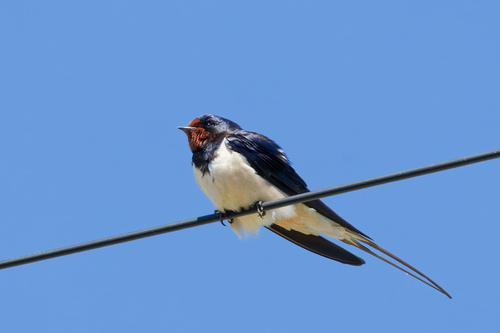
© Donald Davesne · CC BY · iNaturalist 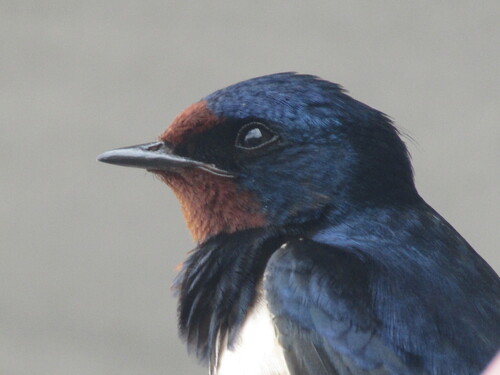
© SteveM4560 · CC BY · iNaturalist 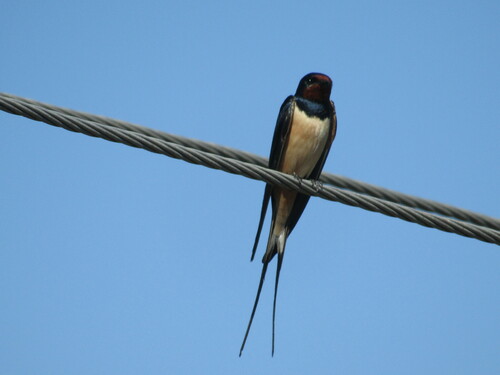
© SteveM4560 · CC BY · iNaturalist 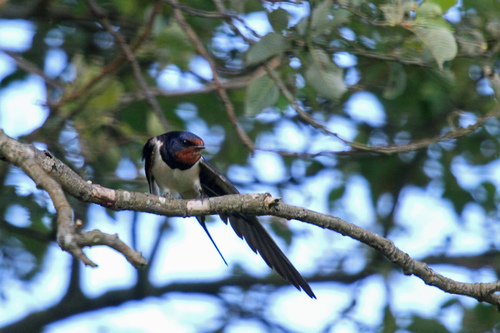
© Roy Lowry · CC BY · iNaturalist 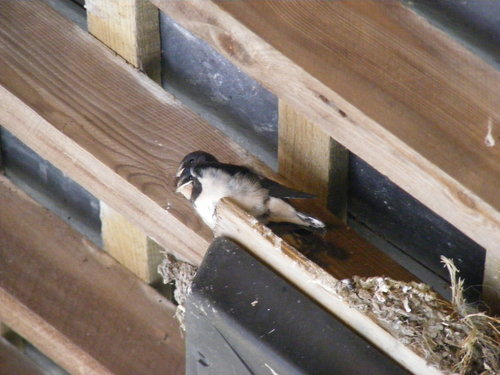
© John Proctor · CC BY · iNaturalist 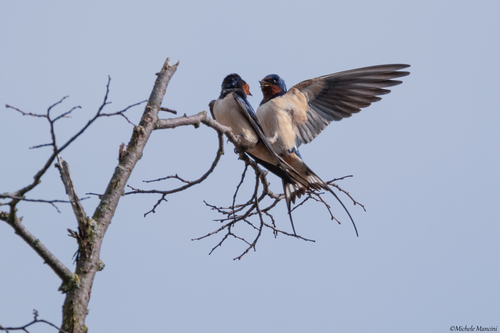
© Michele Mancini · CC BY · iNaturalist 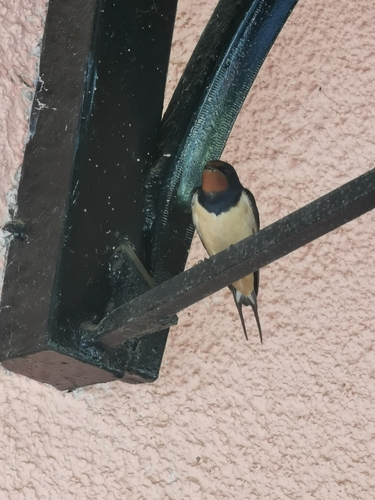
© Chris Taklis · CC BY · iNaturalist
Especies relacionadasRelated species
Otras aves de la familia Hirundinidae y de órdenes cercanos.Other birds from the Hirundinidae family and nearby orders.
- ComúnCommon
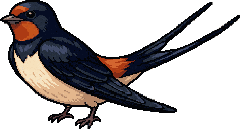 Golondrina dáuricaRed-rumped SwallowCecropis daurica
- ComúnCommon
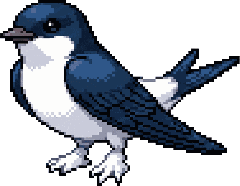 Avión común occidentalCommon House MartinDelichon urbicum
- LegendarioLegendary
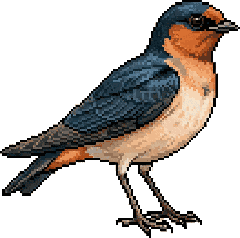 Golondrina puebleraCave SwallowPetrochelidon fulva
- LegendarioLegendary
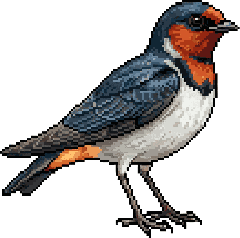 Golondrina risqueraCliff SwallowPetrochelidon pyrrhonota
- ComúnCommon
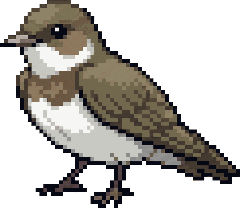 Avión zapadorSand MartinRiparia riparia
- ComúnCommon
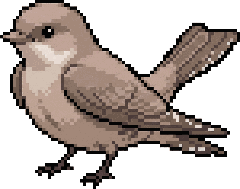 Avión roqueroCrag MartinPtyonoprogne rupestris
- Poco comúnUncommon
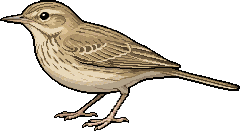 Bisbita campestreTawny PipitAnthus campestris
- RaroRare
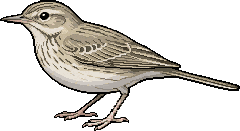 Bisbita camineroBerthelot's PipitAnthus berthelotii
 Gratis, sin anuncios ni comprasFree, no ads, no purchases