 BirdPedy
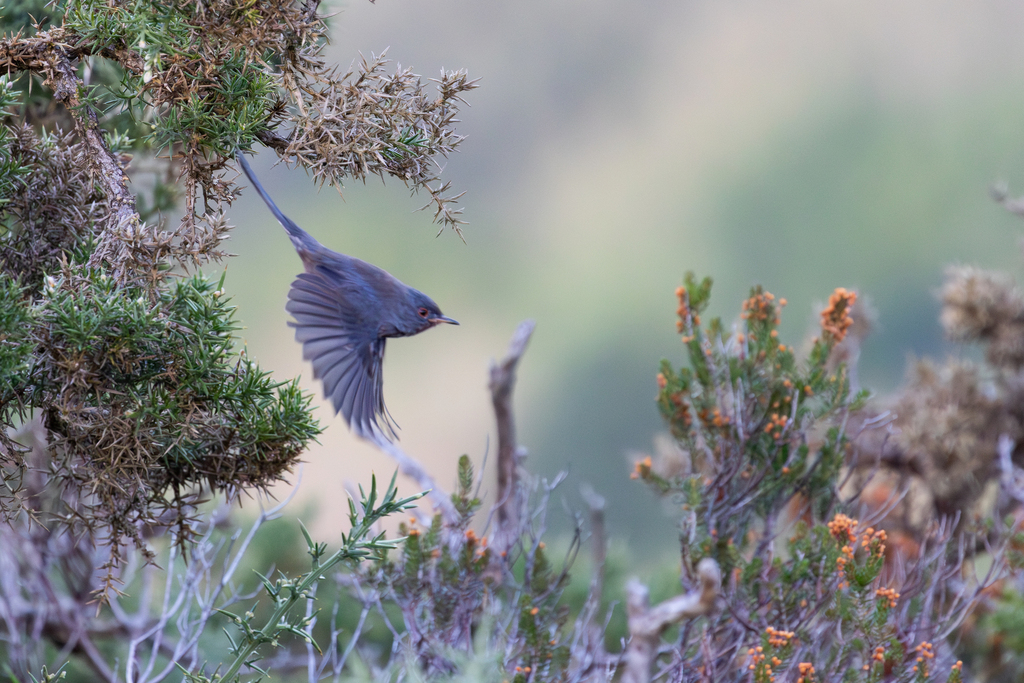
Curruca rabilargaDartford Warbler
En 50 provincias en diciembre y en 47 en marzoIn 50 provinces in December and 47 in March
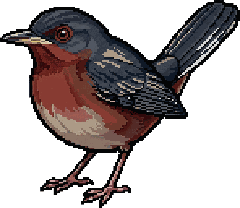
Reporte de rarezaRarity report
Por qué es comúnWhy it is commonEspecialista del matorral mediterráneo denso y bajo (brezales, aulagares). Sedentaria bien distribuida por gran parte de la península, aunque amenazada por la pérdida de calidad de su hábitat.A specialist of dense, low Mediterranean scrub (heathland, gorse). A resident well distributed over much of the Peninsula, although threatened by the declining quality of its habitat.
Cada carrizo es un mes: su altura, las provincias con registros de 2020 a 2024.Each reed is a month: its height, the provinces with records from 2020 to 2024.- Provincias con registrosProvinces with records
- 50 de 52of 52
- En la appIn the app
- Todo el añoAll year
- EnvergaduraWingspan
- 13-19 cm13-19 cm
- LongitudLength
- 12-13 cm12-13 cm
- Lista Roja de EspañaSpanish Red List
- EN En peligroEndangered

Información generalGeneral Information
Las inmensas extensiones de jarales y brezales que aparecen como etapas de degradación del monte mediterráneo en muchas zonas del centro-oeste peninsular son hábitats muy homogéneos que no resultan muy favorables para las aves. Sin embargo, es aquí donde encuentra su ambiente predilecto un pajarillo oscuro y de cola larga que se mueve entre la vegetación con gran cautela y discreción mediante cortos vuelos a baja altura. Se trata de la curruca rabilarga, uno de los representantes más pequeños de este grupo de aves, que se hace notar a menudo por su atropellado canto o su seco y áspero reclamo.The Dartford Warbler is the master of the heathlands. While many warblers migrate to Africa, the Dartford Warbler is a resident that braves the Iberian winter in its scrubby stronghold. It is highly sensitive to severe cold and habitat loss. It is an indicator of healthy, old-growth Mediterranean and Atlantic scrub. Its habit of performing jerky, low-level flights between bushes is characteristic.
IdentificaciónIdentification
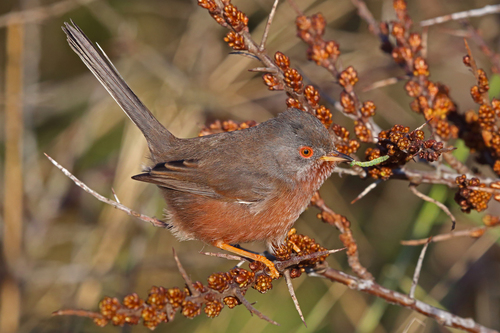
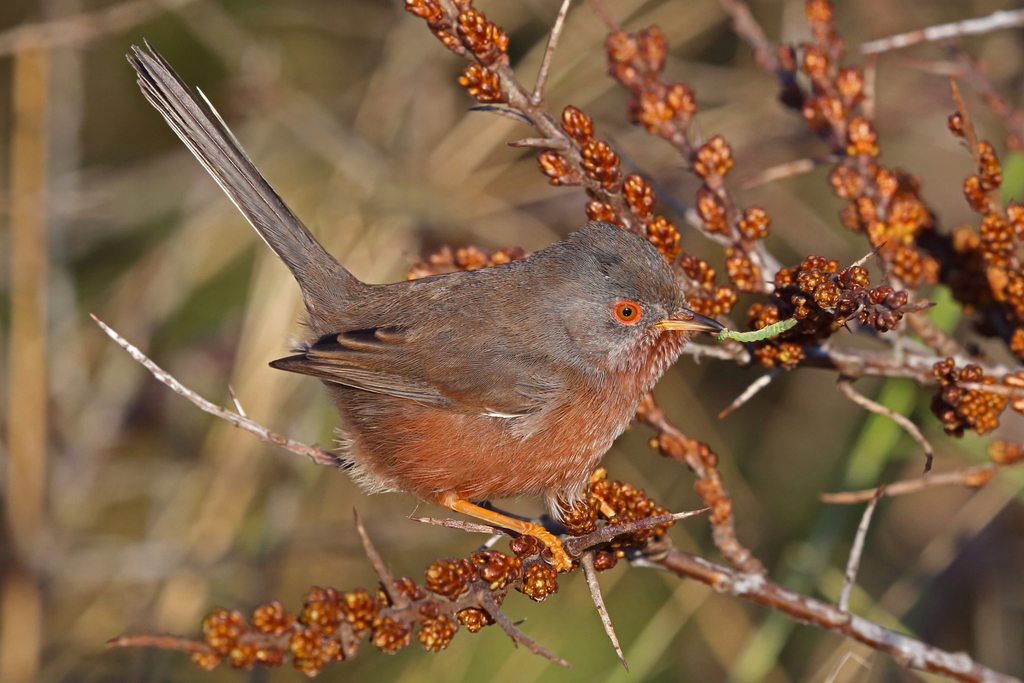
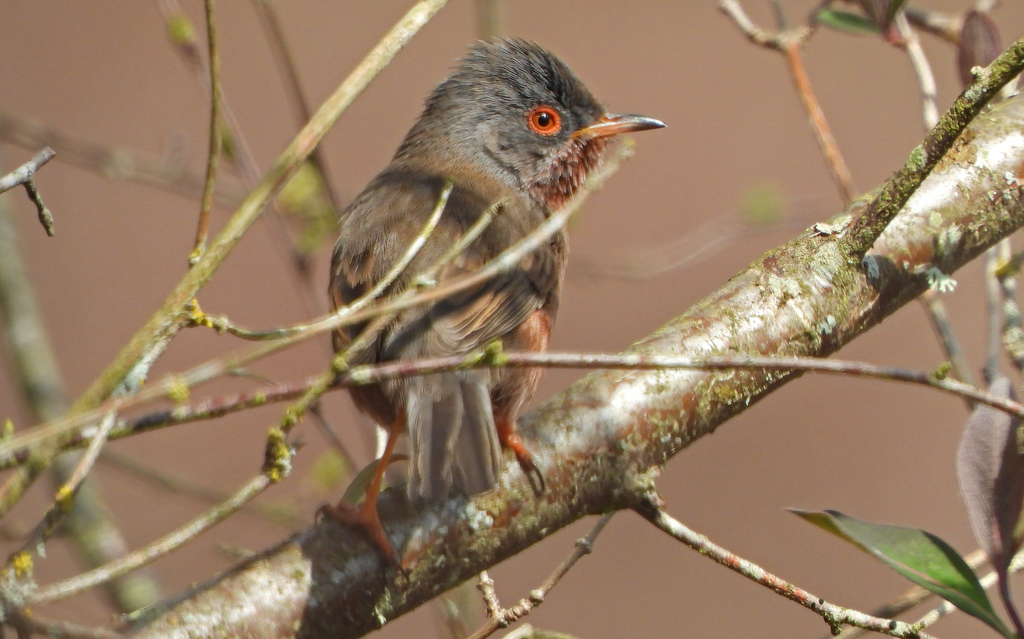
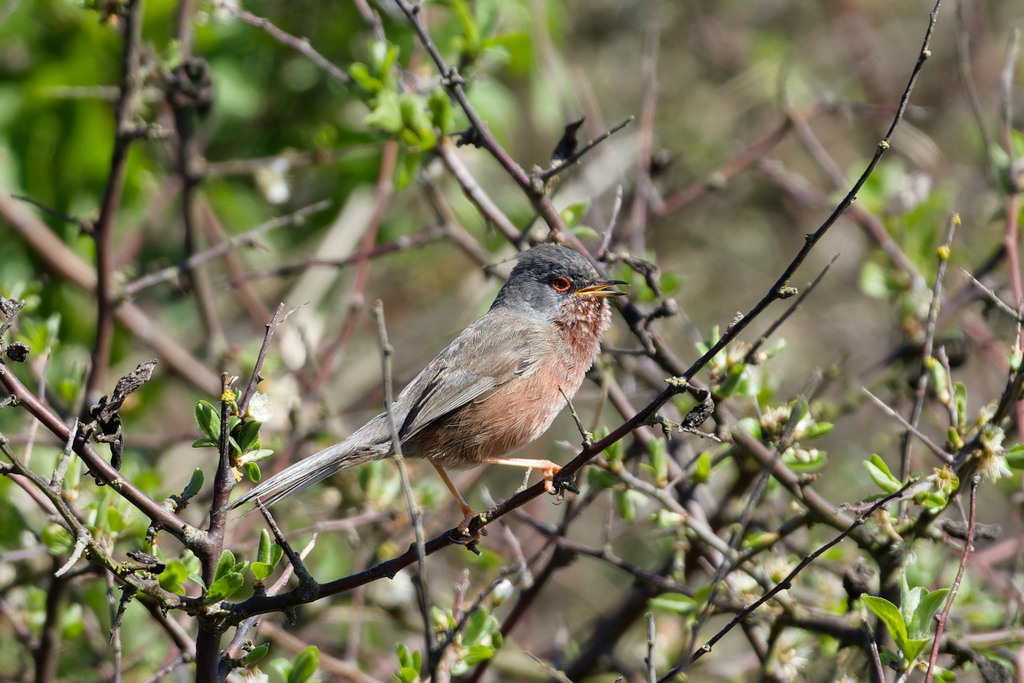
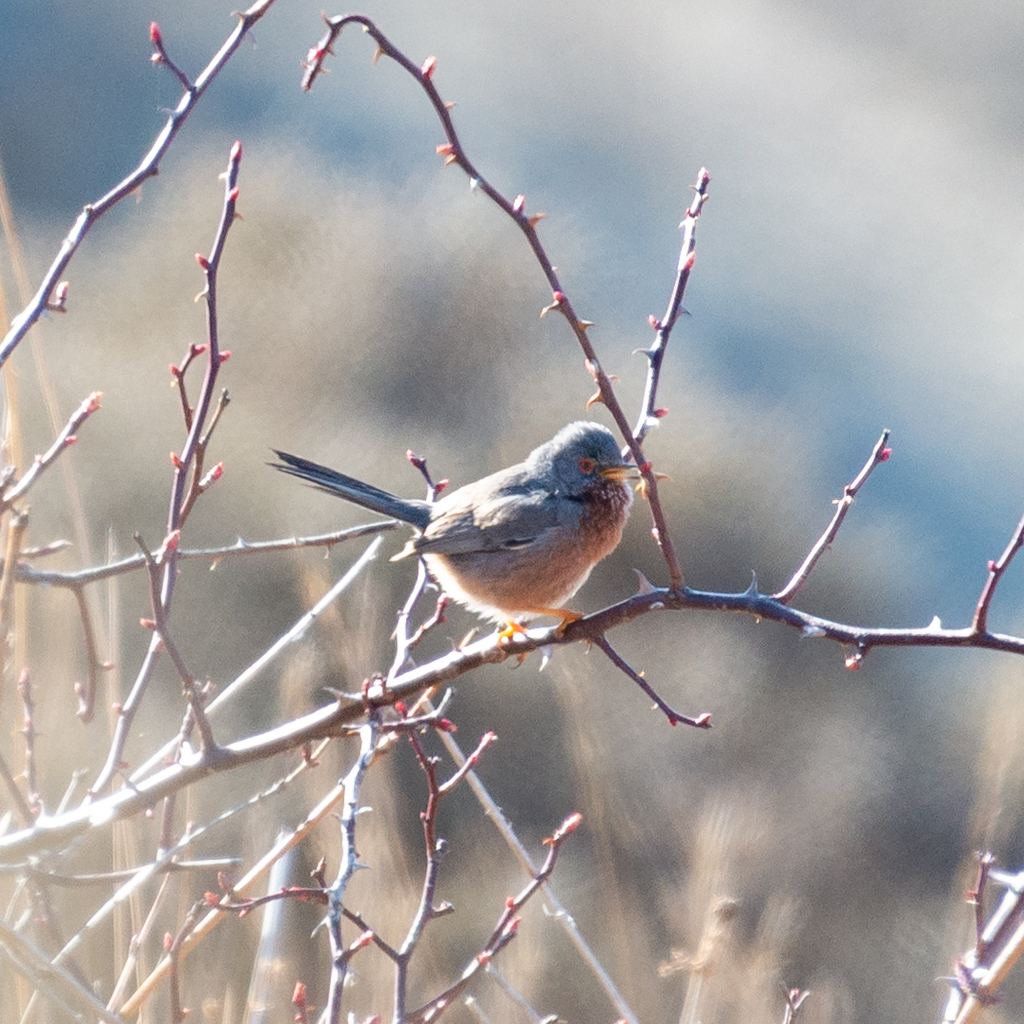
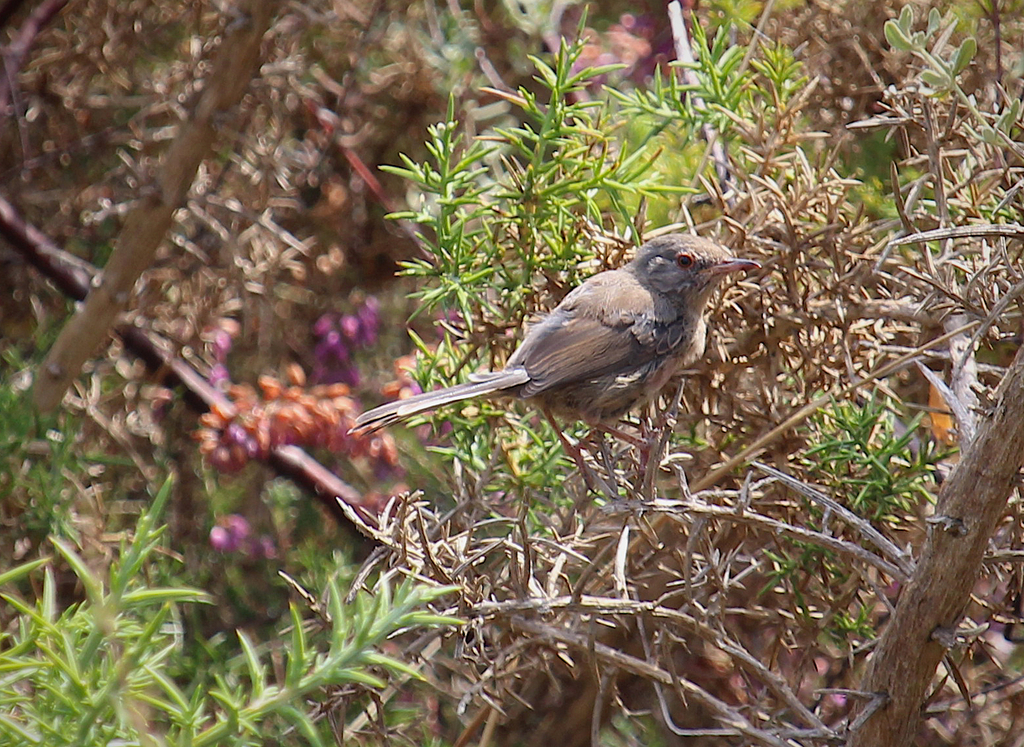
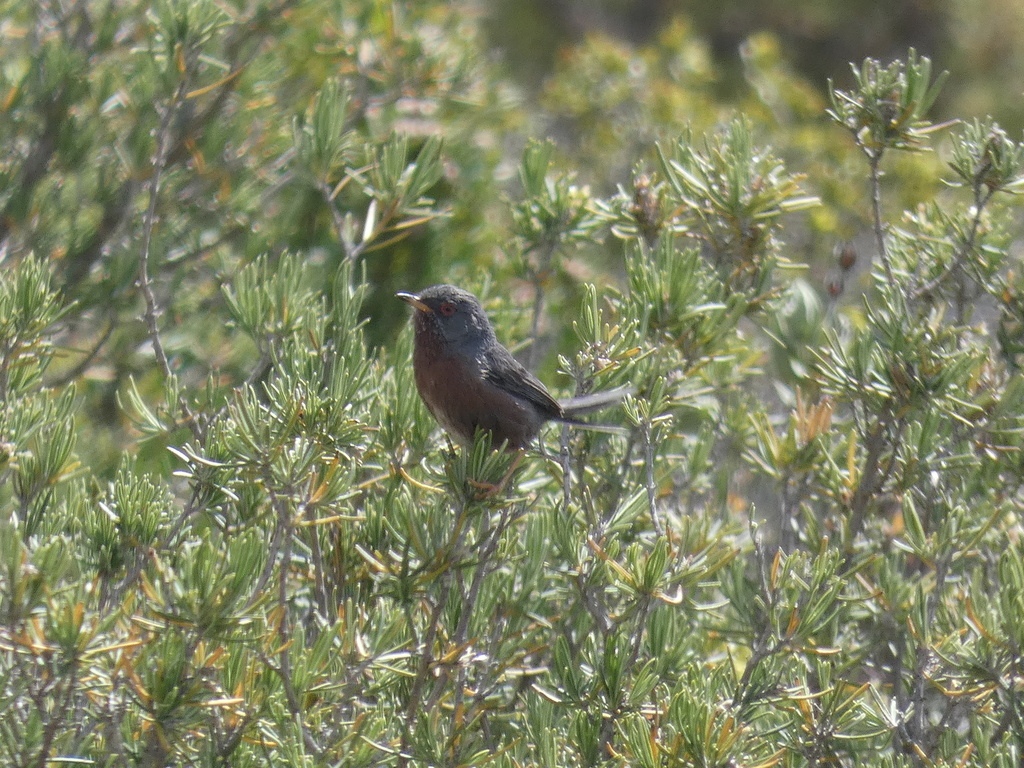
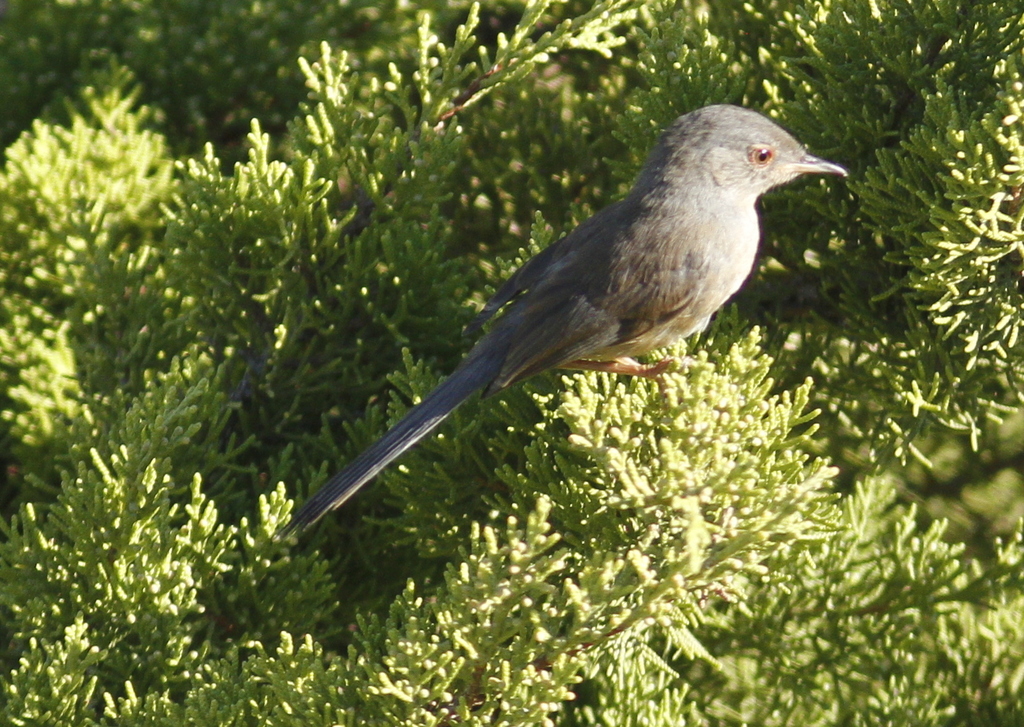
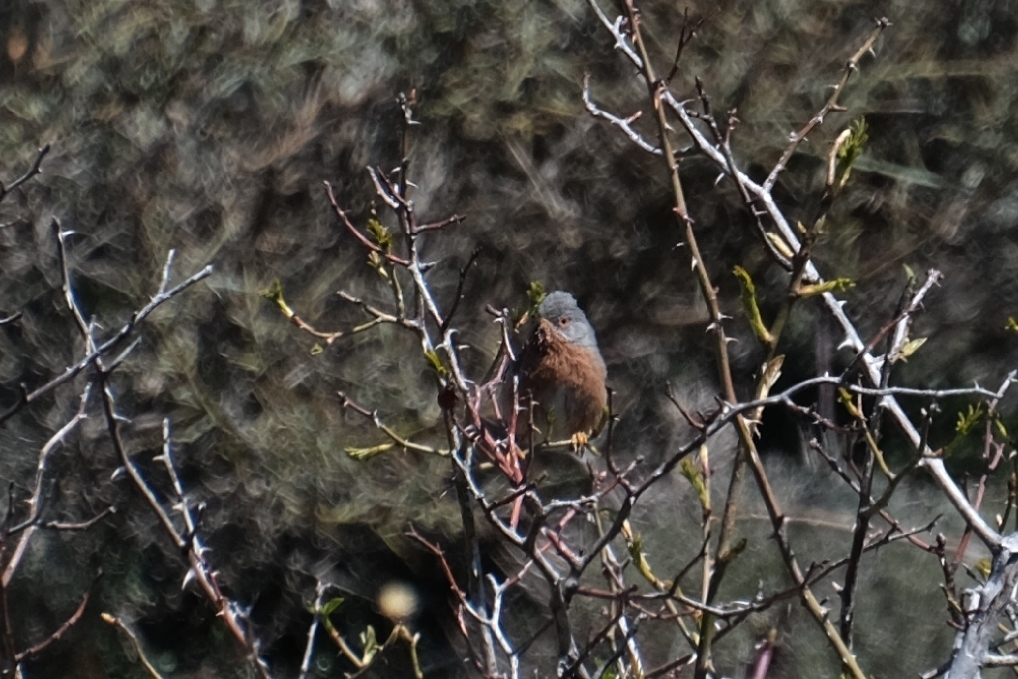
La curruca rabilarga, de coloración general oscura y cola larga (que suele mantener levantada), es una de las currucas de menor tamaño. Presenta el dorso gris pizarroso y las partes inferiores de una tonalidad vinosa con motas blancas en la garganta. Otros rasgos identificativos los constituyen el anillo ocular rojizo y las patas anaranjadas. Las hembras resultan más pardas en el dorso y poseen una coloración general menos intensa. Los jóvenes presentan tonos más apagados y el pecho parduzco. La curruca rabilarga es un ave muy inquieta que se mueve entre los arbustos y matorrales mediante cortos vuelos a baja altura que efectúa al tiempo que sacude frecuentemente la cola.A small, dark warbler with a disproportionately long tail that it frequently holds cocked upwards. Males are stunning with a deep slate-gray back and a saturated vinous-red (wine-colored) breast and throat. It has a bright red eye-ring and orange legs. It is a specialist of low, dense scrublands—especially gorse and heather—where it moves like a small, dark shadow. Its song is a fast, scratchy warble.
DistribuciónDistribution
Se encuentra ampliamente distribuida por toda la Península, Ceuta y Baleares (norte de Mallorca, Formentera y Menorca), archipiélago en el que se ha detectado su expansión en las últimas décadas. Falta en Canarias, Melilla y en extensas zonas del interior peninsular (valle del Guadalquivir, submesetas norte y sur, depresión del Ebro y áreas adehesadas y esteparias de Extremadura y secano manchego), además de ausentarse también de las cumbres pirinaicas. En España aparecen tres subespecies: undata en el noreste y Baleares; dartfordiensis en el noroeste; y toni en el centro y sur peninsular.Widespread across the Peninsula, North Africa, and some Balearic islands. Absent from Canaries and the true plains of the Meseta and Ebro. Focuses on the more humid and scrubby regions of the west and north. Three subspecies in Spain: 'undata', 'dartfordiensis', and 'toni'.
Textos reproducidos con permiso de laTexts translated and reproduced with permission from the Guía de Aves de España © SEO/BirdLife
Estado de conservaciónConservation Status
- EX
- RE
- CR
- EN
- VU
- NT
- LC
En peligroEndangered
Qué significa cada categoríaWhat each category means
- LC
- Preocupación menor: Taxón evaluado que no califica para categorías amenazadas. Especies abundantes y ampliamente distribuidasLeast Concern - Evaluated taxon that does not qualify for threatened categories. Widespread and abundant taxa
- NT
- Casi amenazada: No califica actualmente como amenazada, pero está cerca de calificar o es probable que califique en el futuro cercanoNear Threatened - Does not currently qualify as threatened, but is close to qualifying or likely to qualify in the near future
- VU
- Vulnerable: Enfrenta un alto riesgo de extinción en estado silvestre según los criterios A a E de IUCNVulnerable - Facing a high risk of extinction in the wild based on IUCN criteria A to E
- EN
- En peligro: Enfrenta un riesgo muy alto de extinción en estado silvestre según los criterios A a E de IUCNEndangered - Facing a very high risk of extinction in the wild based on IUCN criteria A to E
- CR
- En peligro crítico: Enfrenta un riesgo extremadamente alto de extinción en estado silvestre según los criterios A a E de IUCNCritically Endangered - Facing an extremely high risk of extinction in the wild based on IUCN criteria A to E
- DD
- Datos insuficientes: Información inadecuada para evaluar el riesgo de extinción basándose en distribución o estado poblacionalData Deficient - Inadequate information to assess extinction risk based on distribution and/or population status
- NE
- No evaluada: No ha sido evaluada aún contra los criterios de la Lista Roja de IUCNNot Evaluated - Has not yet been assessed against the IUCN Red List criteria
- RE
- Extinta regionalmente: El taxón ya no existe en la región específica, aunque puede sobrevivir en otros lugaresRegionally Extinct - Taxon no longer exists in the specific region, though it may survive elsewhere
- EX
- Extinta - No existe duda razonable de que ha muerto el último individuo del taxónExtinct - No reasonable doubt that the last individual of the taxon has died
TaxonomíaTaxonomy
- OrdenOrder
- Passeriformes
- FamiliaFamily
- Sylviidae
- SinónimosSynonyms
- Sylvia undata
Presencia en EspañaPresence in Spain
- HabitualRegular
- ResidenteResident
En la app: todo el año.In the app: all year.
Revisión científica de BirdPedyBirdPedy scientific review
Revisada por BirdPedy el 28/10/2026 ·Reviewed by BirdPedy on 28 October 2026 · Cómo revisamosHow we review
RarezaRarity
Entre 2020 y 2024 se vio en España en 9.274 ocasiones distintas, repartidas en 1.827 días, todos los años (datos de Observation.org, eBird, iNaturalist y el ICO publicados en GBIF) [1, 2]. Cada ocasión junta los registros de una misma cuadrícula de 10 km y sus 8 vecinas sin un hueco de más de 14 días, así que un ave que pasa semanas en el mismo sitio cuenta una sola vez. En la provincia mediana, 1 de cada 490 registros de aves es suyo.
En BirdPedy es común, el nivel de las especies con 3.400 ocasiones o más y al menos 1 de cada 1.000 registros en la provincia mediana. Que esté en peligro no cuenta aquí: la rareza mide lo difícil que es verla en España, no lo amenazada que está.
Between 2020 and 2024 it was seen in Spain on 9,274 separate occasions, spread over 1,827 days, every year (data from Observation.org, eBird, iNaturalist and ICO published on GBIF) [1, 2]. Each occasion groups the records in the same 10 km square and its 8 neighbours with no gap of more than 14 days, so a bird that stays for weeks in the same place counts only once. In the median province, 1 in every 490 bird records is of this species.
In BirdPedy it is common, the level for species with 3,400 occasions or more and at least 1 in 1,000 records in the median province. Being Endangered does not count here: rarity measures how hard it is to see in Spain, not how threatened it is.
Estado de amenazaThreat status
ReferenciasReferences
- GBIF.org (23/10/2026). Descarga de registros de aves de España, 2020-2024, con el día y la cuadrícula de 10 km de cada uno, para contar ocasiones y días.GBIF.org (23 October 2026). Occurrence download of birds in Spain, 2020-2024, with the day and 10 km square of each record, to count occasions and days. doi.org/10.15468/dl.bqdmdt
- GBIF.org (23/10/2026). Descarga de registros de aves de España, 2020-2024 (Observation.org, eBird, iNaturalist e ICO).GBIF.org (23 October 2026). Occurrence download of birds in Spain, 2020-2024 (Observation.org, eBird, iNaturalist and ICO). doi.org/10.15468/dl.r5sf2a
- SEO/BirdLife (2021). Libro Rojo de las Aves de España. Madrid.SEO/BirdLife (2021). Libro Rojo de las Aves de España (Red Data Book of the Birds of Spain). Madrid. seo.org
- SEO/BirdLife. Guía de aves de seo.org, ficha: Curruca rabilarga (consultada el 23/10/2026).SEO/BirdLife. Bird guide on seo.org, Dartford Warbler account (accessed 23 October 2026). seo.org
Dónde verlaWhere to see it
3.376 cuadrículas de 10 km con registros de 2020 a 2024. Toca un mes para ver dónde se ha visto.3,376 10 km squares with records from 2020 to 2024. Pick a month to see where it has been seen.
Cargando el mapa…Loading the map…
Dónde es regularWhere it is regular
Provincias con registros en al menos 3 de los 5 años algún mes, de más a menos frecuente, y sus mejores meses.Provinces with records in at least 3 of the 5 years in some month, from most to least frequent, and their best months.
- OurenseOurenseoctubre, noviembre, junioOctober, November, June
- PontevedraPontevedraagosto, junio, septiembreAugust, June, September
- JaénJaéndiciembre, enero, febreroDecember, January, February
- HuelvaHuelvanoviembre, septiembre, octubreNovember, September, October
- A CoruñaA Coruñaagosto, septiembre, junioAugust, September, June
- AlbaceteAlbacetenoviembre, diciembre, octubreNovember, December, October
- AlmeríaAlmeríanoviembre, diciembre, eneroNovember, December, January
- MurciaMurciadiciembre, octubre, eneroDecember, October, January
- CuencaCuencaoctubre, agosto, diciembreOctober, August, December
- LleidaLleidadiciembre, enero, noviembreDecember, January, November
Ver las 48 provinciasSee all 48 provinces
- CáceresCáceresnoviembre, diciembre, octubreNovember, December, October
- ZaragozaZaragozadiciembre, octubre, noviembreDecember, October, November
- ZamoraZamoraagosto, octubre, septiembreAugust, October, September
- ÁvilaÁviladiciembre, noviembre, febreroDecember, November, February
- SalamancaSalamancanoviembre, diciembre, febreroNovember, December, February
- GuadalajaraGuadalajaranoviembre, diciembre, febreroNovember, December, February
- Ciudad RealCiudad Realnoviembre, diciembre, eneroNovember, December, January
- LeónLeónmayo, junio, eneroMay, June, January
- TeruelTeruelseptiembre, octubre, diciembreSeptember, October, December
- LugoLugoagosto, julio, junioAugust, July, June
- SegoviaSegovianoviembre, diciembre, febreroNovember, December, February
- BadajozBadajoznoviembre, octubre, diciembreNovember, October, December
- HuescaHuescadiciembre, enero, noviembreDecember, January, November
- CastellónCastellónenero, diciembre, octubreJanuary, December, October
- NavarraNavarradiciembre, febrero, eneroDecember, February, January
- AlicanteAlicantenoviembre, enero, diciembreNovember, January, December
- ToledoToledodiciembre, enero, noviembreDecember, January, November
- GranadaGranadadiciembre, noviembre, octubreDecember, November, October
- La RiojaLa Riojamayo, octubre, abrilMay, October, April
- ValenciaValencianoviembre, diciembre, eneroNovember, December, January
- PalenciaPalenciaagosto, octubre, julioAugust, October, July
- MálagaMálagaoctubre, septiembre, diciembreOctober, September, December
- SoriaSoriadiciembre, noviembre, octubreDecember, November, October
- MadridMadriddiciembre, noviembre, eneroDecember, November, January
- AsturiasAsturiasmayo, noviembre, marzoMay, November, March
- BurgosBurgosnoviembre, enero, diciembreNovember, January, December
- BarcelonaBarcelonaoctubre, diciembre, junioOctober, December, June
- CórdobaCórdobanoviembre, octubre, mayoNovember, October, May
- ValladolidValladolidnoviembre, enero, octubreNovember, January, October
- CádizCádiznoviembre, diciembre, eneroNovember, December, January
- SevillaSevillaenero, diciembre, noviembreJanuary, December, November
- GironaGironadiciembre, mayo, junioDecember, May, June
- VizcayaVizcayaoctubre, agosto, septiembreOctober, August, September
- TarragonaTarragonadiciembre, octubre, eneroDecember, October, January
- CantabriaCantabriajunio, julio, noviembreJune, July, November
- GuipúzcoaGuipúzcoaoctubre, septiembre, julioOctober, September, July
- ÁlavaÁlavajunio, julio, mayoJune, July, May
- BalearesBalearic Islandsfebrero, diciembre, noviembreFebruary, December, November
Datos: registros en GBIF de 2020 a 2024 de Observation.org, eBird, iNaturalist y el ICO, descargados el 23/10/2026.Data: GBIF records from 2020 to 2024 from Observation.org, eBird, iNaturalist and the ICO, downloaded on 23/10/2026. GBIF.org (23 October 2026) GBIF Occurrence Download · doi:10.15468/dl.r5sf2a · CC BY-NC 4.0
GaleríaGallery
© Nigel Voaden · CC BY · iNaturalist 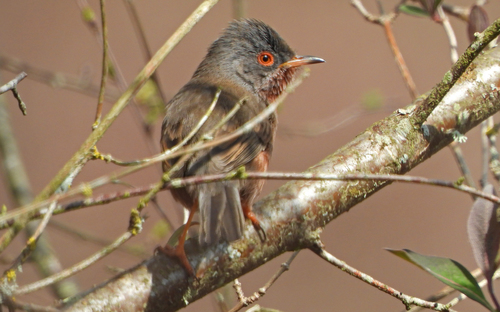
© Paul Lewis · CC BY · iNaturalist 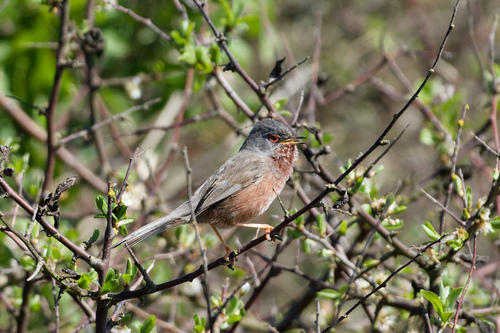
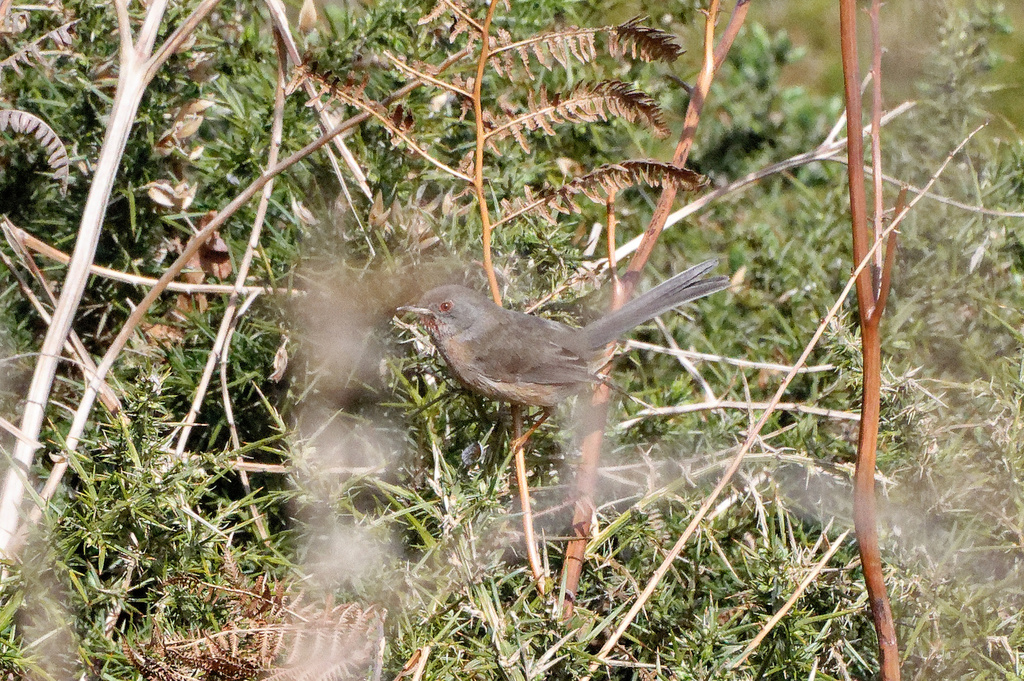
© Donald Davesne · CC BY · iNaturalist 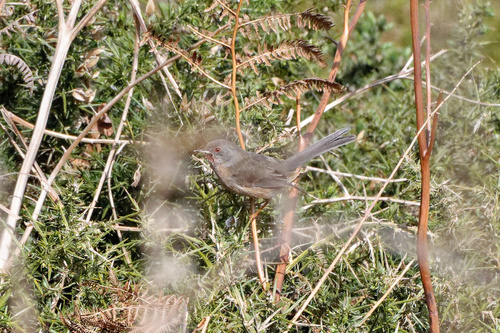
© Donald Davesne · CC BY · iNaturalist 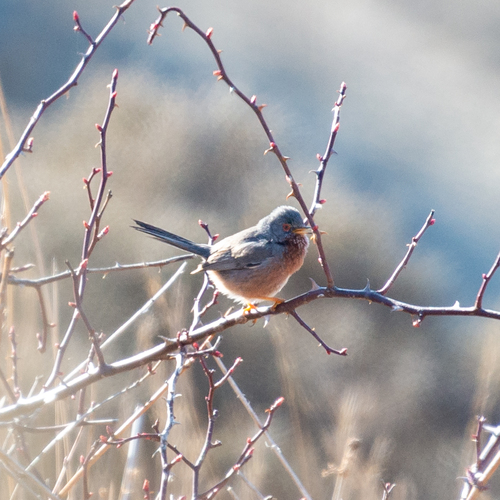
© euqirneto · CC BY · iNaturalist 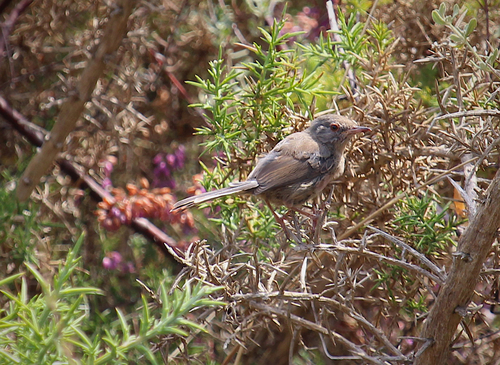
© Diego Cidrás · CC BY · iNaturalist 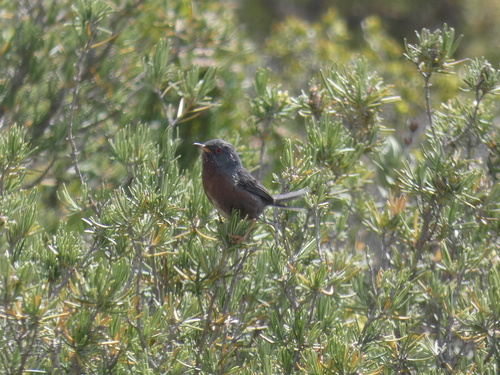
© Aurélien Coste · CC BY · iNaturalist 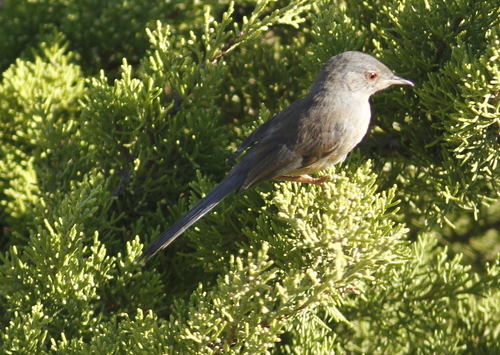
© Julien Renoult · CC BY · iNaturalist 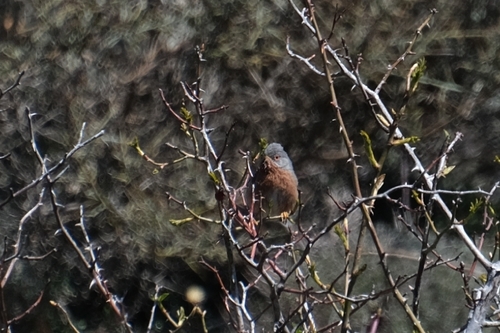
© Thomas Barrès · CC BY · iNaturalist 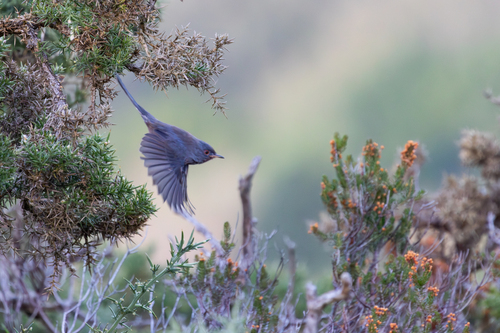
© Diego González Dopico · CC BY · iNaturalist
Especies relacionadasRelated species
Otras aves de la familia Sylviidae y de órdenes cercanos.Other birds from the Sylviidae family and nearby orders.
- Poco comúnUncommon
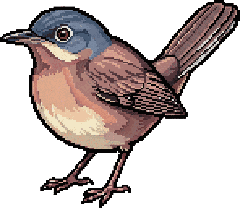 Curruca tomilleraSpectacled WarblerCurruca conspicillata
- ComúnCommon
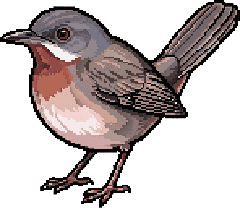 Curruca carrasqueña occidentalWestern Subalpine WarblerCurruca iberiae
- ComúnCommon
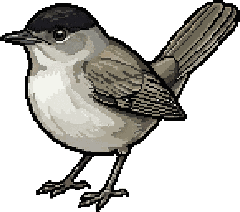 Curruca capirotadaEurasian BlackcapSylvia atricapilla
- Poco comúnUncommon
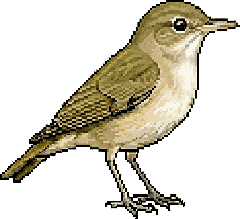 Curruca mosquiteraGarden WarblerSylvia borin
- LegendarioLegendary
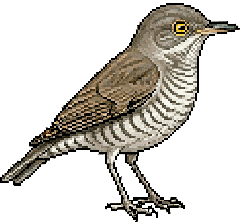 Curruca gavilanaBarred WarblerCurruca nisoria
- ÉpicoEpic
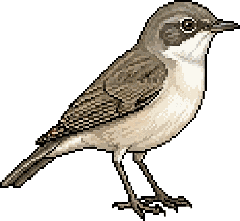 Curruca zarcerillaLesser WhitethroatCurruca curruca
- Poco comúnUncommon
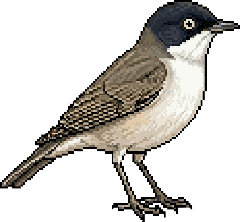 Curruca mirlona occidentalWestern Orphean WarblerCurruca hortensis
- LegendarioLegendary
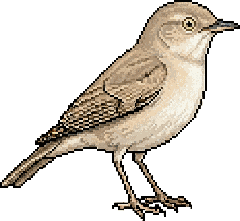 Curruca saharianaAfrican Desert WarblerCurruca deserti
 Gratis, sin anuncios ni comprasFree, no ads, no purchases