 BirdPedy
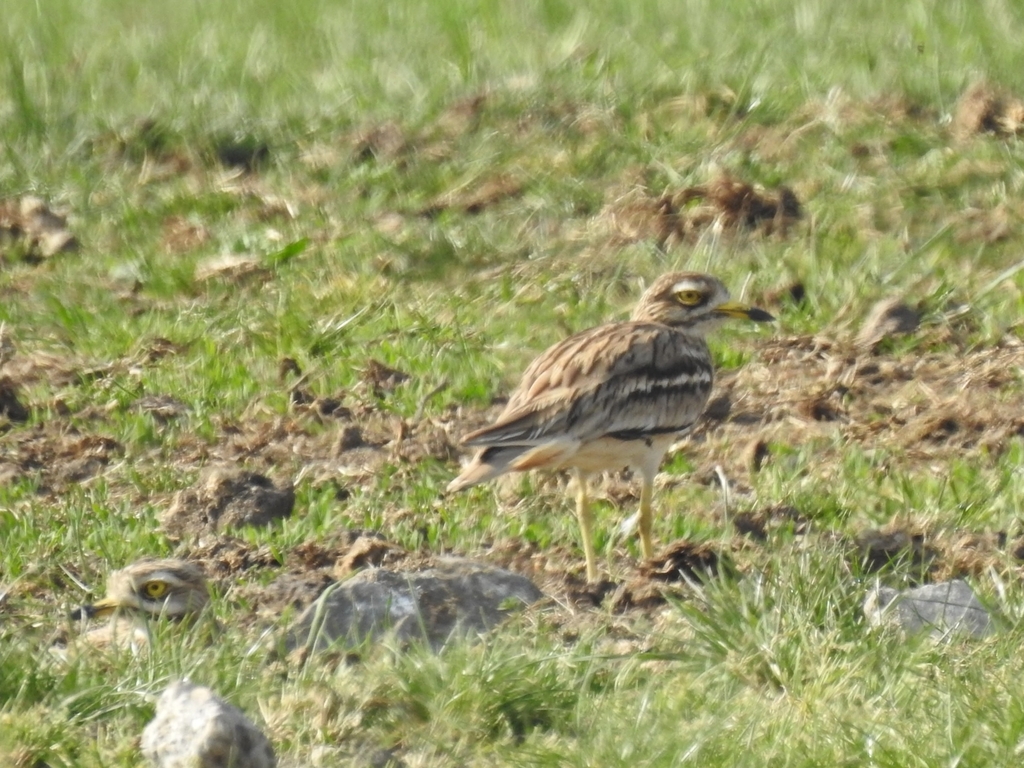
Alcaraván comúnStone-curlew
En 49 provincias en abril y en 39 en octubreIn 49 provinces in April and 39 in October
Reporte de rarezaRarity report
Por qué es poco comúnWhy it is uncommonEspecie esteparia de hábitos crepusculares. Se distribuye bien por zonas áridas, pseudoestepas cerealistas y eriales de la mitad sur y centro peninsular, aunque su mimetismo dificulta su frecuencia de observación.Steppic species of crepuscular habits. Distributed through arid zones and cereal pseudo-steppes, but camouflage makes observation difficult.
Cada carrizo es un mes: su altura, las provincias con registros de 2020 a 2024.Each reed is a month: its height, the provinces with records from 2020 to 2024.- Provincias con registrosProvinces with records
- 51 de 52of 52
- En la appIn the app
- Todo el añoAll year
- EnvergaduraWingspan
- 77-85 cm77-85 cm
- LongitudLength
- 40-44 cm40-44 cm
- Lista Roja de EspañaSpanish Red List
- NT Casi amenazadaNear Threatened

Información generalGeneral Information
Aunque emparentado con los limícolas, el alcaraván común es un ave esteparia bastante extendida en España, pero que no resulta fácil de observar debido a sus colores discretos y a sus hábitos esquivos y nocturnos. Sin embargo, durante la época de cría se detecta con menos dificultad por su característico e inconfundible reclamo, que emite en horas crepusculares. Ocupa una amplia variedad de hábitats abiertos en la España de clima más seco, ya sean eriales, estepas, arenales o tierras agrícolas.The Stone-curlew is a widespread steppe bird in Spain, though difficult to see due to its secretive habits and nocturnal nature. It occupies a wide variety of open, dry habitats, including fallow fields, stony steppes, and sandy ground. It is an emblematic species of the arid Iberian landscape.
IdentificaciónIdentification
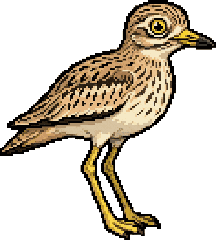
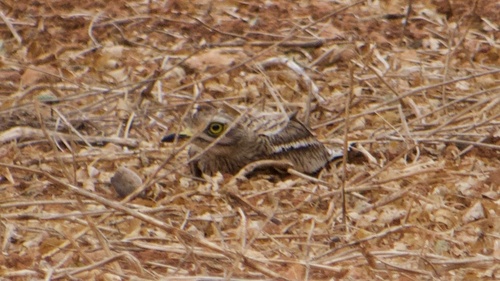
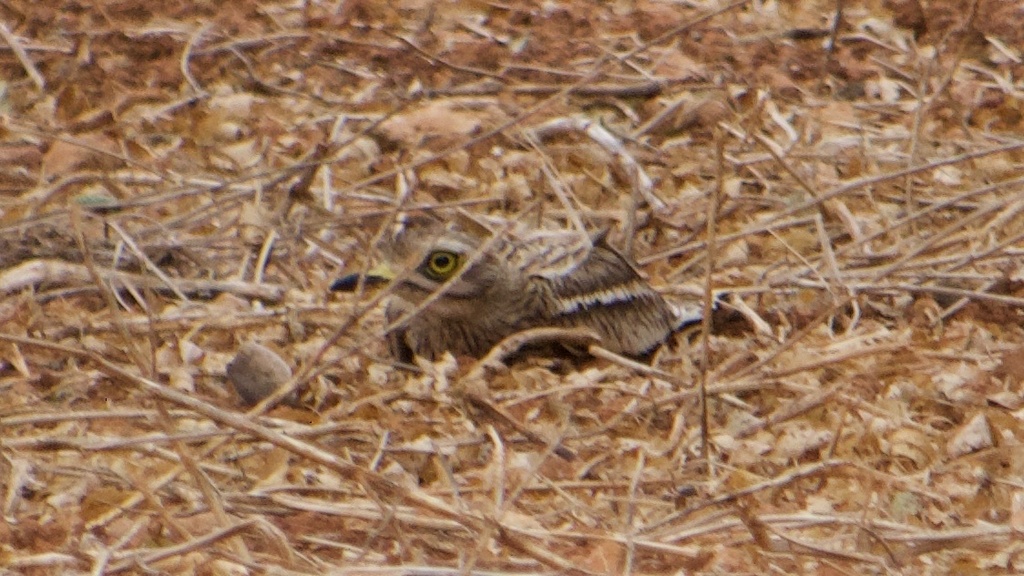
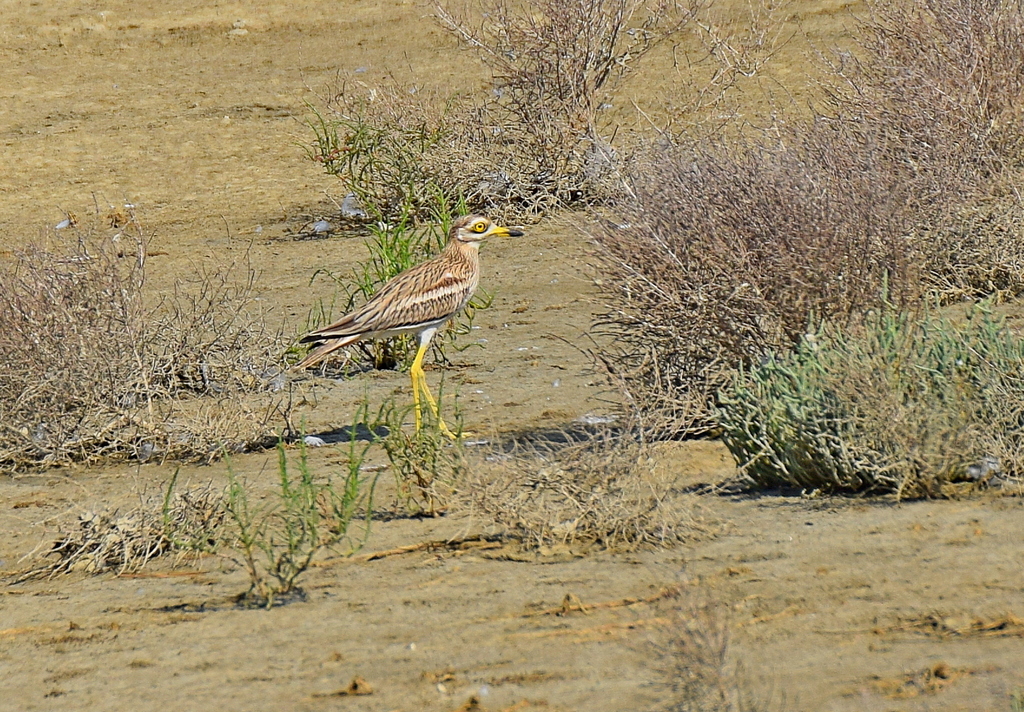
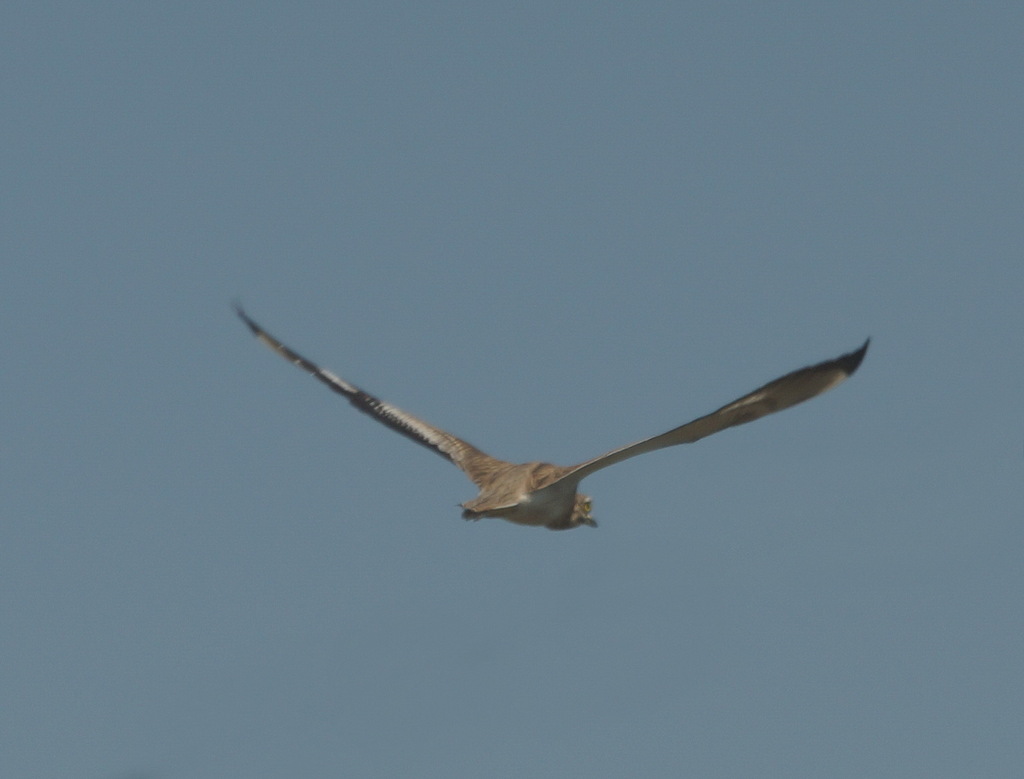
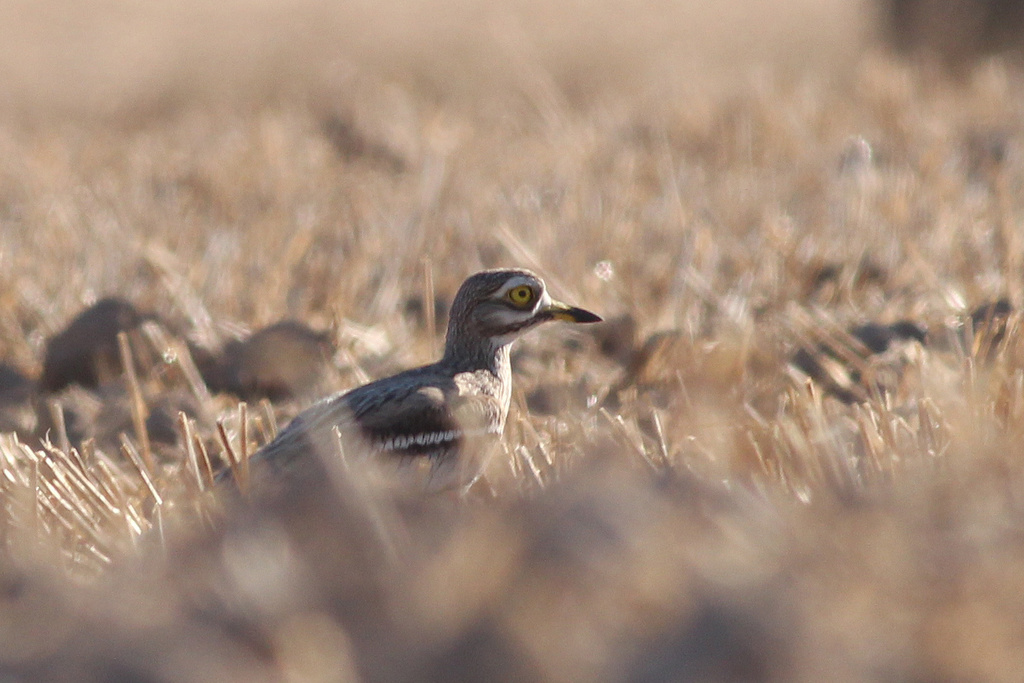
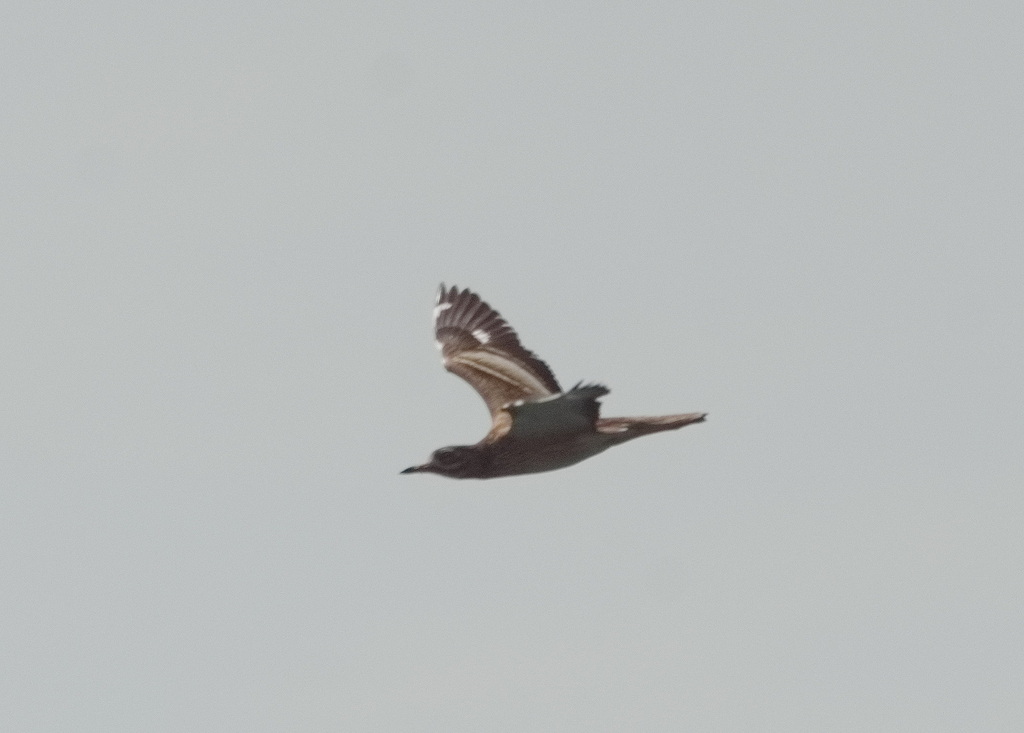
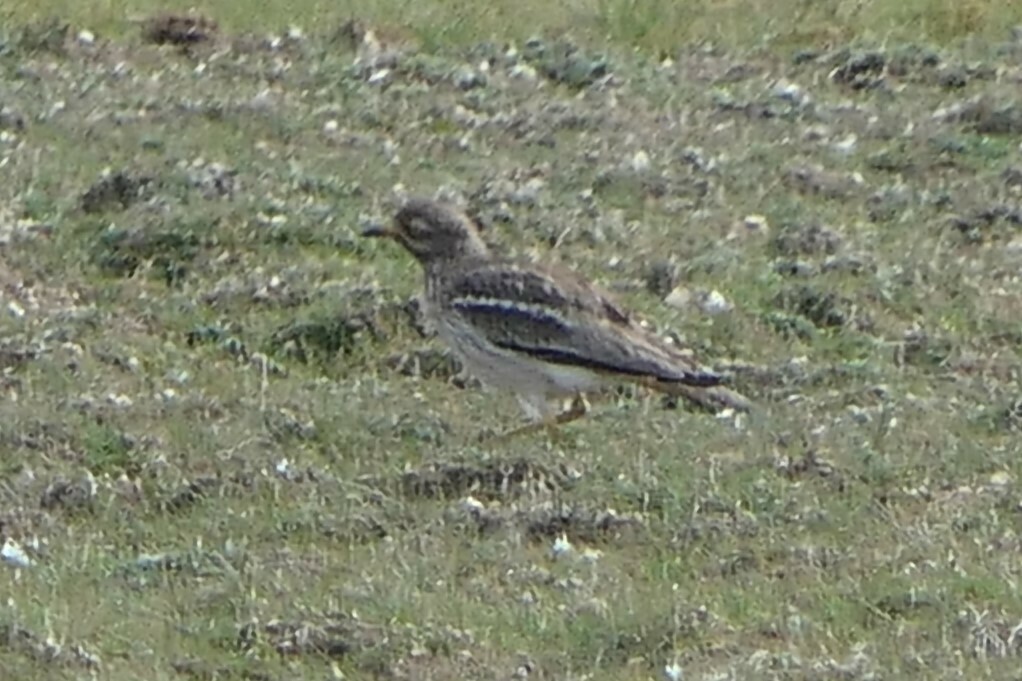
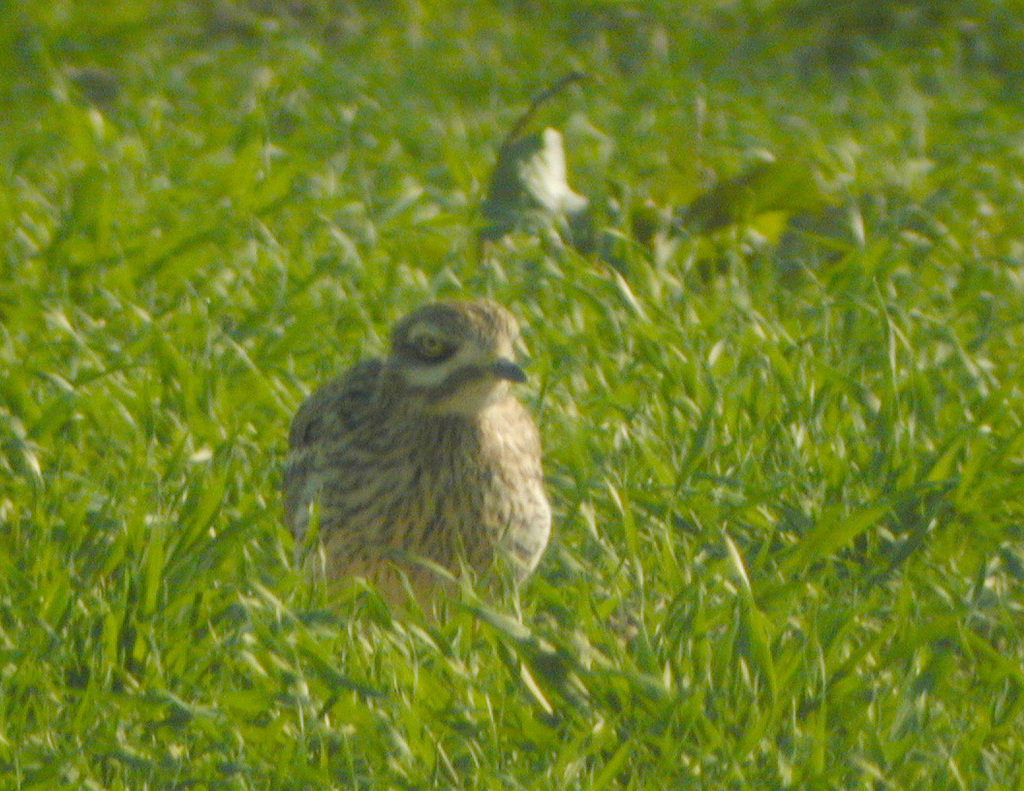
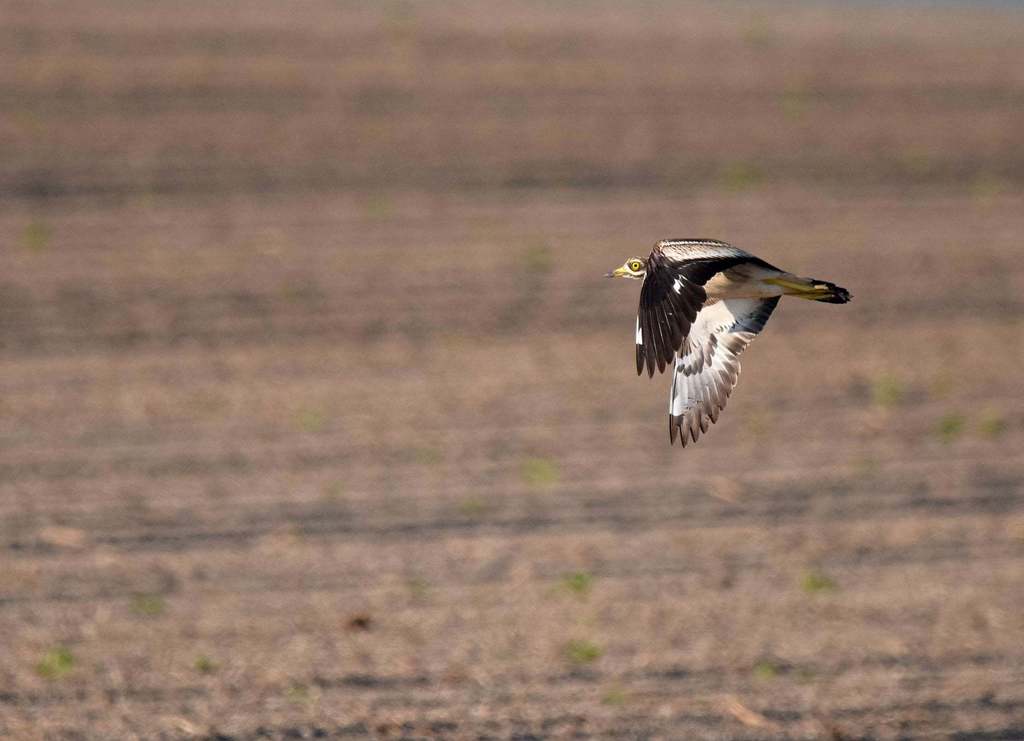
El alcaraván común es una pequeña zancuda de grandes ojos amarillos y coloración general pardo-terrosa. El adulto luce una banda blanca bordeada de negro en el ala, y dos franjas blancas por encima y debajo del ojo. Tiene el pico amarillo, con la punta negra. El joven es más discreto, con la banda alar y las franjas blancas de la cabeza más desvanecidas y menos marcadas. En vuelo, la parte inferior de las alas resulta muy pálida, mientras que la superior presenta dos franjas alares blanquecinas bordeadas de negro, con las puntas y la parte posterior de las alas negruzcas, aunque sobre este fondo oscuro también se aprecian algunas manchas blancas.A ground-dwelling bird with massive yellow eyes and cryptic sandy-brown plumage, more related to bustards than typical waders. It features a white wing bar bordered by black and two white stripes on the head. The bill is yellow with a black tip. It is largely nocturnal and very shy, often remaining motionless and relying on its camouflage during the day. Its loud, eerie, whistling calls are most heard at dawn and dusk.
DistribuciónDistribution
En la Península ocupa ampliamente las zonas de influencia mediterránea, evitando regiones montañosas y forestales, y se encuentra ausente de la franja norteña húmeda, así como de gran parte de Cataluña y la Comunidad Valenciana. En Baleares se localiza en Mallorca, Menorca, Cabrera, Ibiza y Formentera. También está presente en Canarias. En la Península aparece la subespecie oedicnemus; en Baleares se encuentra la subespecie saharae; y en Canarias hay dos subespecies propias de las islas: insularum (Fuerteventura, Lanzarote e islotes de La Graciosa y Alegranza) y distinctus (resto del archipiélago).On the Peninsula it widely occupies areas of Mediterranean influence, avoiding mountainous and forested regions, and it is absent from the humid northern strip and from much of Catalonia and the Valencian Community. In the Balearic Islands it is found on Mallorca, Menorca, Cabrera, Ibiza and Formentera. It is also present in the Canary Islands. The subspecies oedicnemus occurs on the Peninsula and saharae in the Balearics, and the Canaries have two subspecies of their own: insularum (Fuerteventura, Lanzarote and the islets of La Graciosa and Alegranza) and distinctus (the rest of the archipelago).
Textos reproducidos con permiso de laTexts translated and reproduced with permission from the Guía de Aves de España © SEO/BirdLife
Estado de conservaciónConservation Status
- EX
- RE
- CR
- EN
- VU
- NT
- LC
Casi amenazadaNear Threatened
Qué significa cada categoríaWhat each category means
- LC
- Preocupación menor: Taxón evaluado que no califica para categorías amenazadas. Especies abundantes y ampliamente distribuidasLeast Concern - Evaluated taxon that does not qualify for threatened categories. Widespread and abundant taxa
- NT
- Casi amenazada: No califica actualmente como amenazada, pero está cerca de calificar o es probable que califique en el futuro cercanoNear Threatened - Does not currently qualify as threatened, but is close to qualifying or likely to qualify in the near future
- VU
- Vulnerable: Enfrenta un alto riesgo de extinción en estado silvestre según los criterios A a E de IUCNVulnerable - Facing a high risk of extinction in the wild based on IUCN criteria A to E
- EN
- En peligro: Enfrenta un riesgo muy alto de extinción en estado silvestre según los criterios A a E de IUCNEndangered - Facing a very high risk of extinction in the wild based on IUCN criteria A to E
- CR
- En peligro crítico: Enfrenta un riesgo extremadamente alto de extinción en estado silvestre según los criterios A a E de IUCNCritically Endangered - Facing an extremely high risk of extinction in the wild based on IUCN criteria A to E
- DD
- Datos insuficientes: Información inadecuada para evaluar el riesgo de extinción basándose en distribución o estado poblacionalData Deficient - Inadequate information to assess extinction risk based on distribution and/or population status
- NE
- No evaluada: No ha sido evaluada aún contra los criterios de la Lista Roja de IUCNNot Evaluated - Has not yet been assessed against the IUCN Red List criteria
- RE
- Extinta regionalmente: El taxón ya no existe en la región específica, aunque puede sobrevivir en otros lugaresRegionally Extinct - Taxon no longer exists in the specific region, though it may survive elsewhere
- EX
- Extinta - No existe duda razonable de que ha muerto el último individuo del taxónExtinct - No reasonable doubt that the last individual of the taxon has died
TaxonomíaTaxonomy
- OrdenOrder
- Charadriiformes
- FamiliaFamily
- Burhinidae
Presencia en EspañaPresence in Spain
- HabitualRegular
- ResidenteResident
En la app: todo el año.In the app: all year.
Dónde verlaWhere to see it
1.848 cuadrículas de 10 km con registros de 2020 a 2024. Toca un mes para ver dónde se ha visto.1,848 10 km squares with records from 2020 to 2024. Pick a month to see where it has been seen.
Cargando el mapa…Loading the map…
Dónde es regularWhere it is regular
Provincias con registros en al menos 3 de los 5 años algún mes, de más a menos frecuente, y sus mejores meses.Provinces with records in at least 3 of the 5 years in some month, from most to least frequent, and their best months.
- MurciaMurciajunio, mayo, julioJune, May, July
- BalearesBalearic Islandsjulio, abril, mayoJuly, April, May
- MelillaMelillaabrilApril
- AlmeríaAlmeríajulio, marzo, junioJuly, March, June
- ToledoToledojulio, junio, abrilJuly, June, April
- Las PalmasLas Palmasjunio, mayo, julioJune, May, July
- LleidaLleidamayo, julio, junioMay, July, June
- AlicanteAlicantejulio, agosto, mayoJuly, August, May
- Ciudad RealCiudad Realjulio, junio, abrilJuly, June, April
- SevillaSevillajulio, junio, agostoJuly, June, August
Ver las 48 provinciasSee all 48 provinces
- AlbaceteAlbacetemayo, agosto, julioMay, August, July
- JaénJaénjunio, julio, agostoJune, July, August
- ZaragozaZaragozajulio, junio, abrilJuly, June, April
- BadajozBadajozabril, julio, junioApril, July, June
- HuescaHuescamayo, marzo, junioMay, March, June
- GranadaGranadamarzo, mayo, abrilMarch, May, April
- CádizCádizabril, julio, marzoApril, July, March
- GuipúzcoaGuipúzcoanoviembre, octubre, diciembreNovember, October, December
- CórdobaCórdobaabril, julio, junioApril, July, June
- TeruelTerueljulio, mayo, septiembreJuly, May, September
- CuencaCuencamayo, julio, abrilMay, July, April
- CastellónCastellónjunio, abril, julioJune, April, July
- MálagaMálagadiciembre, enero, julioDecember, January, July
- Santa Cruz de TenerifeSanta Cruz de Tenerifejulio, marzo, febreroJuly, March, February
- NavarraNavarramarzo, julio, mayoMarch, July, May
- HuelvaHuelvajulio, noviembre, marzoJuly, November, March
- La RiojaLa Riojamayo, abril, junioMay, April, June
- ÁlavaÁlavamarzo, abrilMarch, April
- CáceresCáceresjunio, abril, mayoJune, April, May
- GironaGironamayo, octubre, abrilMay, October, April
- ÁvilaÁvilaabril, septiembre, octubreApril, September, October
- ValladolidValladolidabril, junio, julioApril, June, July
- SalamancaSalamancajunio, agosto, mayoJune, August, May
- SegoviaSegoviajunio, mayo, julioJune, May, July
- ValenciaValenciajulio, noviembre, septiembreJuly, November, September
- MadridMadridmarzo, mayo, julioMarch, May, July
- AsturiasAsturiasdiciembre, enero, febreroDecember, January, February
- BarcelonaBarcelonaenero, diciembre, noviembreJanuary, December, November
- GuadalajaraGuadalajarajulio, junio, mayoJuly, June, May
- LugoLugoeneroJanuary
- ZamoraZamoramayo, julio, junioMay, July, June
- LeónLeónabril, mayo, marzoApril, May, March
- TarragonaTarragonamarzo, agosto, junioMarch, August, June
- PalenciaPalenciaabril, mayo, agostoApril, May, August
- BurgosBurgosabril, mayo, junioApril, May, June
- SoriaSoriajunio, agosto, julioJune, August, July
- VizcayaVizcayanoviembre, marzo, octubreNovember, March, October
- CantabriaCantabriafebrero, diciembre, eneroFebruary, December, January
Datos: registros en GBIF de 2020 a 2024 de Observation.org, eBird, iNaturalist y el ICO, descargados el 23/10/2026.Data: GBIF records from 2020 to 2024 from Observation.org, eBird, iNaturalist and the ICO, downloaded on 23/10/2026. GBIF.org (23 October 2026) GBIF Occurrence Download · doi:10.15468/dl.r5sf2a · CC BY-NC 4.0
GaleríaGallery
© Martin Scheidleder · CC BY · iNaturalist 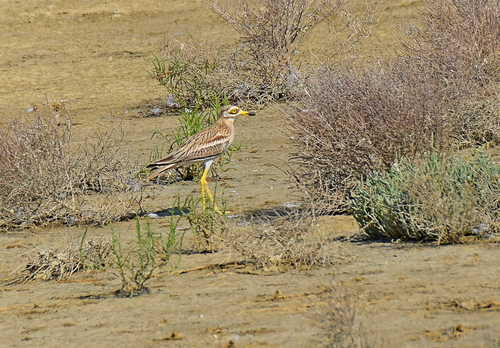
© Kostas Zontanos · CC BY · iNaturalist 
© Eamon Corbett · CC BY · iNaturalist 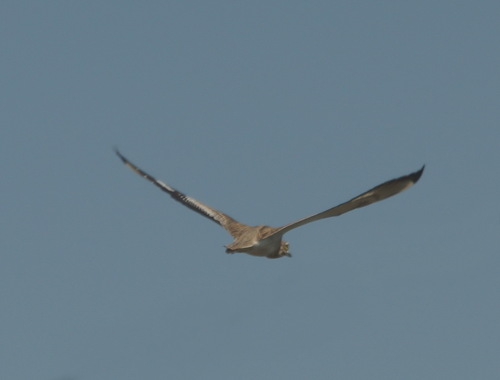
© SIA · CC BY · iNaturalist 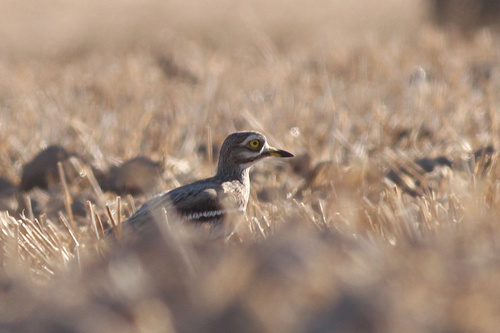
© Jan Ebr & Ivana Ebrová · CC BY · iNaturalist 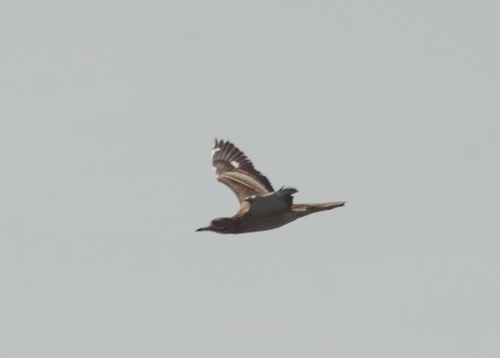
© SIA · CC BY · iNaturalist 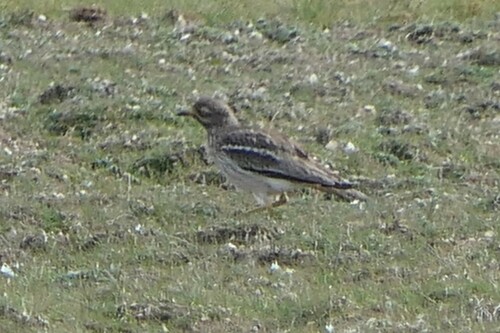
© Pete Bradshaw · CC BY · iNaturalist 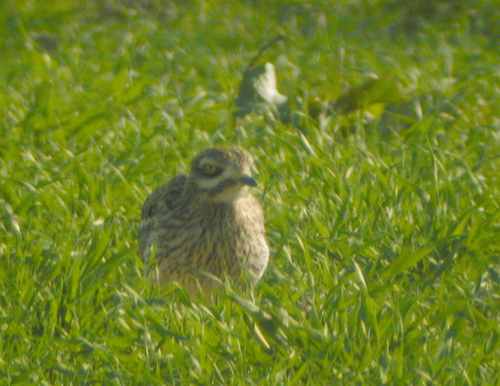
© Yves Bas · CC BY · iNaturalist 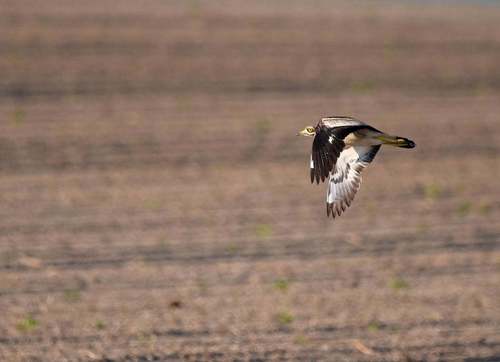
© bigayon · CC BY · iNaturalist 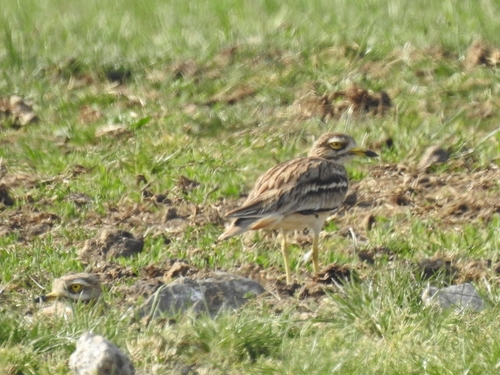
© Olivier Morel · CC BY · iNaturalist
Especies relacionadasRelated species
Aves cercanas en la clasificación taxonómica.Birds that sit close by in the taxonomic order.
- RaroRare
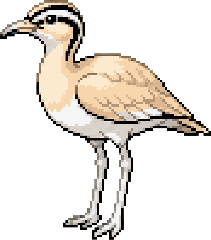 Corredor saharianoCream-colored CourserCursorius cursor
- Poco comúnUncommon
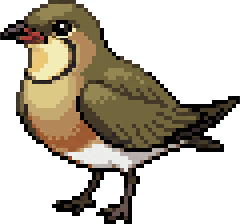 Canastera comúnCollared PratincoleGlareola pratincola
- ComúnCommon
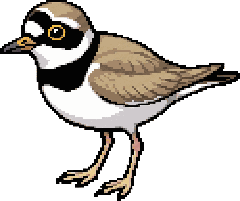 Chorlitejo chicoLittle Ringed PloverCharadrius dubius
- ComúnCommon
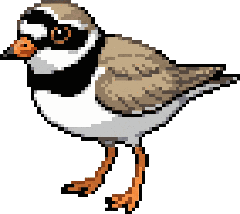 Chorlitejo grandeCommon Ringed PloverCharadrius hiaticula
- Poco comúnUncommon
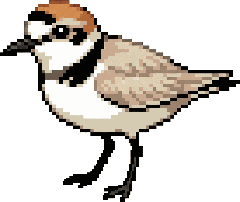 Chorlitejo patinegroKentish PloverCharadrius alexandrinus
- RaroRare
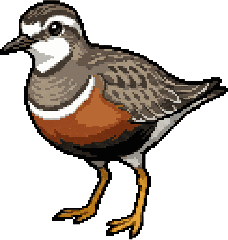 Chorlito caramboloEurasian DotterelCharadrius morinellus
- ComúnCommon
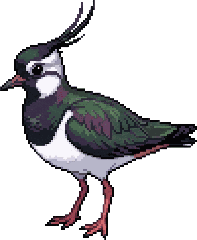 Avefría europeaNorthern LapwingVanellus vanellus
- ComúnCommon
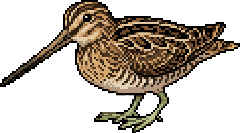 Agachadiza comúnCommon SnipeGallinago gallinago
 Gratis, sin anuncios ni comprasFree, no ads, no purchases