 BirdPedy
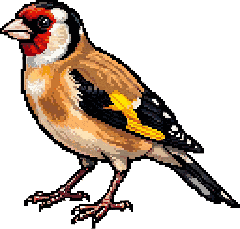
Jilguero europeoEuropean Goldfinch
En 52 provincias en enero y en 51 en febreroIn 52 provinces in January and 51 in February
Reporte de rarezaRarity report
Por qué es comúnWhy it is commonUna de las aves más emblemáticas y queridas de la fauna ibérica. Extremadamente frecuente en campos abiertos, parajes degradados con cardos y jardines de todo el territorio.One of the most emblematic birds of Iberian fauna. Extremely frequent in open fields and gardens.
Cada carrizo es un mes: su altura, las provincias con registros de 2020 a 2024.Each reed is a month: its height, the provinces with records from 2020 to 2024.- Provincias con registrosProvinces with records
- 52 de 52of 52
- En la appIn the app
- Todo el añoAll year
- EnvergaduraWingspan
- 21-25,5 cm21-25.5 cm
- LongitudLength
- 12 cm12 cm
- Lista Roja de EspañaSpanish Red List
- LC Preocupación menorLeast Concern

Información generalGeneral Information
El inconfundible y popular jilguero es una de las especies más comunes y extendidas en nuestro territorio, especialmente en el sur y algunos puntos del este peninsular. Ave muy gregaria, sobre todo en invierno, el jilguero suele agruparse en bandos mixtos con otros fringílidos que nomadean en busca de alimento. En invierno recibimos abundantes ejemplares procedentes de otras latitudes europeas, que se unen a la fracción sedentaria de la población. Debido a su aspecto y vistoso canto es frecuentemente capturado como ave de jaula.The European Goldfinch is an icon of Spanish culture and birdlife. It is traditionally prized for its beautiful song and vibrant colors, though capture of wild specimens is now strictly regulated or prohibited. It is a highly social bird, forming massive 'charms' (flocks) in autumn and winter that roam across fallow fields and orchards. It is one of our most successful and beloved birds, found even in the heart of our largest cities.
IdentificaciónIdentification
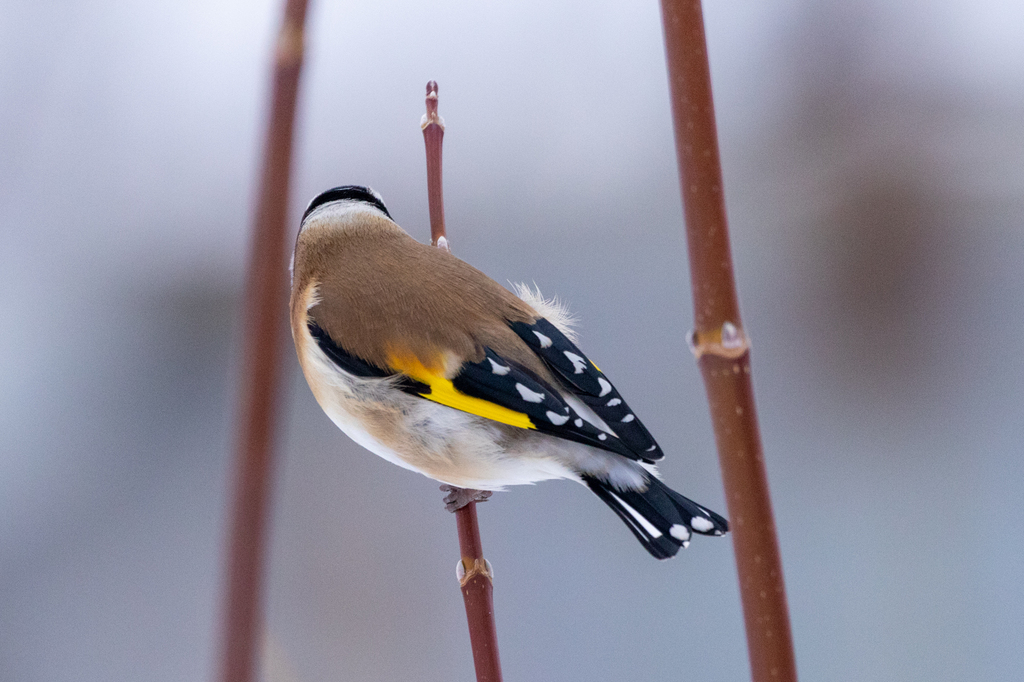
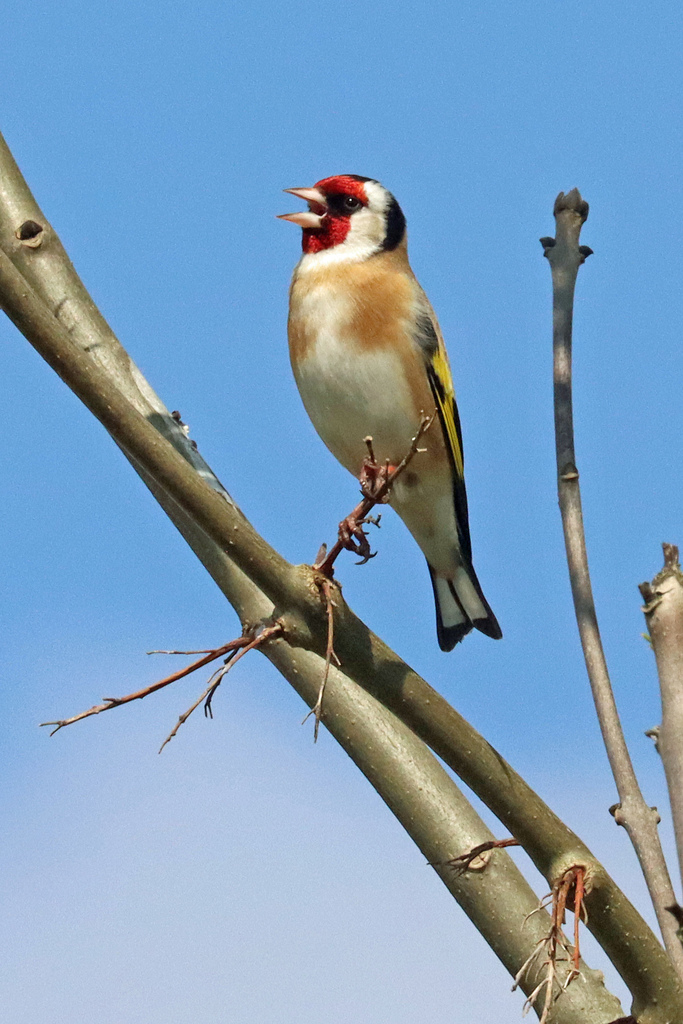
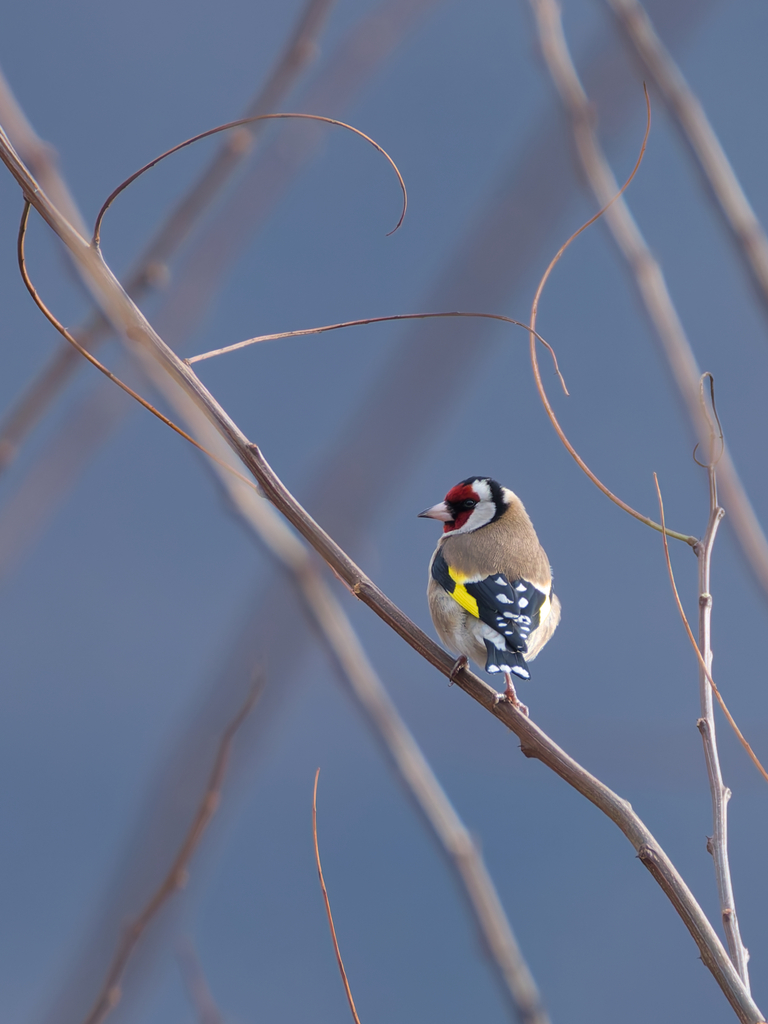
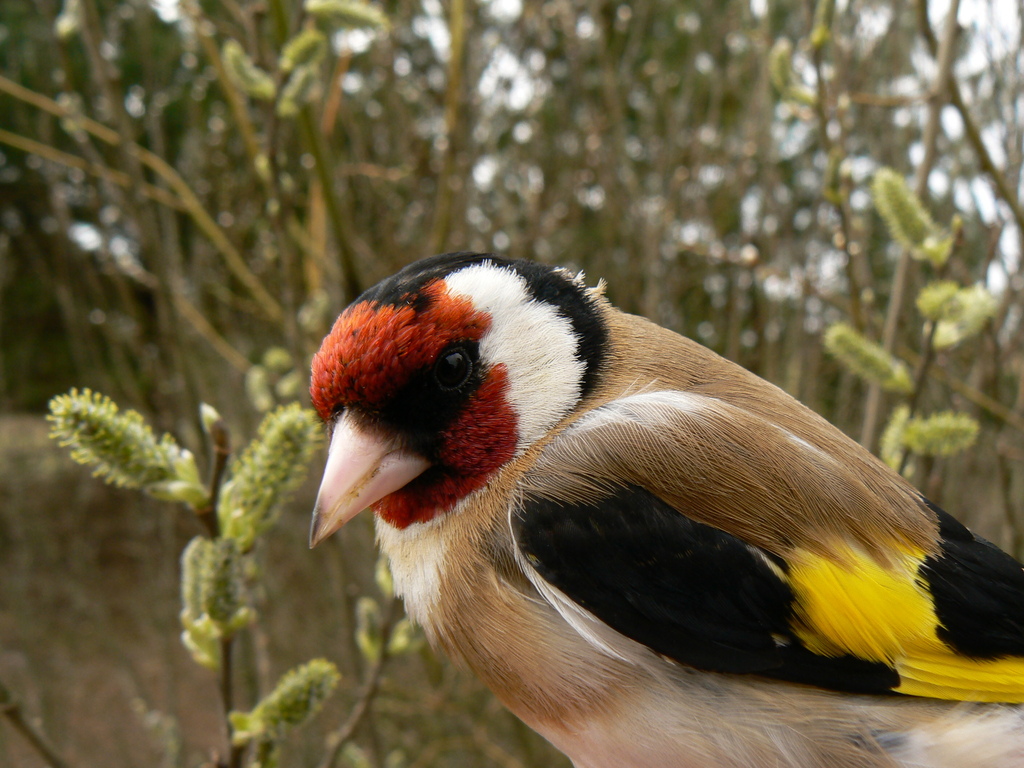
Los jilgueros se distinguen con facilidad por el juego de vistosos colores de su plumaje. En la cabeza muestran una característica careta roja, junto a sendas manchas blanca y negra. Poseen un pico de base ancha, largo y acabado en una fina punta. Su cola es negra, con el obispillo y el extremo distal blanco. Además, las plumas más externas de la cola pueden tener amplias manchas blancas. No hay dimorfismo sexual fácilmente perceptible, aunque los machos lucen hombros más negros y careta roja más amplia que las hembras. Por otra parte, el plumaje varía notablemente con la edad. Así, antes de mudarlo a finales de verano, los volantones carecen de la coloración descrita para la cabeza, pero mantienen las distintivas franjas alares amarillas. En vuelo se reconocen bien por la presencia de dos amplias bandas alares de color amarillo dorado.Perhaps the most popular and brightly colored finch in Spain. It is unmistakable due to its bold 'circus-like' appearance: a bright red face mask, white cheeks, and a black-and-white head. It has a warm brownish back and brilliant golden-yellow wing bars that are the highlight of its flight. It is highly gregarious and energetic, always active and vocal with a liquid, tinkling song. Its thin, pointed bill is adapted for extracting seeds from thistles.
DistribuciónDistribution
Se halla presente en la práctica totalidad de nuestra geografía, incluyendo tanto las islas Canarias y las Baleares como Ceuta y Melilla. En España se reproduce la subespecie parva, residente. Además, el anillamiento científico ha revelado que a principios del otoño recibimos individuos de las subespecies carduelis y britannica, procedentes principalmente de Centroeuropa y Gran Bretaña, respectivamente.Widespread and abundant across the entire Peninsula and both archipelagos, as well as Ceuta and Melilla. Resident subspecies 'parva' is joined in winter by migrants from Central Europe ('carduelis') and Britain ('britannica').
Textos reproducidos con permiso de laTexts translated and reproduced with permission from the Guía de Aves de España © SEO/BirdLife
Estado de conservaciónConservation Status
- EX
- RE
- CR
- EN
- VU
- NT
- LC
Preocupación menorLeast Concern
Qué significa cada categoríaWhat each category means
- LC
- Preocupación menor: Taxón evaluado que no califica para categorías amenazadas. Especies abundantes y ampliamente distribuidasLeast Concern - Evaluated taxon that does not qualify for threatened categories. Widespread and abundant taxa
- NT
- Casi amenazada: No califica actualmente como amenazada, pero está cerca de calificar o es probable que califique en el futuro cercanoNear Threatened - Does not currently qualify as threatened, but is close to qualifying or likely to qualify in the near future
- VU
- Vulnerable: Enfrenta un alto riesgo de extinción en estado silvestre según los criterios A a E de IUCNVulnerable - Facing a high risk of extinction in the wild based on IUCN criteria A to E
- EN
- En peligro: Enfrenta un riesgo muy alto de extinción en estado silvestre según los criterios A a E de IUCNEndangered - Facing a very high risk of extinction in the wild based on IUCN criteria A to E
- CR
- En peligro crítico: Enfrenta un riesgo extremadamente alto de extinción en estado silvestre según los criterios A a E de IUCNCritically Endangered - Facing an extremely high risk of extinction in the wild based on IUCN criteria A to E
- DD
- Datos insuficientes: Información inadecuada para evaluar el riesgo de extinción basándose en distribución o estado poblacionalData Deficient - Inadequate information to assess extinction risk based on distribution and/or population status
- NE
- No evaluada: No ha sido evaluada aún contra los criterios de la Lista Roja de IUCNNot Evaluated - Has not yet been assessed against the IUCN Red List criteria
- RE
- Extinta regionalmente: El taxón ya no existe en la región específica, aunque puede sobrevivir en otros lugaresRegionally Extinct - Taxon no longer exists in the specific region, though it may survive elsewhere
- EX
- Extinta - No existe duda razonable de que ha muerto el último individuo del taxónExtinct - No reasonable doubt that the last individual of the taxon has died
TaxonomíaTaxonomy
- OrdenOrder
- Passeriformes
- FamiliaFamily
- Fringillidae
Presencia en EspañaPresence in Spain
- HabitualRegular
- ResidenteResident
En la app: todo el año.In the app: all year.
Revisión científica de BirdPedyBirdPedy scientific review
Revisada por BirdPedy el 28/10/2026 ·Reviewed by BirdPedy on 28 October 2026 · Cómo revisamosHow we review
HábitatsHabitats
BirdPedy usa 14 categorías de hábitat propias, con definiciones fijas, y apoya cada una en el texto de la ficha de seo.org [1] o, cuando no basta, en el III Atlas u otra fuente sobre España. En esta especie hay decisiones que se apartan de la ficha o que merecen explicación.
Añadimos “Urbano y rural”: la ficha no lo dice, pero el III Atlas lo cita en áreas urbanas y periurbanas [2].
BirdPedy uses 14 habitat categories of its own, with fixed definitions, and supports each one with the text of the seo.org account [1] or, when that is not enough, with the III Atlas or another source on Spain. For this species, some decisions depart from the account or deserve an explanation.
We add “Urban and rural”: the account does not say so, but the III Atlas reports it in urban and suburban areas [2].
ReferenciasReferences
- SEO/BirdLife. Guía de aves de seo.org, ficha: Jilguero europeo (consultada el 23/10/2026).SEO/BirdLife. Bird guide on seo.org, European Goldfinch account (accessed 23 October 2026). seo.org
- Molina, B. et al. (eds.) (2022). III Atlas de las aves en época de reproducción en España, ficha: Jilguero europeo. SEO/BirdLife. Madrid.Molina, B. et al. (eds.) (2022). III Atlas de las aves en época de reproducción en España (Atlas of breeding birds in Spain), European Goldfinch account. SEO/BirdLife. Madrid. atlasaves.seo.org
Dónde verlaWhere to see it
4.962 cuadrículas de 10 km con registros de 2020 a 2024. Toca un mes para ver dónde se ha visto.4,962 10 km squares with records from 2020 to 2024. Pick a month to see where it has been seen.
Cargando el mapa…Loading the map…
Dónde es regularWhere it is regular
Provincias con registros en al menos 3 de los 5 años algún mes, de más a menos frecuente, y sus mejores meses.Provinces with records in at least 3 of the 5 years in some month, from most to least frequent, and their best months.
- MálagaMálagajulio, junio, mayoJuly, June, May
- SoriaSoriadiciembre, noviembre, eneroDecember, November, January
- CádizCádizjunio, marzo, julioJune, March, July
- NavarraNavarrajulio, junio, mayoJuly, June, May
- ValladolidValladolidjulio, mayo, junioJuly, May, June
- GranadaGranadaabril, marzo, julioApril, March, July
- CórdobaCórdobajunio, julio, agostoJune, July, August
- GuadalajaraGuadalajaraenero, noviembre, julioJanuary, November, July
- AsturiasAsturiasabril, julio, junioApril, July, June
- La RiojaLa Riojaabril, junio, julioApril, June, July
Ver las 51 provinciasSee all 51 provinces
- JaénJaénagosto, julio, junioAugust, July, June
- CastellónCastellónjulio, febrero, eneroJuly, February, January
- BalearesBalearic Islandsjunio, abril, julioJune, April, July
- CuencaCuencanoviembre, julio, diciembreNovember, July, December
- GuipúzcoaGuipúzcoaabril, junio, mayoApril, June, May
- AlbaceteAlbacetejulio, noviembre, diciembreJuly, November, December
- TeruelTerueldiciembre, septiembre, eneroDecember, September, January
- BadajozBadajozjunio, marzo, mayoJune, March, May
- CantabriaCantabriaabril, marzo, mayoApril, March, May
- ToledoToledoabril, marzo, junioApril, March, June
- ÁvilaÁvilajulio, octubre, agostoJuly, October, August
- MurciaMurciajunio, mayo, marzoJune, May, March
- MadridMadridjulio, abril, junioJuly, April, June
- Ciudad RealCiudad Realjulio, noviembre, diciembreJuly, November, December
- ZaragozaZaragozajulio, diciembre, agostoJuly, December, August
- ÁlavaÁlavamayo, abril, julioMay, April, July
- GironaGironajulio, junio, abrilJuly, June, April
- VizcayaVizcayamayo, junio, abrilMay, June, April
- AlicanteAlicantejunio, mayo, julioJune, May, July
- TarragonaTarragonajunio, marzo, julioJune, March, July
- SevillaSevillajulio, junio, mayoJuly, June, May
- BarcelonaBarcelonamayo, julio, junioMay, July, June
- BurgosBurgosjulio, abril, junioJuly, April, June
- PalenciaPalenciajulio, abril, mayoJuly, April, May
- SegoviaSegoviajulio, diciembre, noviembreJuly, December, November
- ValenciaValenciamayo, junio, noviembreMay, June, November
- LugoLugoabril, octubre, julioApril, October, July
- HuelvaHuelvamarzo, junio, abrilMarch, June, April
- SalamancaSalamancajulio, abril, octubreJuly, April, October
- ZamoraZamorajulio, abril, junioJuly, April, June
- LeónLeónjulio, abril, agostoJuly, April, August
- LleidaLleidanoviembre, marzo, diciembreNovember, March, December
- CáceresCáceresmarzo, junio, abrilMarch, June, April
- HuescaHuescadiciembre, noviembre, abrilDecember, November, April
- AlmeríaAlmeríajunio, marzo, abrilJune, March, April
- OurenseOurensejulio, agosto, septiembreJuly, August, September
- A CoruñaA Coruñajulio, junio, mayoJuly, June, May
- Las PalmasLas Palmasjunio, julio, mayoJune, July, May
- CeutaCeutamarzo, abril, noviembreMarch, April, November
- PontevedraPontevedrajunio, julio, marzoJune, July, March
- Santa Cruz de TenerifeSanta Cruz de Tenerifeagosto, mayo, diciembreAugust, May, December
Datos: registros en GBIF de 2020 a 2024 de Observation.org, eBird, iNaturalist y el ICO, descargados el 23/10/2026.Data: GBIF records from 2020 to 2024 from Observation.org, eBird, iNaturalist and the ICO, downloaded on 23/10/2026. GBIF.org (23 October 2026) GBIF Occurrence Download · doi:10.15468/dl.r5sf2a · CC BY-NC 4.0
GaleríaGallery
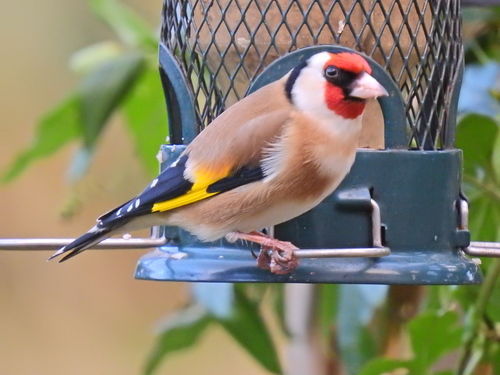
© Susan Marley · CC BY · iNaturalist 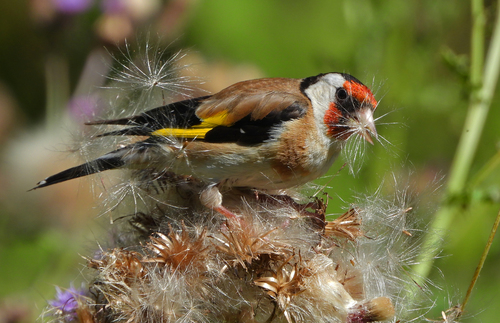
© Paul Lewis · CC BY · iNaturalist 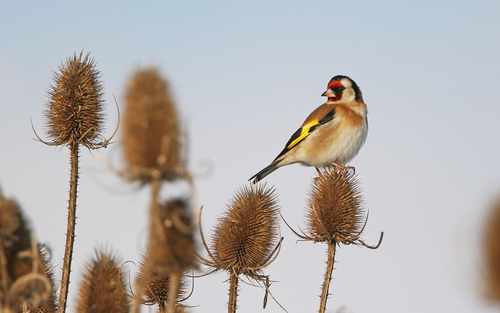
© Christoph Moning · CC BY · iNaturalist 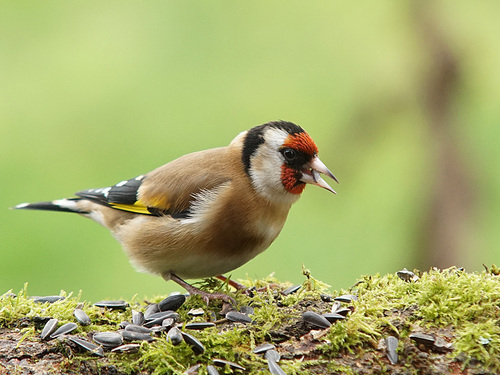
© Sylvain Montagner · CC BY · iNaturalist 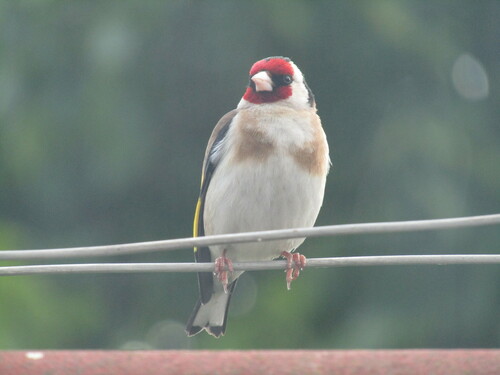
© SteveM4560 · CC BY · iNaturalist 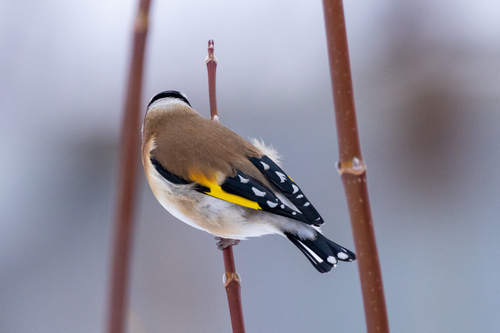
© Константин Шатилов · CC BY · iNaturalist 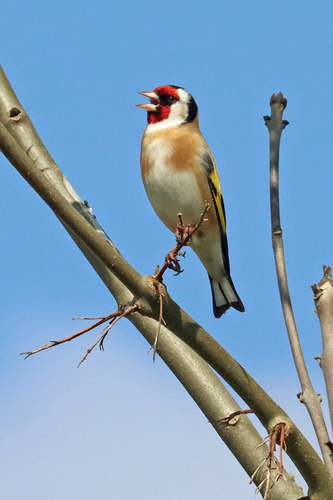
© Roy Lowry · CC BY · iNaturalist 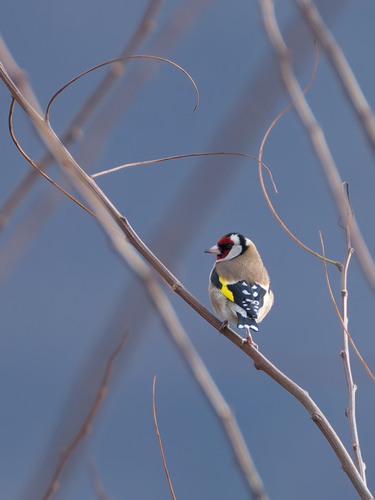
© Matteo Martini · CC BY · iNaturalist 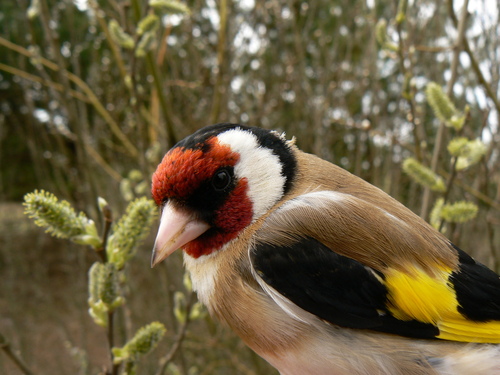
© K.P. · CC BY · iNaturalist

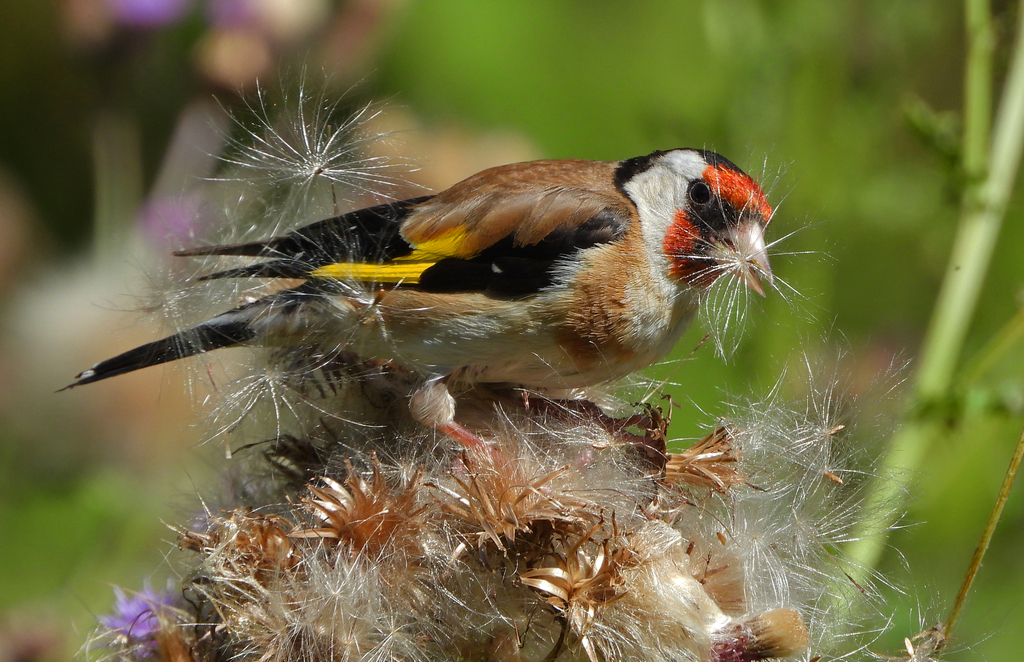


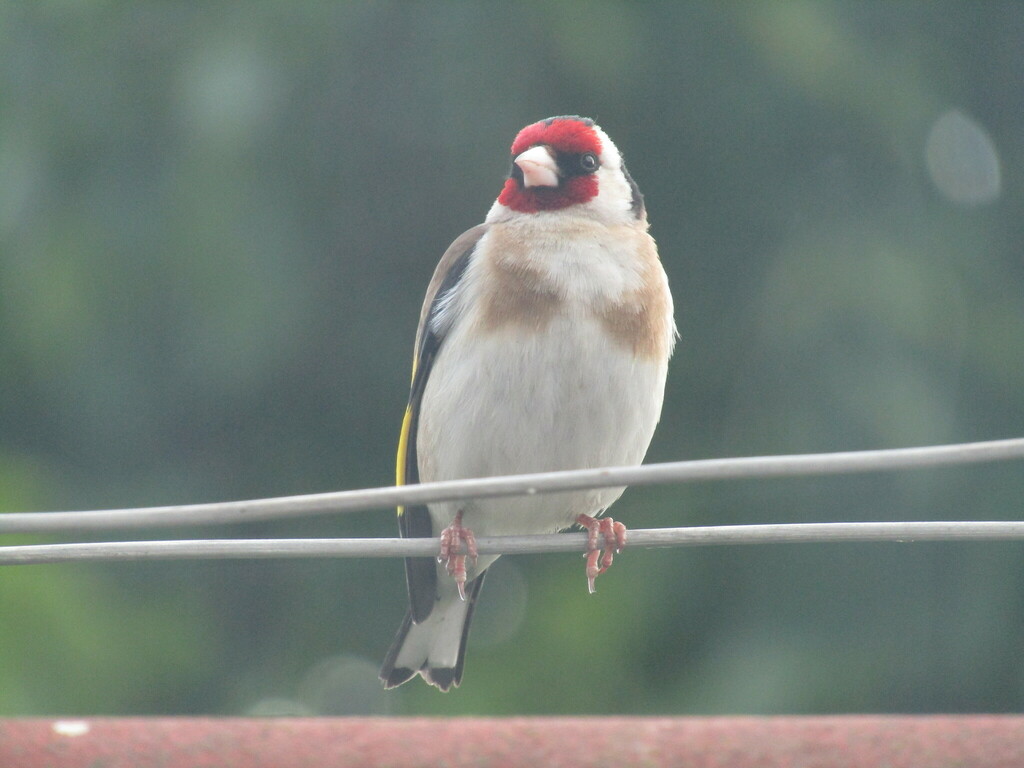
Especies relacionadasRelated species
Otras aves de la familia Fringillidae y de órdenes cercanos.Other birds from the Fringillidae family and nearby orders.
- ComúnCommon
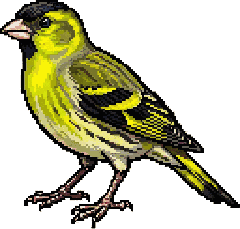 Jilguero lúganoEurasian SiskinSpinus spinus
- ComúnCommon
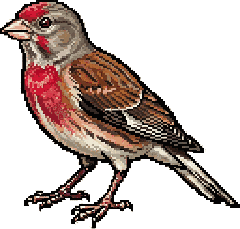 Pardillo comúnCommon LinnetLinaria cannabina
- Poco comúnUncommon
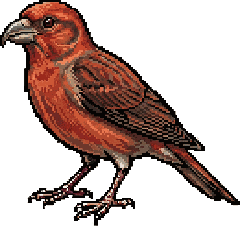 Piquituerto comúnCommon CrossbillLoxia curvirostra
- RaroRare
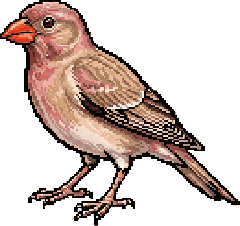 Camachuelo trompeteroTrumpeter FinchBucanetes githagineus
- Poco comúnUncommon
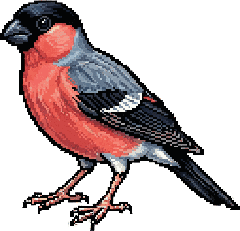 Camachuelo comúnEurasian BullfinchPyrrhula pyrrhula
- Poco comúnUncommon
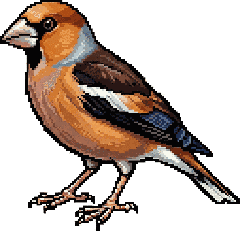 Picogordo comúnHawfinchCoccothraustes coccothraustes
- ÉpicoEpic
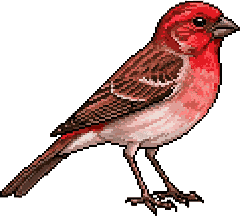 Camachuelo carminosoCommon RosefinchCarpodacus erythrinus
- LegendarioLegendary
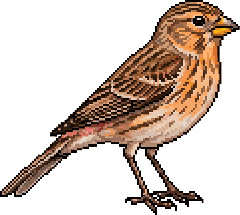 Pardillo piquigualdoTwiteLinaria flavirostris
 Gratis, sin anuncios ni comprasFree, no ads, no purchases