 BirdPedy
Tarabilla norteñaWhinchat
En 51 provincias en septiembre y en 3 en febreroIn 51 provinces in September and 3 in February
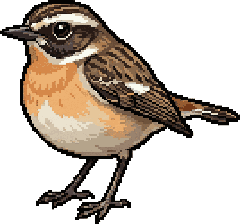
Reporte de rarezaRarity report
Por qué es poco comúnWhy it is uncommonEstival del tercio norte peninsular ligada a praderas húmedas y campiñas atlánticas. Durante los pasos migratorios es regular pero escasa en campo abierto comparativamente con la común.Summer of the northern third linked to wet meadows and Atlantic countryside. Regular but scarce in open field.
Cada carrizo es un mes: su altura, las provincias con registros de 2020 a 2024.Each reed is a month: its height, the provinces with records from 2020 to 2024.- Provincias con registrosProvinces with records
- 52 de 52of 52
- En la appIn the app
- Marzo a octubreMarch to October
- EnvergaduraWingspan
- 21-24 cm21-24 cm
- LongitudLength
- 13 cm13 cm
- Lista Roja de EspañaSpanish Red List
- DD Datos insuficientesData Deficient

Información generalGeneral Information
Una de las dos tarabillas presentes en la Península, pero con un área de distribución muy concentrada en el tercio norte peninsular, donde ocupa terrenos abiertos de pastizales y prados húmedos con setos intercalados, principalmente en áreas de media montaña.One of the two 'tarabillas' in Spain, but with a much more restricted range in the north. It is a bird of the high pastures and the northern 'campiña.' Unlike the resident Stonechat, the Whinchat is a long-distance migrant, arriving in spring from Africa. It is a classic inhabitant of the northern Spanish grasslands, but it is currently in decline due to changes in grazing and the intensive use of meadows.
IdentificaciónIdentification
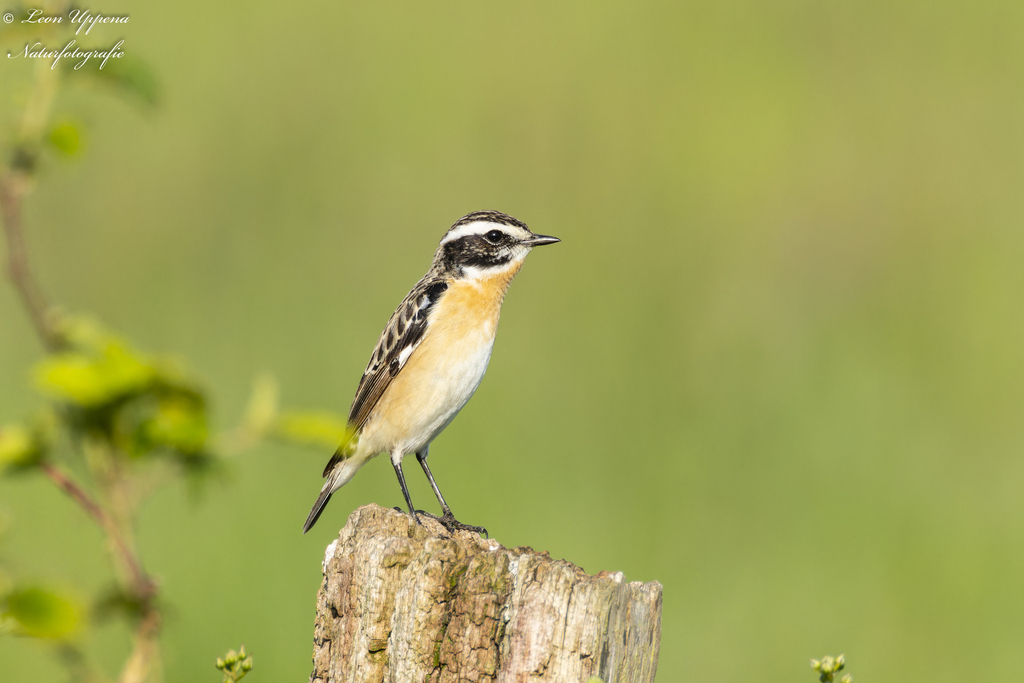
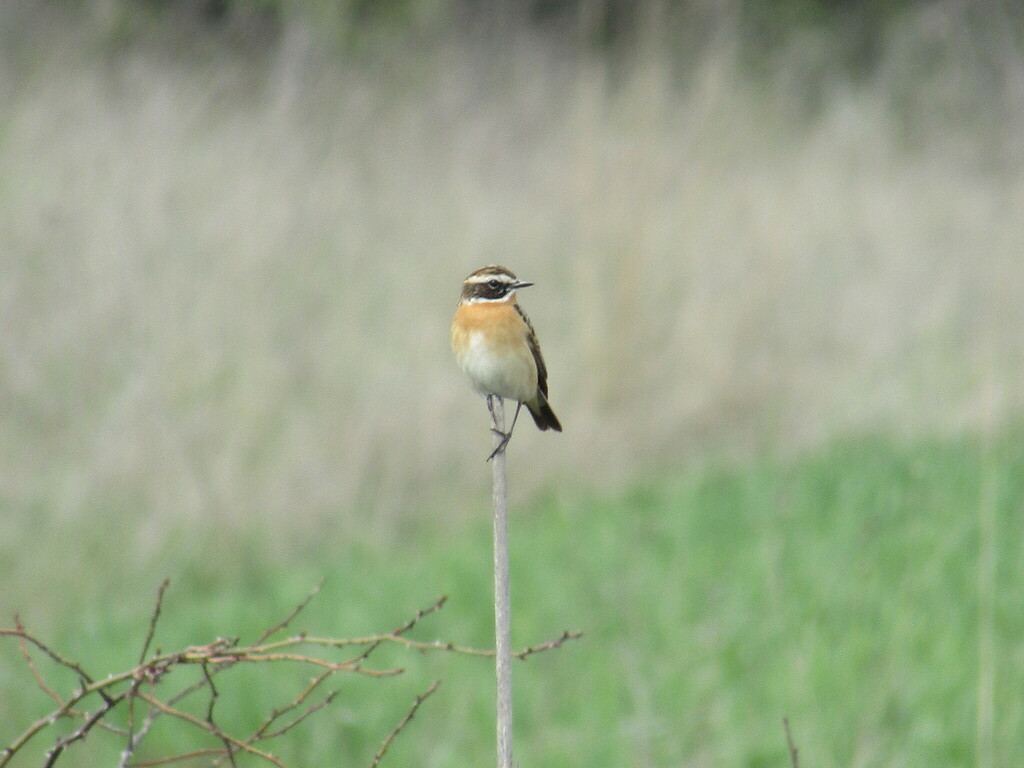
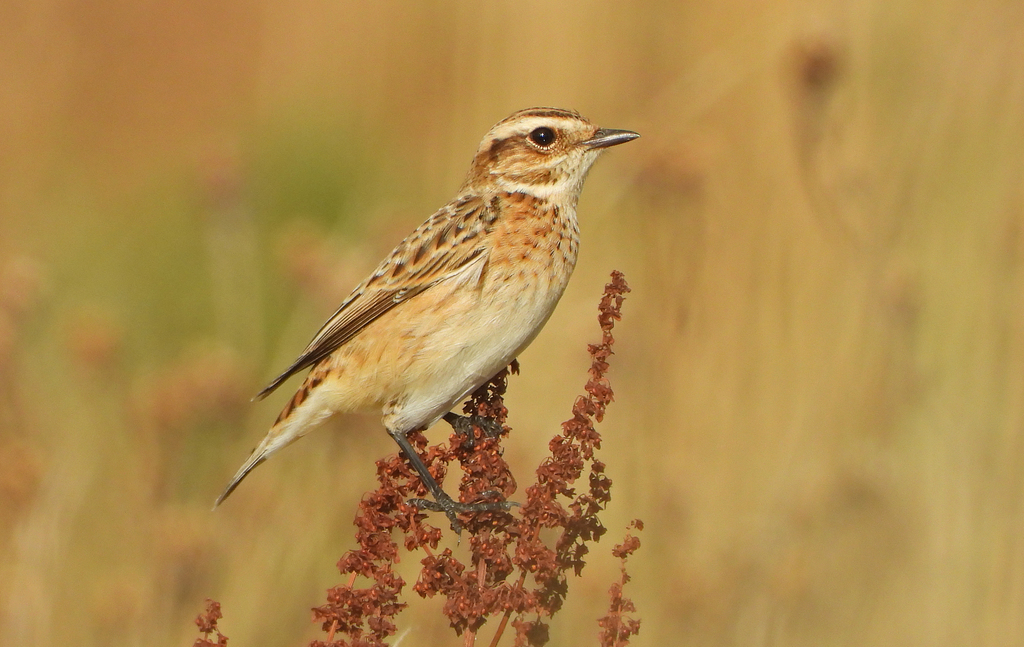
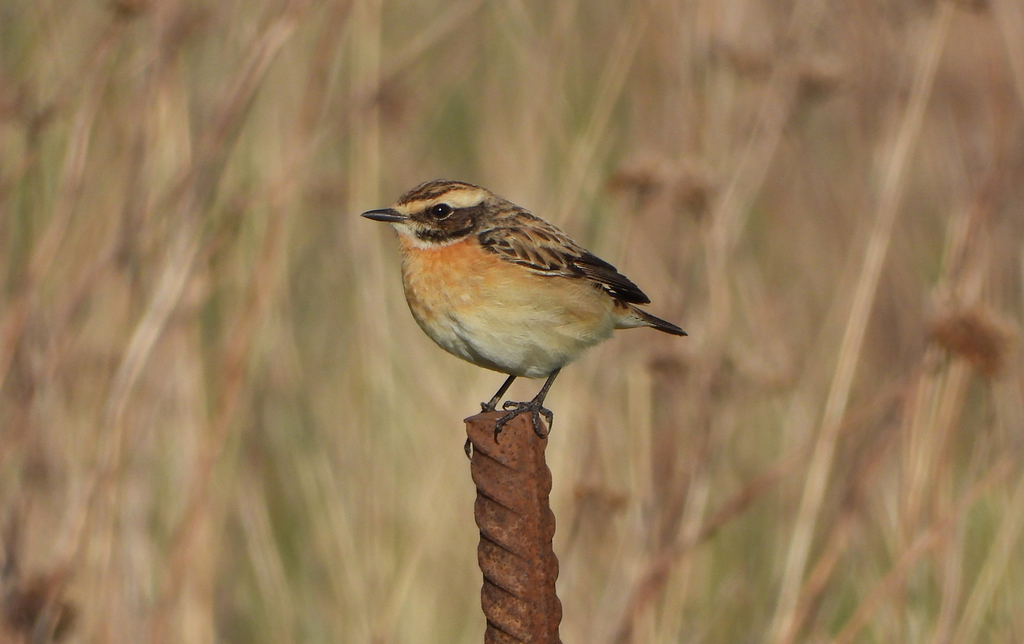
La tarabilla norteña es un pájaro pequeño, de aspecto compacto, similar a la tarabilla común, pero con garganta clara, ceja blanca, y cola blanca y con banda terminal ancha y negra. Los machos resultan más vistosos que las hembras, con garganta, pecho y flancos ventrales de color anaranjado-rojizo, y píleo y mejillas más oscuras. Las hembras presentan generalmente una coloración más pálida y menos intensa y contrastada. En vuelo, su silueta muestra cola corta y alas largas y anchas.A small, compact bird related to the stonechats but with a wider, more distinct set of markings. It features a bold white eyebrow (supercilium), a dark 'mask,' and a pale orange-buff breast. Its tail is white with a broad black terminal band. Males are more contrastingly colored than the more subtle females. It is a bird of open, often mountainous pastures and wet meadows, usually seen perched on tall weeds or fence posts.
DistribuciónDistribution
Como especie reproductora, su distribución se localiza en dos núcleos diferenciados. El primero se extiende desde Galicia hasta el País Vasco, siempre al margen de la zona costera y con límite de distribución meridional en la sierra de Guadarrama. El segundo se ubica en la región pirenaica que cabalga entre Huesca y Girona. Durante la migración puede localizarse por toda la Península y Baleares.Breeds in two main areas: from Galicia to the Basque Country (upland pastures) and the Pyrenees. Absent as a breeder from the south and archipelagos. Widespread on passage throughout the Peninsula and Balearics. Migratory.
Textos reproducidos con permiso de laTexts translated and reproduced with permission from the Guía de Aves de España © SEO/BirdLife
Estado de conservaciónConservation Status
- EX
- RE
- CR
- EN
- VU
- NT
- LC
DD
Datos insuficientesData Deficient
Qué significa cada categoríaWhat each category means
- LC
- Preocupación menor: Taxón evaluado que no califica para categorías amenazadas. Especies abundantes y ampliamente distribuidasLeast Concern - Evaluated taxon that does not qualify for threatened categories. Widespread and abundant taxa
- NT
- Casi amenazada: No califica actualmente como amenazada, pero está cerca de calificar o es probable que califique en el futuro cercanoNear Threatened - Does not currently qualify as threatened, but is close to qualifying or likely to qualify in the near future
- VU
- Vulnerable: Enfrenta un alto riesgo de extinción en estado silvestre según los criterios A a E de IUCNVulnerable - Facing a high risk of extinction in the wild based on IUCN criteria A to E
- EN
- En peligro: Enfrenta un riesgo muy alto de extinción en estado silvestre según los criterios A a E de IUCNEndangered - Facing a very high risk of extinction in the wild based on IUCN criteria A to E
- CR
- En peligro crítico: Enfrenta un riesgo extremadamente alto de extinción en estado silvestre según los criterios A a E de IUCNCritically Endangered - Facing an extremely high risk of extinction in the wild based on IUCN criteria A to E
- DD
- Datos insuficientes: Información inadecuada para evaluar el riesgo de extinción basándose en distribución o estado poblacionalData Deficient - Inadequate information to assess extinction risk based on distribution and/or population status
- NE
- No evaluada: No ha sido evaluada aún contra los criterios de la Lista Roja de IUCNNot Evaluated - Has not yet been assessed against the IUCN Red List criteria
- RE
- Extinta regionalmente: El taxón ya no existe en la región específica, aunque puede sobrevivir en otros lugaresRegionally Extinct - Taxon no longer exists in the specific region, though it may survive elsewhere
- EX
- Extinta - No existe duda razonable de que ha muerto el último individuo del taxónExtinct - No reasonable doubt that the last individual of the taxon has died
TaxonomíaTaxonomy
- OrdenOrder
- Passeriformes
- FamiliaFamily
- Muscicapidae
Presencia en EspañaPresence in Spain
- EstivalSummer visitor
- HabitualRegular
En la app: marzo a octubre.In the app: March to October.
Dónde verlaWhere to see it
2.305 cuadrículas de 10 km con registros de 2020 a 2024. Toca un mes para ver dónde se ha visto.2,305 10 km squares with records from 2020 to 2024. Pick a month to see where it has been seen.
Cargando el mapa…Loading the map…
Dónde es regularWhere it is regular
Provincias con registros en al menos 3 de los 5 años algún mes, de más a menos frecuente, y sus mejores meses.Provinces with records in at least 3 of the 5 years in some month, from most to least frequent, and their best months.
- LeónLeónseptiembre, agosto, mayoSeptember, August, May
- AsturiasAsturiasseptiembre, agosto, octubreSeptember, August, October
- ÁvilaÁvilaseptiembre, octubre, agostoSeptember, October, August
- LugoLugoseptiembre, octubre, agostoSeptember, October, August
- GuipúzcoaGuipúzcoaseptiembre, agosto, octubreSeptember, August, October
- NavarraNavarraseptiembre, agosto, abrilSeptember, August, April
- SegoviaSegoviaseptiembre, abril, agostoSeptember, April, August
- SalamancaSalamancaseptiembre, octubre, agostoSeptember, October, August
- BurgosBurgosseptiembre, agosto, mayoSeptember, August, May
- SoriaSoriaseptiembre, agosto, abrilSeptember, August, April
Ver las 50 provinciasSee all 50 provinces
- ZamoraZamoraseptiembre, octubre, agostoSeptember, October, August
- ValladolidValladolidseptiembre, agosto, octubreSeptember, August, October
- PalenciaPalenciaseptiembre, agosto, abrilSeptember, August, April
- CáceresCáceresseptiembre, octubre, abrilSeptember, October, April
- A CoruñaA Coruñaseptiembre, agosto, octubreSeptember, August, October
- ToledoToledoseptiembre, octubre, abrilSeptember, October, April
- ÁlavaÁlavaseptiembre, octubre, agostoSeptember, October, August
- VizcayaVizcayaseptiembre, agosto, abrilSeptember, August, April
- CantabriaCantabriaseptiembre, agosto, octubreSeptember, August, October
- LleidaLleidaseptiembre, abril, agostoSeptember, April, August
- GuadalajaraGuadalajaraseptiembre, abril, octubreSeptember, April, October
- OurenseOurenseseptiembre, octubreSeptember, October
- PontevedraPontevedraseptiembre, octubre, agostoSeptember, October, August
- BalearesBalearic Islandsseptiembre, abril, mayoSeptember, April, May
- MadridMadridseptiembre, octubre, abrilSeptember, October, April
- La RiojaLa Riojaseptiembre, octubre, abrilSeptember, October, April
- CastellónCastellónseptiembre, abril, mayoSeptember, April, May
- ZaragozaZaragozaseptiembre, abril, mayoSeptember, April, May
- Ciudad RealCiudad Realseptiembre, abril, octubreSeptember, April, October
- TeruelTeruelseptiembre, abril, mayoSeptember, April, May
- HuescaHuescaseptiembre, agosto, abrilSeptember, August, April
- AlbaceteAlbaceteseptiembre, octubre, abrilSeptember, October, April
- HuelvaHuelvaseptiembre, octubre, abrilSeptember, October, April
- GironaGironaabril, septiembre, mayoApril, September, May
- GranadaGranadaoctubre, septiembre, abrilOctober, September, April
- CuencaCuencaseptiembre, octubre, agostoSeptember, October, August
- CórdobaCórdobaseptiembre, octubre, abrilSeptember, October, April
- SevillaSevillaseptiembre, octubre, abrilSeptember, October, April
- BarcelonaBarcelonaseptiembre, abril, mayoSeptember, April, May
- BadajozBadajozseptiembre, octubre, abrilSeptember, October, April
- TarragonaTarragonaseptiembre, abril, mayoSeptember, April, May
- MálagaMálagaseptiembre, octubre, abrilSeptember, October, April
- JaénJaénseptiembre, abrilSeptember, April
- MurciaMurciaseptiembre, abril, mayoSeptember, April, May
- ValenciaValenciaseptiembre, abril, octubreSeptember, April, October
- AlmeríaAlmeríaseptiembre, abril, octubreSeptember, April, October
- AlicanteAlicanteseptiembre, abril, mayoSeptember, April, May
- CádizCádizseptiembre, abril, octubreSeptember, April, October
- Las PalmasLas Palmasabril, septiembre, mayoApril, September, May
- CeutaCeutaabrilApril
Datos: registros en GBIF de 2020 a 2024 de Observation.org, eBird, iNaturalist y el ICO, descargados el 23/10/2026.Data: GBIF records from 2020 to 2024 from Observation.org, eBird, iNaturalist and the ICO, downloaded on 23/10/2026. GBIF.org (23 October 2026) GBIF Occurrence Download · doi:10.15468/dl.r5sf2a · CC BY-NC 4.0
GaleríaGallery
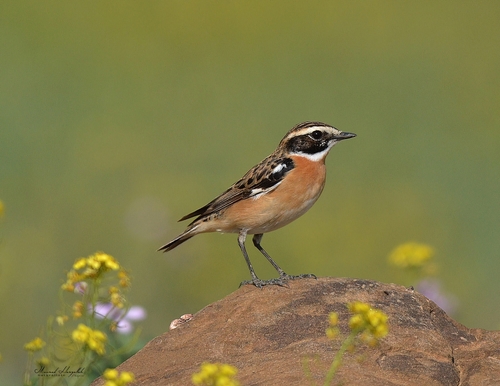
© Mourad Harzallah · CC BY · iNaturalist 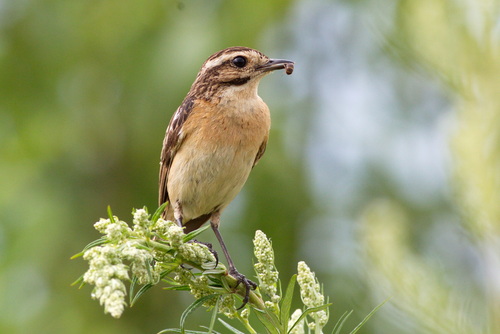
© Вячеслав Юсупов · CC BY · iNaturalist 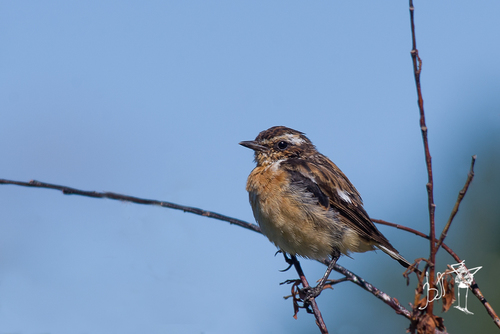
© Виктор · CC BY · iNaturalist 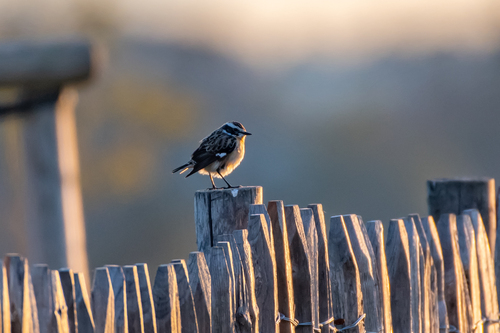
© Codrin Bucur · CC BY · iNaturalist 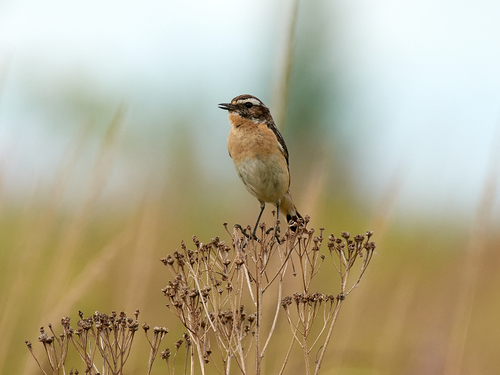
© Сергей Неклюдов · CC BY · iNaturalist 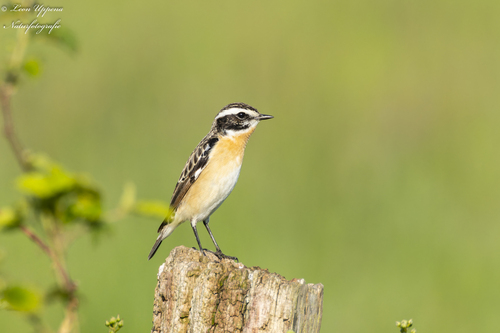
© bristolian · CC BY · iNaturalist 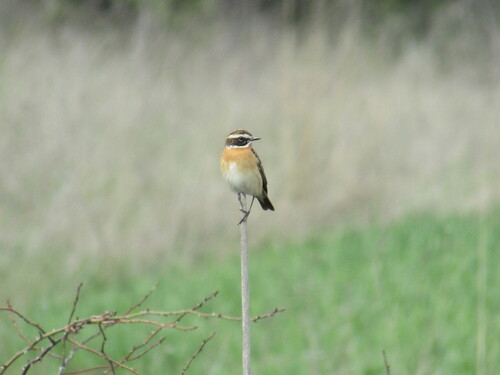
© SteveM4560 · CC BY · iNaturalist 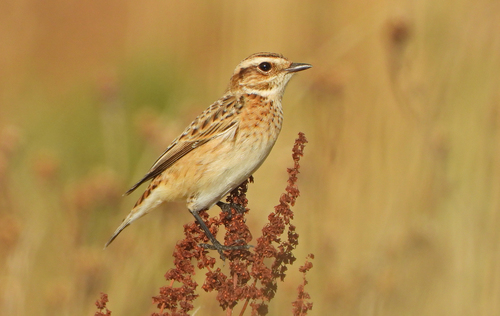
© Paul Lewis · CC BY · iNaturalist 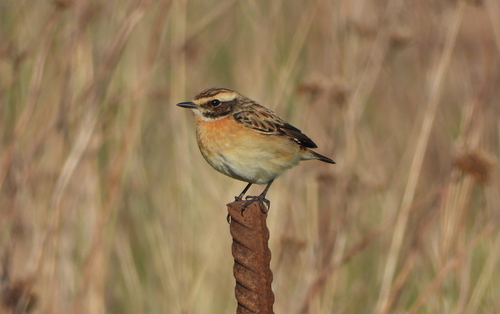
© Paul Lewis · CC BY · iNaturalist

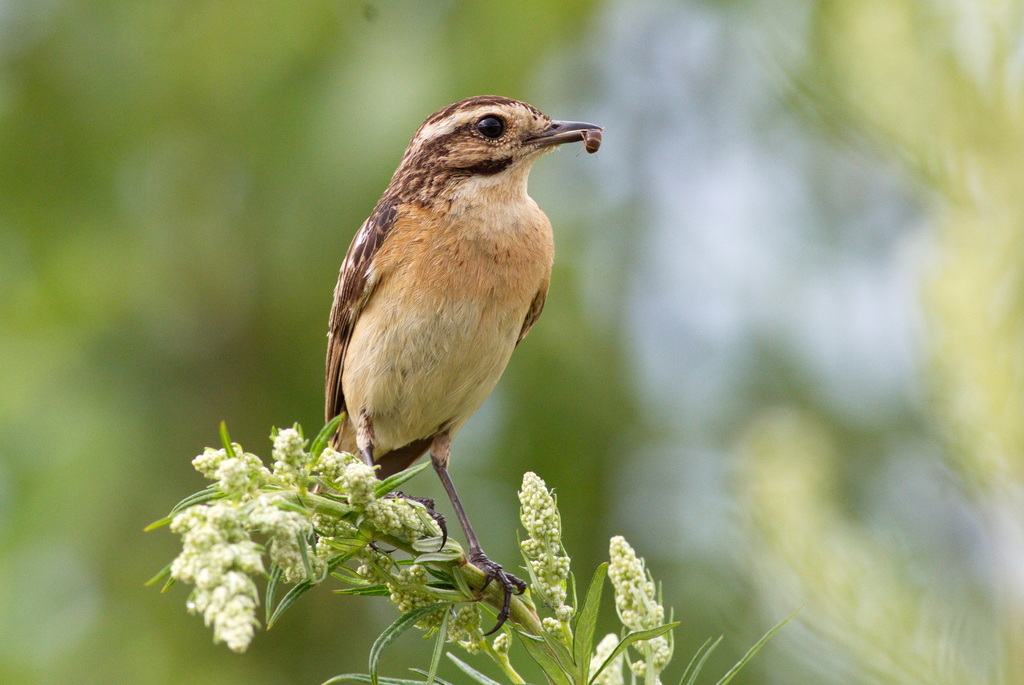


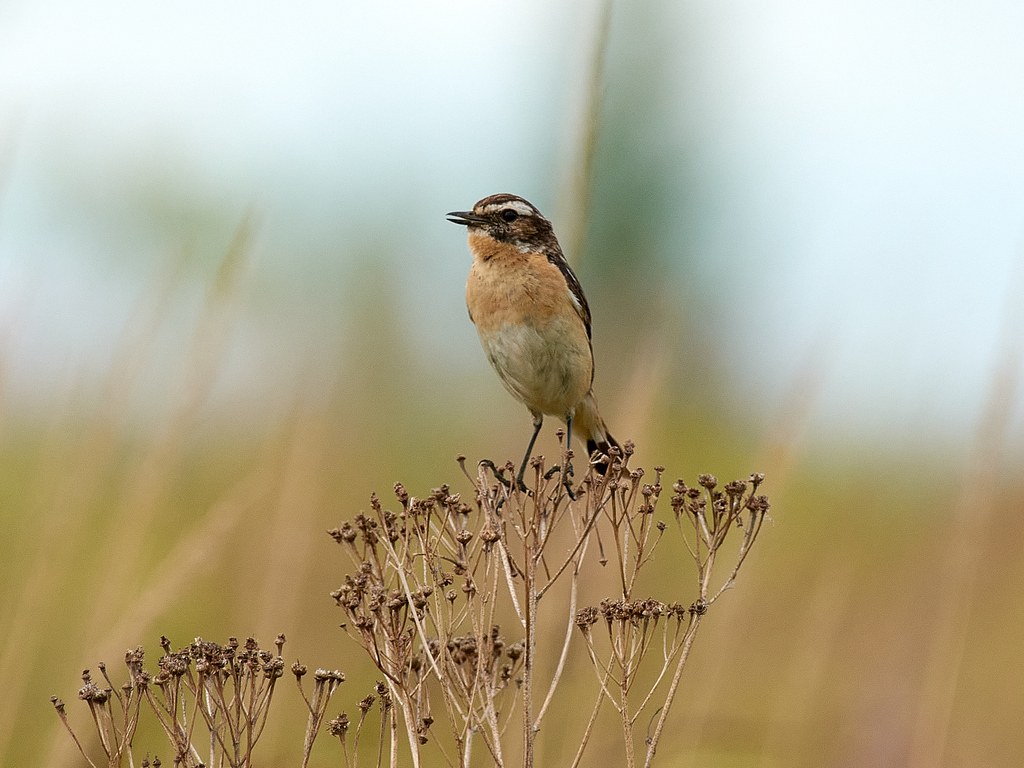
Especies relacionadasRelated species
Otras aves de la familia Muscicapidae y de órdenes cercanos.Other birds from the Muscicapidae family and nearby orders.
- RaroRare
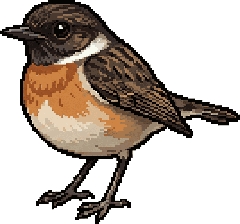 Tarabilla canariaCanary Islands StonechatSaxicola dacotiae
- ComúnCommon
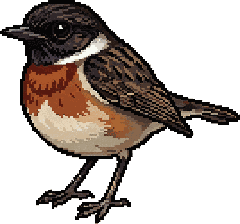 Tarabilla europeaEuropean StonechatSaxicola rubicola
- ComúnCommon
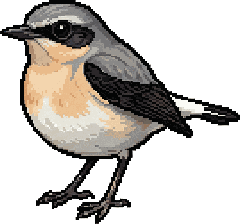 Collalba grisNorthern WheatearOenanthe oenanthe
- Poco comúnUncommon
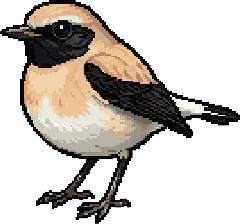 Collalba rubia occidentalWestern Black-eared WheatearOenanthe hispanica
- Poco comúnUncommon
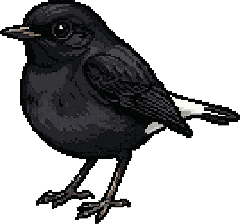 Collalba negraBlack WheatearOenanthe leucura
- Poco comúnUncommon
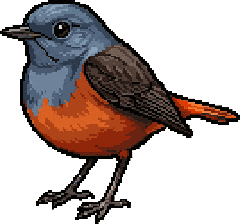 Roquero rojoCommon Rock ThrushMonticola saxatilis
- ComúnCommon
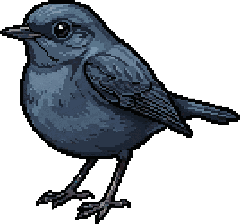 Roquero solitarioBlue Rock ThrushMonticola solitarius
- ComúnCommon
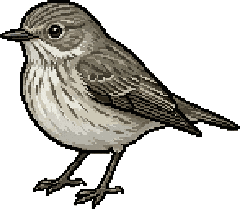 Papamoscas grisSpotted FlycatcherMuscicapa striata
 Gratis, sin anuncios ni comprasFree, no ads, no purchases