 BirdPedy
Primavera · mes 03 de 12Spring · month 03 of 12
Aves migratorias en marzoMigratory birds in March
La gran entrada por el EstrechoThe great entry through the Strait
- Especies destacadasFeatured species
- 6
- Fase del cicloStage of the cycle
- Entrada masiva prenupcial por el EstrechoMass spring entry through the Strait
- MetodologíaMethod
- Conteos, seguimiento GPS y bibliografíaCounts, GPS tracking and literature
- FuentesSources
- 9 fuentes citadas9 sources cited
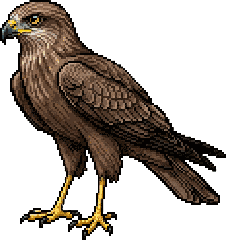 Especie destacada del mesFeatured species of the monthMilano negroBlack KiteMilvus migrans
Dinámica de la migración en España durante marzoHow migration unfolds in Spain in March
Marzo es el mes de la gran entrada por el Estrecho. En la campaña de primavera de 2007, el milano negro fue la planeadora más abundante, con 12.460 aves, el 43 % del total, y su paso más fuerte llegó en la segunda y la tercera semana de marzo, con más de 300 aves por hora[1]. En esas mismas semanas cruzó el grueso de las culebreras[1]. La cigüeña blanca superó las 100 aves por hora, y la cigüeña negra tuvo en marzo su mayor tasa de paso de la primavera[1]. El cernícalo primilla dejó un fuerte paso en las últimas semanas de marzo[1], y las águilas calzadas seguidas por satélite salieron de África, en la mediana, el 16 de marzo[2].March is the month of the great entry through the Strait. In the spring 2007 count, the Black Kite was the most abundant soaring bird, with 12,460 birds, 43% of the total, and its strongest passage came in the second and third weeks of March, at more than 300 birds an hour[1]. Most Short-toed Snake Eagles crossed in those same weeks[1]. The White Stork exceeded 100 birds an hour, and the Black Stork had its highest spring passage rate in March[1]. The Lesser Kestrel passed strongly in the last weeks of March[1], and satellite-tracked Booted Eagles left Africa on a median date of 16 March[2].
Las aves más destacadas de marzoThe standout birds of March
Cómo elegimos las aves de este mesHow we choose the birds for each month
Cada mes reúne las aves migratorias que más destacan en España en ese momento. Cada una entra por uno de estos motivos, que se indica en su ficha:Each month brings together the migratory birds that stand out most in Spain at that time. Each one is included for one of these reasons, shown on its card:
- Pico de pasoPeak passage el mes en que se cuentan más aves.the month when most birds are counted.
- Gran concentraciónBig gathering colonias, dormideros o escalas que reúnen miles de aves.colonies, roosts or stopovers that bring together thousands of birds.
- Llegada o despedidaArrival or departure la primera en llegar o la última en irse.the first to arrive or the last to leave.
- Especie amenazadaThreatened species pocas aves, pero es el mes para verla; su categoría es la de la Lista Roja de las Aves de España 2021.few birds, but this is the month to see it; its category is the one in the 2021 Red List of the Birds of Spain.
- Fenómeno o récordPhenomenon or record algo que solo ocurre ese mes o una cifra excepcional.something that only happens that month, or an exceptional figure.
Cada cifra y cada fecha llevan su fuente, numerada al final de la página. Si un dato no se ha podido comprobar en una fuente original, no se publica. Las barras de cada ave son las cuadrículas de 10 km con algún registro en GBIF cada mes.Every figure and date carries its source, numbered at the end of the page. If a figure could not be checked against an original source, it is not published. Each bird's bars are the 10 km squares with any GBIF record in each month.
- Pico de pasoPeak passage
Milano negroBlack Kite
Milvus migrans
Por qué en marzoWhy in March
Marzo es su pico de primavera: más de 300 aves por hora en la segunda y la tercera semana. En otoño cruzan muchos más, 242.000 en la campaña de 2024.March is its spring peak: more than 300 birds an hour in the second and third weeks. Far more cross in autumn, 242,000 in the 2024 season.
- Dato claveKey figure
- 12.460 aves en la primavera de 2007, el 43,14 % de las 28.884 planeadoras contadas desde los observatorios fijos12,460 birds in spring 2007, 43.14% of the 28,884 soaring birds counted from the fixed watchpoints
- Régimen de desplazamientoType of movement
- Transahariana (prenupcial)Trans-Saharan (Spring)
En marzo, 2.148 cuadrículas de 10 km con registros; su mejor mes es abril, con 2.632.In March, 2,148 grid squares (10 km) with records; its best month is April, with 2,632. Fuentes:Sources: [1][5]Ficha de especieSpecies page
- Pico de pasoPeak passage
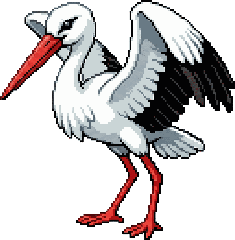
Cigüeña blancaWhite Stork
Ciconia ciconia
Por qué en marzoWhy in March
Fue la segunda planeadora más abundante de la primavera de 2007 y alcanzó sus mayores tasas de paso en marzo, que fueron bajando en abril y mayo.It was the second most abundant soaring bird in spring 2007 and reached its highest passage rates in March, which fell through April and May.
- Dato claveKey figure
- 6.645 aves en la primavera de 2007, el 23,01 % de las planeadoras; más de 100 aves por hora en marzo6,645 birds in spring 2007, 23.01% of the soaring birds; more than 100 birds an hour in March
- Régimen de desplazamientoType of movement
- Transahariana (prenupcial)Trans-Saharan (Spring)
En marzo, 1.714 cuadrículas de 10 km con registros; su mejor mes es abril, con 1.922.In March, 1,714 grid squares (10 km) with records; its best month is April, with 1,922. Fuentes:Sources: [1]Ficha de especieSpecies page
- Pico de pasoPeak passage
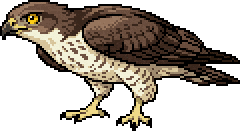
Culebrera europeaShort-toed Snake Eagle
Circaetus gallicus
Por qué en marzoWhy in March
Paso de gran intensidad en la segunda y la tercera semana de marzo. Al final de la campaña, en mayo, repuntó con jóvenes que aún no crían.A very strong passage in the second and third weeks of March. At the end of the count, in May, numbers rose again with young birds that do not yet breed.
- Dato claveKey figure
- 1.975 aves en la primavera de 2007, el 6,84 %1,975 birds in spring 2007, 6.84%
- Régimen de desplazamientoType of movement
- Transahariana (prenupcial)Trans-Saharan (Spring)
En marzo, 1.608 cuadrículas de 10 km con registros; su mejor mes es mayo, con 1.976.In March, 1,608 grid squares (10 km) with records; its best month is May, with 1,976. Fuentes:Sources: [1]Ficha de especieSpecies page
- Especie amenazadaThreatened species
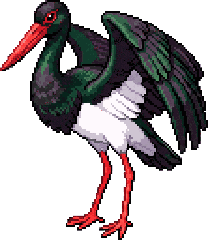
Cigüeña negraBlack Stork
Ciconia nigra
Por qué en marzoWhy in March
Marzo es su mejor mes de la primavera en el Estrecho. Es vulnerable como reproductora en la Lista Roja 2021, y verla cruzar es uno de los premios de la temporada.March is its best spring month at the Strait. It is listed as Vulnerable as a breeder in the 2021 Red List, and seeing one cross is one of the rewards of the season.
- Dato claveKey figure
- 248 aves en la primavera de 2007; algo más de 8 por hora en su máximo de marzo248 birds in spring 2007; just over 8 an hour at its March peak
- Régimen de desplazamientoType of movement
- Transahariana (prenupcial)Trans-Saharan (Spring)
En marzo, 404 cuadrículas de 10 km con registros; su mejor mes es septiembre, con 490.In March, 404 grid squares (10 km) with records; its best month is September, with 490. Fuentes:Sources: [1][6]Ficha de especieSpecies page
- Llegada o despedidaArrival or departure
Águila calzadaBooted Eagle
Hieraaetus pennatus
Por qué en marzoWhy in March
Marzo es el mes en que las calzadas emprenden la vuelta: el viaje les lleva unos 29 días. En el conteo de 2007, su paso más marcado fue en marzo y principios de abril, con 1.545 aves.March is when Booted Eagles set off back: the journey takes them about 29 days. In the 2007 count its passage was strongest in March and early April, with 1,545 birds.
- Dato claveKey figure
- Salida mediana de África el 16 de marzo y llegada a sus territorios el 7 de abril (cinco águilas con satélite)Median departure from Africa on 16 March and arrival at their territories on 7 April (five satellite-tracked eagles)
- Régimen de desplazamientoType of movement
- Transahariana (prenupcial)Trans-Saharan (Spring)
En marzo, 1.277 cuadrículas de 10 km con registros; su mejor mes es abril, con 2.465.In March, 1,277 grid squares (10 km) with records; its best month is April, with 2,465. Fuentes:Sources: [2][1]Ficha de especieSpecies page
- Especie amenazadaThreatened species
Cernícalo primillaLesser Kestrel
Falco naumanni
Por qué en marzoWhy in March
Es la única especie del género Falco abundante en el paso de primavera por el Estrecho. En España crían unas 10.900 parejas, entre un 28 y un 40 % menos que a principios de siglo, y está catalogado vulnerable.It is the only falcon that is abundant in the spring passage through the Strait. About 10,900 pairs breed in Spain, 28-40% fewer than at the start of the century, and it is listed as Vulnerable.
- Dato claveKey figure
- 304 aves en la primavera de 2007; fuerte paso en las últimas semanas de marzo y la primera de abril304 birds in spring 2007; strong passage in the last weeks of March and the first week of April
- Régimen de desplazamientoType of movement
- Transahariana (prenupcial)Trans-Saharan (Spring)
En marzo, 683 cuadrículas de 10 km con registros; su mejor mes es abril, con 909.In March, 683 grid squares (10 km) with records; its best month is April, with 909. Fuentes:Sources: [1][6][7]Ficha de especieSpecies page
Enclaves ornitológicos recomendados en marzoRecommended birding sites in March
- Cádiz (Tarifa)Cádiz (Tarifa)
Cerro de Cazalla y Punta Paloma
Observatorios fijos del conteo de primavera de 2007: desde Cazalla se controló el sector central del Estrecho y desde Punta Paloma, el occidental.Fixed watchpoints of the spring 2007 count: Cazalla covered the central sector of the Strait and Punta Paloma the western one. [1]
- CáceresCáceres
Parque Nacional de Monfragüe
Cría de la cigüeña negra, que vuelve de África en primavera; Extremadura acoge el 75 % de sus parejas en España.Breeding site of the Black Stork, which returns from Africa in spring; Extremadura holds 75% of its pairs in Spain. [8]
- TarragonaTarragona
Delta del Ebro
Uno de los principales lugares de invernada del correlimos común, que vuelve hacia el norte entre abril y mayo.One of the main wintering sites of the Dunlin, which heads back north between April and May. [9]
Dinámica de vientos en el Estrecho: en el conteo de primavera de 2007, los días de levante el paso se siguió en el sector occidental, de la playa de Los Lances a Bolonia, y los de poniente, en el oriental, hacia la bahía de AlgecirasWinds at the Strait: in the spring 2007 count, on easterly (levante) days the passage was followed in the western sector, from Los Lances beach to Bolonia, and on westerly (poniente) days in the eastern sector, towards the Bay of Algeciras [1].
FuentesSources
Cada cifra y cada fecha de esta página remite a una de estas fuentes. Datos comprobados el 30 de septiembre de 2026.Every figure and date on this page points to one of these sources. Data checked on 30 September 2026.
- De la Cruz, A., Ramírez, J., Onrubia, A., Cuenca, D., Carrero, M. y Muñoz, G. (2008). Seguimiento de la migración prenupcial de las aves planeadoras en el estrecho de Gibraltar: resultados de la campaña 2007. Almoraima, 37: 293-305.De la Cruz, A., Ramírez, J., Onrubia, A., Cuenca, D., Carrero, M. and Muñoz, G. (2008). Seguimiento de la migración prenupcial de las aves planeadoras en el estrecho de Gibraltar: resultados de la campaña 2007. Almoraima, 37: 293-305. (in Spanish) Ver fuenteView source
- Mellone, U., De La Puente, J., López-López, P., Limiñana, R., Bermejo, A. y Urios, V. (2013). Migration routes and wintering areas of Booted Eagles Aquila pennata breeding in Spain. Bird Study, 60: 409-413.Mellone, U., De La Puente, J., López-López, P., Limiñana, R., Bermejo, A. and Urios, V. (2013). Migration routes and wintering areas of Booted Eagles Aquila pennata breeding in Spain. Bird Study, 60: 409-413. Ver fuenteView source
- SEO/BirdLife. Guía de aves de España: ficha del milano negro.SEO/BirdLife. Guide to the birds of Spain: Black Kite (in Spanish). Ver fuenteView source
- Martín, B., Onrubia, A., de la Cruz, A. y Ferrer, M. (2016). Trends of autumn counts at Iberian migration bottlenecks as a tool for monitoring continental populations of soaring birds in Europe. Biodiversity and Conservation, 25: 295-309.Martín, B., Onrubia, A., de la Cruz, A. and Ferrer, M. (2016). Trends of autumn counts at Iberian migration bottlenecks as a tool for monitoring continental populations of soaring birds in Europe. Biodiversity and Conservation, 25: 295-309. Ver fuenteView source
- Fundación Migres. Balance de la campaña de seguimiento de 2024 (5 de mayo-20 de noviembre). Recogido en Tarifa al Día, 12/02/2025.Fundación Migres. Results of the 2024 monitoring season (5 May-20 November). Reported by Tarifa al Día, 12/02/2025 (in Spanish). Ver fuenteView source
- SEO/BirdLife (López-Jiménez, N., ed.) (2021). Libro Rojo de las Aves de España. Tabla 14: categoría de cada especie en la Lista Roja de 2021. SEO/BirdLife, Madrid.SEO/BirdLife (López-Jiménez, N., ed.) (2021). Red Book of the Birds of Spain. Table 14: category of each species in the 2021 Red List. SEO/BirdLife, Madrid (in Spanish). Ver fuenteView source
- SEO/BirdLife. Guía de aves de España: ficha del cernícalo primilla.SEO/BirdLife. Guide to the birds of Spain: Lesser Kestrel (in Spanish). Ver fuenteView source
- Ministerio para la Transición Ecológica. Parque Nacional de Monfragüe: cigüeña negra.Spanish Ministry for the Ecological Transition. Monfragüe National Park: Black Stork. In Spanish. Ver fuenteView source
- SEO/BirdLife. Guía de aves de España: ficha del correlimos común.SEO/BirdLife. Guide to the birds of Spain: Dunlin (in Spanish). Ver fuenteView source
 Herramienta de campoField tool
Avistamientos recientes en tu provinciaRecent sightings in your area
BirdPedy reúne en un mapa los avistamientos recientes de eBird, iNaturalist y MINKA junto a los de su propia comunidad, y su planificador añade el histórico de Observation.org y del Institut Català d'Ornitologia, a través de GBIF, para consultar en qué puntos de tu provincia se ha citado cada especie en este mes durante los últimos cinco años.BirdPedy brings together on one map the recent sightings from eBird, iNaturalist and MINKA and those of its own community, and its planner adds historical data from Observation.org and the Institut Català d'Ornitologia, through GBIF, so you can see where each species has been recorded in your area in this month over the last five years.