 BirdPedy
Verano · mes 08 de 12Summer · month 08 of 12
Aves migratorias en agostoMigratory birds in August
La hora del milano negroThe hour of the Black Kite
- Especies destacadasFeatured species
- 5
- Fase del cicloStage of the cycle
- Paso postnupcial masivo de cigüeñas y rapacesMass autumn passage of storks and raptors
- MetodologíaMethod
- Conteos, seguimiento GPS y bibliografíaCounts, GPS tracking and literature
- FuentesSources
- 14 fuentes citadas14 sources cited
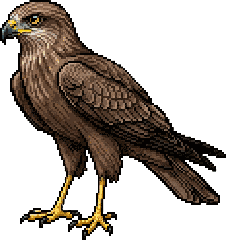 Especie destacada del mesFeatured species of the monthMilano negroBlack KiteMilvus migrans
Dinámica de la migración en España durante agostoHow migration unfolds in Spain in August
Agosto es el mes de las grandes cifras en el Estrecho. El milano negro es la especie más numerosa del paso de otoño: 242.000 en la campaña de 2024 y 271.400 en la de 2023[1][2]. Mientras esperan el momento de cruzar, se llegan a concentrar entre 40.000 y 60.000[3]. Las cigüeñas blancas ibéricas saltan a África en la primera quincena de agosto, y las centroeuropeas, entre finales de agosto y septiembre[4]. El abejaruco abandona sus territorios de cría hacia mediados de mes[5]. Y los cernícalos primilla, antes de migrar, suben al norte peninsular y forman dormideros de varios miles de aves[6].August is the month of the big numbers at the Strait. The Black Kite is the most numerous species of the autumn passage: 242,000 in the 2024 season and 271,400 in 2023[1][2]. While waiting to cross, between 40,000 and 60,000 can gather[3]. Iberian White Storks fly over to Africa in the first half of August, and central European ones between late August and September[4]. The European Bee-eater leaves its breeding territories around mid-month[5]. And Lesser Kestrels, before migrating, move to northern Iberia and gather in roosts of several thousand birds[6].
Las aves más destacadas de agostoThe standout birds of August
Cómo elegimos las aves de este mesHow we choose the birds for each month
Cada mes reúne las aves migratorias que más destacan en España en ese momento. Cada una entra por uno de estos motivos, que se indica en su ficha:Each month brings together the migratory birds that stand out most in Spain at that time. Each one is included for one of these reasons, shown on its card:
- Pico de pasoPeak passage el mes en que se cuentan más aves.the month when most birds are counted.
- Gran concentraciónBig gathering colonias, dormideros o escalas que reúnen miles de aves.colonies, roosts or stopovers that bring together thousands of birds.
- Llegada o despedidaArrival or departure la primera en llegar o la última en irse.the first to arrive or the last to leave.
- Especie amenazadaThreatened species pocas aves, pero es el mes para verla; su categoría es la de la Lista Roja de las Aves de España 2021.few birds, but this is the month to see it; its category is the one in the 2021 Red List of the Birds of Spain.
- Fenómeno o récordPhenomenon or record algo que solo ocurre ese mes o una cifra excepcional.something that only happens that month, or an exceptional figure.
Cada cifra y cada fecha llevan su fuente, numerada al final de la página. Si un dato no se ha podido comprobar en una fuente original, no se publica. Las barras de cada ave son las cuadrículas de 10 km con algún registro en GBIF cada mes.Every figure and date carries its source, numbered at the end of the page. If a figure could not be checked against an original source, it is not published. Each bird's bars are the 10 km squares with any GBIF record in each month.
- Pico de pasoPeak passage
Milano negroBlack Kite
Milvus migrans
Por qué en agostoWhy in August
Es la especie más abundante del paso de otoño y deja las zonas de cría a lo largo de agosto. En el Estrecho se llegan a concentrar entre 40.000 y 60.000 esperando para cruzar. En toda la primavera de 2007 se contaron 12.460.It is the most abundant species of the autumn passage and leaves its breeding areas during August. Between 40,000 and 60,000 can gather at the Strait waiting to cross. In the whole spring of 2007, 12,460 were counted.
- Dato claveKey figure
- 242.000 en la campaña de 2024; 271.400 en la de 2023242,000 in the 2024 season; 271,400 in 2023
- Régimen de desplazamientoType of movement
- Transahariana (postnupcial, pico)Trans-Saharan (Autumn, peak)
En agosto, 1.790 cuadrículas de 10 km con registros; su mejor mes es abril, con 2.632.In August, 1,790 grid squares (10 km) with records; its best month is April, with 2,632. Fuentes:Sources: [1][2][3][9]Ficha de especieSpecies page
- Pico de pasoPeak passage
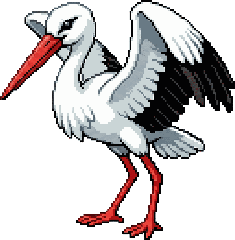
Cigüeña blancaWhite Stork
Ciconia ciconia
Por qué en agostoWhy in August
Las ibéricas cruzan en la primera quincena de agosto; las de Centroeuropa, Dinamarca, Alemania y Países Bajos, que bajan sobre todo por las provincias mediterráneas, lo hacen entre finales de agosto y septiembre.Iberian birds cross in the first half of August; those from central Europe, Denmark, Germany and the Netherlands, which travel mainly down the Mediterranean provinces, cross between late August and September.
- Dato claveKey figure
- 160.300 en la campaña de 2024; 147.500 en la de 2023160,300 in the 2024 season; 147,500 in 2023
- Régimen de desplazamientoType of movement
- Transahariana (postnupcial, pico)Trans-Saharan (Autumn, peak)
En agosto, 1.024 cuadrículas de 10 km con registros; su mejor mes es abril, con 1.922.In August, 1,024 grid squares (10 km) with records; its best month is April, with 1,922. Fuentes:Sources: [1][2][4]Ficha de especieSpecies page
- Llegada o despedidaArrival or departure
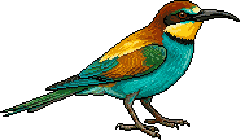
Abejaruco europeoEuropean Bee-eater
Merops apiaster
Por qué en agostoWhy in August
Agosto es el mes de su despedida. Inverna en el África tropical, en dos regiones separadas: una franja de África occidental y un sector más al sur, entre el Congo y Zimbabue.August is when it says goodbye. It winters in tropical Africa, in two separate regions: a belt across West Africa and a sector further south, between the Congo and Zimbabwe.
- Dato claveKey figure
- Abandona sus territorios de cría hacia mediados de agostoLeaves its breeding territories around mid-August
- Régimen de desplazamientoType of movement
- Transahariana (postnupcial)Trans-Saharan (Autumn)
En agosto, 2.495 cuadrículas de 10 km con registros; su mejor mes es mayo, con 2.843.In August, 2,495 grid squares (10 km) with records; its best month is May, with 2,843. Fuentes:Sources: [5]Ficha de especieSpecies page
- Gran concentraciónBig gathering
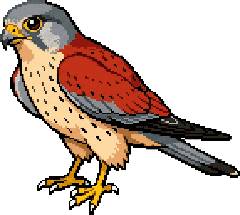
Cernícalo primillaLesser Kestrel
Falco naumanni
Por qué en agostoWhy in August
Antes de migrar al sur, los cernícalos primilla hacen un movimiento hacia el norte peninsular y se congregan en grandes dormideros. Es vulnerable en la Lista Roja 2021.Before heading south, Lesser Kestrels move to northern Iberia and gather in large roosts. It is listed as Vulnerable in the 2021 Red List.
- Dato claveKey figure
- Dormideros de varios miles de aves en Aragón, Navarra y el norte de Castilla y LeónRoosts of several thousand birds in Aragón, Navarre and northern Castilla y León
- Régimen de desplazamientoType of movement
- Transahariana (dormideros premigratorios)Trans-Saharan (pre-migration roosts)
En agosto, 579 cuadrículas de 10 km con registros; su mejor mes es abril, con 909.In August, 579 grid squares (10 km) with records; its best month is April, with 909. Fuentes:Sources: [6][10]Ficha de especieSpecies page
- Llegada o despedidaArrival or departure
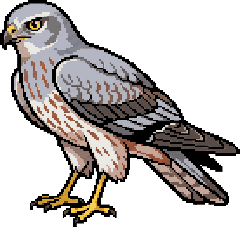
Aguilucho cenizoMontagu's Harrier
Circus pygargus
Por qué en agostoWhy in August
No se concentra solo en el Estrecho: cruza en un frente amplio que lo lleva tanto a las costas de Marruecos como a las de Túnez.It does not funnel only through the Strait: it crosses on a broad front that takes it to the coasts of both Morocco and Tunisia.
- Dato claveKey figure
- Los seguidos por satélite desde el noreste de España empezaron la migración a finales de agosto o principios de septiembreBirds satellite-tracked from north-eastern Spain began migrating in late August or early September
- Régimen de desplazamientoType of movement
- Transahariana (postnupcial)Trans-Saharan (Autumn)
En agosto, 1.057 cuadrículas de 10 km con registros; su mejor mes es abril, con 1.428.In August, 1,057 grid squares (10 km) with records; its best month is April, with 1,428. Fuentes:Sources: [11][12]Ficha de especieSpecies page
Enclaves ornitológicos recomendados en agostoRecommended birding sites in August
- CádizCádiz
Costa de Tarifa y Los Lances
Punto de salida hacia África de milanos negros, que migran de finales de julio a mediados de agosto, y de cigüeñas blancas, que cruzan en agosto y septiembre.Departure point for Africa for Black Kites, which migrate from late July to mid-August, and White Storks, which cross in August and September. [8] [4]
- ValenciaValencia
Parque Natural de l'Albufera
18.184 parejas de 34 especies criaron en 2024, entre ellas 1.827 de charrán patinegro.18,184 pairs of 34 species bred in 2024, including 1,827 pairs of Sandwich Tern. [13]
- SegoviaSegovia
Hoces del río Duratón
La mayor colonia conocida de buitre leonado en España: 730 parejas en 2018.The largest known Griffon Vulture colony in Spain: 730 pairs in 2018. [14]
Dinámica de vientos en el Estrecho: en el conteo de primavera de 2007, los días de levante el paso se siguió en el sector occidental, de la playa de Los Lances a Bolonia, y los de poniente, en el oriental, hacia la bahía de AlgecirasWinds at the Strait: in the spring 2007 count, on easterly (levante) days the passage was followed in the western sector, from Los Lances beach to Bolonia, and on westerly (poniente) days in the eastern sector, towards the Bay of Algeciras [9].
FuentesSources
Cada cifra y cada fecha de esta página remite a una de estas fuentes. Datos comprobados el 30 de septiembre de 2026.Every figure and date on this page points to one of these sources. Data checked on 30 September 2026.
- Fundación Migres. Balance de la campaña de seguimiento de 2024 (5 de mayo-20 de noviembre). Recogido en Tarifa al Día, 12/02/2025.Fundación Migres. Results of the 2024 monitoring season (5 May-20 November). Reported by Tarifa al Día, 12/02/2025 (in Spanish). Ver fuenteView source
- Fundación Migres. Balance de la campaña de seguimiento de 2023 (5 de mayo-5 de diciembre). Recogido en ECOticias, 08/01/2024.Fundación Migres. Results of the 2023 monitoring season (5 May-5 December). Reported by ECOticias, 08/01/2024 (in Spanish). Ver fuenteView source
- SEO/BirdLife. Guía de aves de España: ficha del milano negro.SEO/BirdLife. Guide to the birds of Spain: Black Kite (in Spanish). Ver fuenteView source
- SEO/BirdLife. Guía de aves de España: ficha de la cigüeña blanca.SEO/BirdLife. Guide to the birds of Spain: White Stork (in Spanish). Ver fuenteView source
- SEO/BirdLife. Guía de aves de España: ficha del abejaruco europeo.SEO/BirdLife. Guide to the birds of Spain: European Bee-eater (in Spanish). Ver fuenteView source
- SEO/BirdLife. Guía de aves de España: ficha del cernícalo primilla.SEO/BirdLife. Guide to the birds of Spain: Lesser Kestrel (in Spanish). Ver fuenteView source
- Mellone, U., De La Puente, J., López-López, P., Limiñana, R., Bermejo, A. y Urios, V. (2013). Migration routes and wintering areas of Booted Eagles Aquila pennata breeding in Spain. Bird Study, 60: 409-413.Mellone, U., De La Puente, J., López-López, P., Limiñana, R., Bermejo, A. and Urios, V. (2013). Migration routes and wintering areas of Booted Eagles Aquila pennata breeding in Spain. Bird Study, 60: 409-413. Ver fuenteView source
- Urios, V. y Morollón, S. (eds.) (2026). Comportamiento espacial de la población española del milano negro. Monografía n.º 12 del programa Migra. SEO/BirdLife, Madrid.Urios, V. and Morollón, S. (eds.) (2026). Comportamiento espacial de la población española del milano negro. Monografía n.º 12 del programa Migra. SEO/BirdLife, Madrid. (in Spanish) Ver fuenteView source
- De la Cruz, A., Ramírez, J., Onrubia, A., Cuenca, D., Carrero, M. y Muñoz, G. (2008). Seguimiento de la migración prenupcial de las aves planeadoras en el estrecho de Gibraltar: resultados de la campaña 2007. Almoraima, 37: 293-305.De la Cruz, A., Ramírez, J., Onrubia, A., Cuenca, D., Carrero, M. and Muñoz, G. (2008). Seguimiento de la migración prenupcial de las aves planeadoras en el estrecho de Gibraltar: resultados de la campaña 2007. Almoraima, 37: 293-305. (in Spanish) Ver fuenteView source
- SEO/BirdLife (López-Jiménez, N., ed.) (2021). Libro Rojo de las Aves de España. Tabla 14: categoría de cada especie en la Lista Roja de 2021. SEO/BirdLife, Madrid.SEO/BirdLife (López-Jiménez, N., ed.) (2021). Red Book of the Birds of Spain. Table 14: category of each species in the 2021 Red List. SEO/BirdLife, Madrid (in Spanish). Ver fuenteView source
- Limiñana, R., Soutullo, A. y Urios, V. (2007). Autumn migration of Montagu's harriers Circus pygargus tracked by satellite telemetry. Journal of Ornithology, 148: 517-523.Limiñana, R., Soutullo, A. and Urios, V. (2007). Autumn migration of Montagu's harriers Circus pygargus tracked by satellite telemetry. Journal of Ornithology, 148: 517-523. Ver fuenteView source
- SEO/BirdLife. Guía de aves de España: ficha del aguilucho cenizo.SEO/BirdLife. Guide to the birds of Spain: Montagu's Harrier (in Spanish). Ver fuenteView source
- SEO/BirdLife (23/10/2024). Aves nidificantes en l'Albufera de Valencia en 2024.SEO/BirdLife (23/10/2024). Breeding birds at l'Albufera de Valencia in 2024. In Spanish. Ver fuenteView source
- SEO/BirdLife. Guía de aves de España: ficha del buitre leonado.SEO/BirdLife. Guide to the birds of Spain: Griffon Vulture (in Spanish). Ver fuenteView source
 Herramienta de campoField tool
Avistamientos recientes en tu provinciaRecent sightings in your area
BirdPedy reúne en un mapa los avistamientos recientes de eBird, iNaturalist y MINKA junto a los de su propia comunidad, y su planificador añade el histórico de Observation.org y del Institut Català d'Ornitologia, a través de GBIF, para consultar en qué puntos de tu provincia se ha citado cada especie en este mes durante los últimos cinco años.BirdPedy brings together on one map the recent sightings from eBird, iNaturalist and MINKA and those of its own community, and its planner adds historical data from Observation.org and the Institut Català d'Ornitologia, through GBIF, so you can see where each species has been recorded in your area in this month over the last five years.