 BirdPedy
Invierno · mes 01 de 12Winter · month 01 of 12
Aves migratorias en eneroMigratory birds in January
El refugio invernalThe winter refuge
- Especies destacadasFeatured species
- 5
- Fase del cicloStage of the cycle
- Invernada plena y concentración en humedalesFull wintering and concentration in wetlands
- MetodologíaMethod
- Conteos, seguimiento GPS y bibliografíaCounts, GPS tracking and literature
- FuentesSources
- 15 fuentes citadas15 sources cited
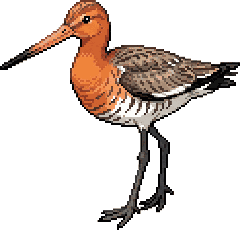 Especie destacada del mesFeatured species of the monthAguja colinegraBlack-tailed GodwitLimosa limosa
Dinámica de la migración en España durante eneroHow migration unfolds in Spain in January
Enero es el mes de la invernada plena y de los censos de humedales. En Doñana, el censo de enero de 2026 contó 385.649 aves acuáticas de 88 especies, un repunte tras dos años de sequía que aun así queda por debajo de la media de las dos últimas décadas[1]. El cuchara común fue la especie que más creció, hasta 120.970 aves[1]. Desde la segunda quincena del mes empieza además uno de los grandes espectáculos del invierno: la aguja colinegra hace escala en los arrozales de las Vegas del Guadiana, donde se pueden ver hasta 30.000[2]. En las campiñas del interior, el milano real alcanza en enero su máximo de población invernante[3]. Y el censo trae también malas noticias: el ánsar común es la anátida invernante que más ha caído en España, un 11,4 % al año entre 2000 y 2023[4].January is the month of full wintering and of the wetland counts. In Doñana, the January 2026 census counted 385,649 waterbirds of 88 species, a recovery after two years of drought though still below the average of the last two decades[1]. The Northern Shoveler grew the most, to 120,970 birds[1]. From the second half of the month one of winter's great spectacles also begins: Black-tailed Godwits stop over in the rice fields of the Vegas del Guadiana, where up to 30,000 can be seen[2]. On the inland plains, the Red Kite's wintering population peaks in January[3]. And the census brings bad news too: the Greylag Goose is the wintering duck or goose that has declined most in Spain, by 11.4% a year between 2000 and 2023[4].
Las aves más destacadas de eneroThe standout birds of January
Cómo elegimos las aves de este mesHow we choose the birds for each month
Cada mes reúne las aves migratorias que más destacan en España en ese momento. Cada una entra por uno de estos motivos, que se indica en su ficha:Each month brings together the migratory birds that stand out most in Spain at that time. Each one is included for one of these reasons, shown on its card:
- Pico de pasoPeak passage el mes en que se cuentan más aves.the month when most birds are counted.
- Gran concentraciónBig gathering colonias, dormideros o escalas que reúnen miles de aves.colonies, roosts or stopovers that bring together thousands of birds.
- Llegada o despedidaArrival or departure la primera en llegar o la última en irse.the first to arrive or the last to leave.
- Especie amenazadaThreatened species pocas aves, pero es el mes para verla; su categoría es la de la Lista Roja de las Aves de España 2021.few birds, but this is the month to see it; its category is the one in the 2021 Red List of the Birds of Spain.
- Fenómeno o récordPhenomenon or record algo que solo ocurre ese mes o una cifra excepcional.something that only happens that month, or an exceptional figure.
Cada cifra y cada fecha llevan su fuente, numerada al final de la página. Si un dato no se ha podido comprobar en una fuente original, no se publica. Las barras de cada ave son las cuadrículas de 10 km con algún registro en GBIF cada mes.Every figure and date carries its source, numbered at the end of the page. If a figure could not be checked against an original source, it is not published. Each bird's bars are the 10 km squares with any GBIF record in each month.
- Gran concentraciónBig gathering
Aguja colinegraBlack-tailed Godwit
Limosa limosa
Por qué en eneroWhy in January
Desde la segunda quincena de enero y durante todo febrero hace escala en los arrozales extremeños, donde aprovecha el grano de arroz, camino de sus áreas de cría. Casi toda la población que inverna en África para también en Doñana a la vuelta. En la Lista Roja 2021 es vulnerable como invernante y en peligro crítico como reproductora.From the second half of January and throughout February it stops over in the rice fields of Extremadura, feeding on rice grain on its way to the breeding grounds. Almost all the population wintering in Africa also stops at Doñana on the way back. In the 2021 Red List it is Vulnerable as a wintering bird and Critically Endangered as a breeder.
- Dato claveKey figure
- Hasta 30.000 en los arrozales de las Vegas del Guadiana, que acogen al menos el 14 % de la población de Europa occidentalUp to 30,000 in the rice fields of the Vegas del Guadiana, which hold at least 14% of the western European population
- Régimen de desplazamientoType of movement
- Migradora (escala prenupcial)Migrant (spring stopover)
En enero, 164 cuadrículas de 10 km con registros; su mejor mes es septiembre, con 263.In January, 164 grid squares (10 km) with records; its best month is September, with 263. Fuentes:Sources: [2][6][7][8]Ficha de especieSpecies page
- Pico de pasoPeak passage
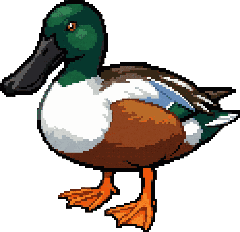
Cuchara comúnNorthern Shoveler
Spatula clypeata
Por qué en eneroWhy in January
Enero es el mes del censo internacional de aves acuáticas, y el cuchara es el gran protagonista en Doñana. Llega a partir de septiembre desde el Báltico, el mar del Norte y Centroeuropa, y es la segunda anátida más frecuente en España en invierno, después del ánade azulón.January is the month of the international waterbird census, and the Shoveler is the star in Doñana. It arrives from September onwards from the Baltic, the North Sea and central Europe, and is the second commonest duck in Spain in winter, after the Mallard.
- Dato claveKey figure
- Doñana: 120.970 en el censo de enero de 2026, la especie que más creció respecto al año anteriorDoñana: 120,970 in the January 2026 census, the species that grew most on the previous year
- Régimen de desplazamientoType of movement
- InvernanteWinter visitor
Su mejor mes: 712 cuadrículas de 10 km con registros.Its best month: 712 grid squares (10 km) with records. Fuentes:Sources: [1][9]Ficha de especieSpecies page
- Pico de pasoPeak passage
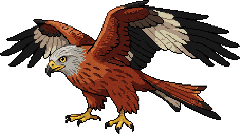
Milano realRed Kite
Milvus milvus
Por qué en eneroWhy in January
A los reproductores españoles se une en invierno un contingente sobre todo de Alemania y Francia, y la población alcanza su máximo en enero. Al atardecer se reúnen en dormideros multitudinarios. Como reproductor está en peligro en la Lista Roja 2021.In winter the Spanish breeders are joined by birds mainly from Germany and France, and numbers peak in January. At dusk they gather in large communal roosts. As a breeder it is Endangered in the 2021 Red List.
- Dato claveKey figure
- Unos 50.297 invernantes en 2013-2014; España es el país más importante para la especie en inviernoAbout 50,297 wintering birds in 2013-2014; Spain is the most important country for the species in winter
- Régimen de desplazamientoType of movement
- InvernanteWinter visitor
En enero, 2.109 cuadrículas de 10 km con registros; su mejor mes es octubre, con 2.233.In January, 2,109 grid squares (10 km) with records; its best month is October, with 2,233. Fuentes:Sources: [3][8]Ficha de especieSpecies page
- Especie amenazadaThreatened species
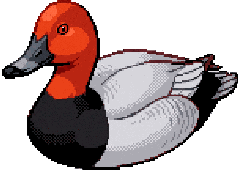
Porrón europeoCommon Pochard
Aythya ferina
Por qué en eneroWhy in January
Tiene su máximo de diciembre a febrero. La invernada en España ha caído un 57 % desde 1991; en la Lista Roja 2021 es casi amenazado como invernante y en peligro como reproductor.It peaks from December to February. Wintering numbers in Spain have fallen by 57% since 1991; in the 2021 Red List it is Near Threatened as a wintering bird and Endangered as a breeder.
- Dato claveKey figure
- Doñana: 10.600 en enero de 2026, más de 6.200 más que el invierno anteriorDoñana: 10,600 in January 2026, more than 6,200 up on the previous winter
- Régimen de desplazamientoType of movement
- InvernanteWinter visitor
En enero, 359 cuadrículas de 10 km con registros; su mejor mes es abril, con 374.In January, 359 grid squares (10 km) with records; its best month is April, with 374. Fuentes:Sources: [1][10][8]Ficha de especieSpecies page
- Fenómeno o récordPhenomenon or record
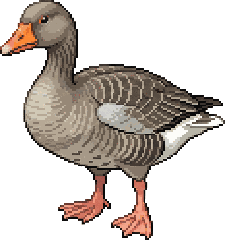
Ánsar comúnGreylag Goose
Anser anser
Por qué en eneroWhy in January
Es el mayor declive de las anátidas invernantes en España: un 11,4 % al año entre 2000 y 2023. El censo de enero es, cada año, la medida de ese desplome. Llega de Noruega, Suecia, Dinamarca y Alemania y vuelve hacia mediados de marzo.It is the steepest decline of any wintering duck or goose in Spain: 11.4% a year between 2000 and 2023. Each year the January census measures that collapse. It comes from Norway, Sweden, Denmark and Germany and returns around mid-March.
- Dato claveKey figure
- Doñana: 4.337 en enero de 2024, la peor cifra de su serie histórica, y 3.700 en enero de 2026. Llegó a superar las 80.000Doñana: 4,337 in January 2024, the worst figure in its historical series, and 3,700 in January 2026. It once exceeded 80,000
- Régimen de desplazamientoType of movement
- InvernanteWinter visitor
Su mejor mes: 473 cuadrículas de 10 km con registros.Its best month: 473 grid squares (10 km) with records. Fuentes:Sources: [4][11][1][12]Ficha de especieSpecies page
Enclaves ornitológicos recomendados en eneroRecommended birding sites in January
- Huelva / SevillaHuelva / Sevilla
Marismas del Guadalquivir (Doñana)
385.649 aves acuáticas de 88 especies en el censo de enero de 2026, todavía por debajo de la media de las dos últimas décadas.385,649 waterbirds of 88 species in the January 2026 census, still below the average of the last two decades. [1]
- Zaragoza / TeruelZaragoza / Teruel
Laguna de Gallocanta
Dormidero de decenas de miles de grullas comunes (Grus grus) en sus pasos de noviembre y febrero; una parte se queda todo el invierno.Roost for tens of thousands of Common Cranes (Grus grus) during their November and February passages; some stay all winter. [13]
Ver la guíaRead the guide - ZamoraZamora
Lagunas de Villafáfila
Lugar de paso de grullas y, en los últimos años, de cría de ánsar común: al menos 13 parejas en 2021.A stopover for cranes and, in recent years, a breeding site for Greylag Geese: at least 13 pairs in 2021. [14] [12]
Dinámica de vientos en el Estrecho: en el conteo de primavera de 2007, los días de levante el paso se siguió en el sector occidental, de la playa de Los Lances a Bolonia, y los de poniente, en el oriental, hacia la bahía de AlgecirasWinds at the Strait: in the spring 2007 count, on easterly (levante) days the passage was followed in the western sector, from Los Lances beach to Bolonia, and on westerly (poniente) days in the eastern sector, towards the Bay of Algeciras [15].
FuentesSources
Cada cifra y cada fecha de esta página remite a una de estas fuentes. Datos comprobados el 30 de septiembre de 2026.Every figure and date on this page points to one of these sources. Data checked on 30 September 2026.
- Delegación del CSIC en Andalucía (19/02/2026). La invernada de aves en Doñana repunta en 2026 tras años de mínimos históricos, aunque las cifras siguen por debajo de la media.CSIC in Andalusia (19/02/2026). Wintering birds in Doñana recover in 2026 after years of record lows, though still below average. In Spanish. Ver fuenteView source
- Agencia SINC. Así sobrevive la aguja colinegra a fenómenos atmosféricos extremos (sobre Senner et al., 2015, Journal of Animal Ecology, 84: 1164-1176, con declaraciones de José A. Masero, Universidad de Extremadura).Agencia SINC. How the Black-tailed Godwit survives extreme weather (on Senner et al., 2015, Journal of Animal Ecology, 84: 1164-1176, with comments by José A. Masero, University of Extremadura). In Spanish. Ver fuenteView source
- SEO/BirdLife. Guía de aves de España: ficha del milano real.SEO/BirdLife. Guide to the birds of Spain: Red Kite (in Spanish). Ver fuenteView source
- SEO/BirdLife (30/01/2026). Los patos más comunes están en declive (censos de aves acuáticas invernantes en España, 2000-2023).SEO/BirdLife (30/01/2026). Spain's commonest ducks are declining (wintering waterbird counts, 2000-2023). In Spanish. Ver fuenteView source
- SEO/BirdLife. Guía de aves de España: ficha de la golondrina común.SEO/BirdLife. Guide to the birds of Spain: Barn Swallow (in Spanish). Ver fuenteView source
- Masero, J. A., Santiago-Quesada, F., Sánchez-Guzmán, J. M., Villegas, A., Abad-Gómez, J. M., Lopes, R. J., Encarnação, V., Corbacho, C. y Morán, R. (2011). Long lengths of stay, large numbers, and trends of the Black-tailed Godwit Limosa limosa in rice fields during spring migration. Bird Conservation International, 21(1), 12-24.Masero, J. A., Santiago-Quesada, F., Sánchez-Guzmán, J. M., Villegas, A., Abad-Gómez, J. M., Lopes, R. J., Encarnação, V., Corbacho, C. & Morán, R. (2011). Long lengths of stay, large numbers, and trends of the Black-tailed Godwit Limosa limosa in rice fields during spring migration. Bird Conservation International, 21(1), 12-24. Ver fuenteView source
- SEO/BirdLife. Guía de aves de España: ficha de la aguja colinegra.SEO/BirdLife. Guide to the birds of Spain: Black-tailed Godwit (in Spanish). Ver fuenteView source
- SEO/BirdLife (López-Jiménez, N., ed.) (2021). Libro Rojo de las Aves de España. Tabla 14: categoría de cada especie en la Lista Roja de 2021. SEO/BirdLife, Madrid.SEO/BirdLife (López-Jiménez, N., ed.) (2021). Red Book of the Birds of Spain. Table 14: category of each species in the 2021 Red List. SEO/BirdLife, Madrid (in Spanish). Ver fuenteView source
- SEO/BirdLife. Guía de aves de España: ficha del cuchara común.SEO/BirdLife. Guide to the birds of Spain: Northern Shoveler (in Spanish). Ver fuenteView source
- SEO/BirdLife. Guía de aves de España: ficha del porrón europeo.SEO/BirdLife. Guide to the birds of Spain: Common Pochard (in Spanish). Ver fuenteView source
- CSIC (31/01/2025). Doñana registra un nuevo mínimo histórico de aves acuáticas invernantes (Estación Biológica de Doñana).CSIC (31/01/2025). Doñana records a new all-time low of wintering waterbirds (Doñana Biological Station). In Spanish. Ver fuenteView source
- SEO/BirdLife. Guía de aves de España: ficha del ánsar común.SEO/BirdLife. Guide to the birds of Spain: Greylag Goose (in Spanish). Ver fuenteView source
- Gobierno de Aragón. Censos semanales de grulla común en la cuenca de Gallocanta, temporadas 2005-2006 a 2025-2026.Government of Aragón. Weekly Common Crane counts in the Gallocanta basin, seasons 2005-2006 to 2025-2026. In Spanish. Ver fuenteView source
- SEO/BirdLife. Guía de aves de España: ficha de la grulla común.SEO/BirdLife. Guide to the birds of Spain: Common Crane (in Spanish). Ver fuenteView source
- De la Cruz, A., Ramírez, J., Onrubia, A., Cuenca, D., Carrero, M. y Muñoz, G. (2008). Seguimiento de la migración prenupcial de las aves planeadoras en el estrecho de Gibraltar: resultados de la campaña 2007. Almoraima, 37: 293-305.De la Cruz, A., Ramírez, J., Onrubia, A., Cuenca, D., Carrero, M. and Muñoz, G. (2008). Seguimiento de la migración prenupcial de las aves planeadoras en el estrecho de Gibraltar: resultados de la campaña 2007. Almoraima, 37: 293-305. (in Spanish) Ver fuenteView source
 Herramienta de campoField tool
Avistamientos recientes en tu provinciaRecent sightings in your area
BirdPedy reúne en un mapa los avistamientos recientes de eBird, iNaturalist y MINKA junto a los de su propia comunidad, y su planificador añade el histórico de Observation.org y del Institut Català d'Ornitologia, a través de GBIF, para consultar en qué puntos de tu provincia se ha citado cada especie en este mes durante los últimos cinco años.BirdPedy brings together on one map the recent sightings from eBird, iNaturalist and MINKA and those of its own community, and its planner adds historical data from Observation.org and the Institut Català d'Ornitologia, through GBIF, so you can see where each species has been recorded in your area in this month over the last five years.