 BirdPedy
Primavera · mes 04 de 12Spring · month 04 of 12
Aves migratorias en abrilMigratory birds in April
Cuando el cielo se llena de alasWhen the sky fills with wings
- Especies destacadasFeatured species
- 5
- Fase del cicloStage of the cycle
- Llegada de estivales y paso de rapacesSummer visitors arrive and raptors pass through
- MetodologíaMethod
- Conteos, seguimiento GPS y bibliografíaCounts, GPS tracking and literature
- FuentesSources
- 12 fuentes citadas12 sources cited
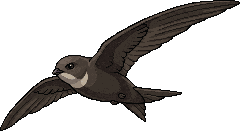 Especie destacada del mesFeatured species of the monthVencejo comúnCommon SwiftApus apus
Dinámica de la migración en España durante abrilHow migration unfolds in Spain in April
Abril completa el verano ibérico. En las ciudades es el mes en que el vencejo común “inunda muchas de nuestras zonas urbanas”[1], aunque empieza a volver desde mediados de marzo[2]. El abejaruco llega a sus zonas de cría en abril y empieza el cortejo[3]. El aguilucho cenizo tiene en abril su mayor afluencia[4]. En los humedales, el morito vuelve de forma masiva a sus colonias a principios de abril[5], y el flamenco empieza a criar a partir de este mes[6]: en 2025, la colonia de Fuente de Piedra batió su récord, con más de 33.900 parejas[7].April completes the Iberian summer. In towns it is the month when the Common Swift “floods many of our urban areas”[1], although it starts coming back from mid-March[2]. The European Bee-eater reaches its breeding areas in April and starts courting[3]. Montagu's Harrier arrives in greatest numbers in April[4]. In the wetlands, the Glossy Ibis returns en masse to its colonies in early April[5], and the Greater Flamingo starts breeding from this month[6]: in 2025 the Fuente de Piedra colony broke its record, with more than 33,900 pairs[7].
Las aves más destacadas de abrilThe standout birds of April
Cómo elegimos las aves de este mesHow we choose the birds for each month
Cada mes reúne las aves migratorias que más destacan en España en ese momento. Cada una entra por uno de estos motivos, que se indica en su ficha:Each month brings together the migratory birds that stand out most in Spain at that time. Each one is included for one of these reasons, shown on its card:
- Pico de pasoPeak passage el mes en que se cuentan más aves.the month when most birds are counted.
- Gran concentraciónBig gathering colonias, dormideros o escalas que reúnen miles de aves.colonies, roosts or stopovers that bring together thousands of birds.
- Llegada o despedidaArrival or departure la primera en llegar o la última en irse.the first to arrive or the last to leave.
- Especie amenazadaThreatened species pocas aves, pero es el mes para verla; su categoría es la de la Lista Roja de las Aves de España 2021.few birds, but this is the month to see it; its category is the one in the 2021 Red List of the Birds of Spain.
- Fenómeno o récordPhenomenon or record algo que solo ocurre ese mes o una cifra excepcional.something that only happens that month, or an exceptional figure.
Cada cifra y cada fecha llevan su fuente, numerada al final de la página. Si un dato no se ha podido comprobar en una fuente original, no se publica. Las barras de cada ave son las cuadrículas de 10 km con algún registro en GBIF cada mes.Every figure and date carries its source, numbered at the end of the page. If a figure could not be checked against an original source, it is not published. Each bird's bars are the 10 km squares with any GBIF record in each month.
- Llegada o despedidaArrival or departure
Vencejo comúnCommon Swift
Apus apus
Por qué en abrilWhy in April
Abril es el mes en que llena muchas zonas urbanas: su llegada es la señal más visible del cambio de estación en las ciudades. Es vulnerable como reproductor en la Lista Roja 2021.April is when it fills many urban areas: its arrival is the most visible sign of the change of season in towns. It is listed as Vulnerable as a breeder in the 2021 Red List.
- Dato claveKey figure
- Vuelve desde mediados de marzo y ocupa las colonias bien entrado abril y en mayoReturns from mid-March and occupies its colonies from well into April and in May
- Régimen de desplazamientoType of movement
- Transahariana (prenupcial)Trans-Saharan (Spring)
En abril, 2.459 cuadrículas de 10 km con registros; su mejor mes es junio, con 3.477.In April, 2,459 grid squares (10 km) with records; its best month is June, with 3,477. Fuentes:Sources: [1][2][8]Ficha de especieSpecies page
- Llegada o despedidaArrival or departure
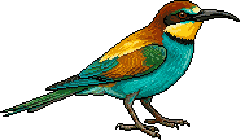
Abejaruco europeoEuropean Bee-eater
Merops apiaster
Por qué en abrilWhy in April
Regresa en marzo-abril desde el África tropical, y en abril, poco después de llegar a las zonas de cría, empieza el cortejo. Es una de las llegadas más vistosas y sonoras de la primavera.It returns from tropical Africa in March-April, and in April, soon after reaching its breeding areas, it starts courting. It is one of the most colourful and noisy arrivals of spring.
- Dato claveKey figure
- Población española estimada en unos 2,6 millones de avesSpanish population estimated at about 2.6 million birds
- Régimen de desplazamientoType of movement
- Transahariana (prenupcial)Trans-Saharan (Spring)
En abril, 2.631 cuadrículas de 10 km con registros; su mejor mes es mayo, con 2.843.In April, 2,631 grid squares (10 km) with records; its best month is May, with 2,843. Fuentes:Sources: [3]Ficha de especieSpecies page
- Especie amenazadaThreatened species
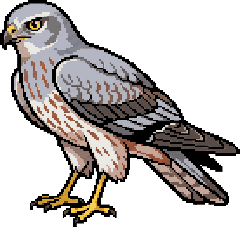
Aguilucho cenizoMontagu's Harrier
Circus pygargus
Por qué en abrilWhy in April
Aparece desde finales de marzo y abril es su mes de mayor llegada: las parejas se forman a comienzos de abril, cuando las hembras vuelven a los territorios que ya ocupan los machos. Cría en los cereales y está catalogado vulnerable.It appears from late March and April is its main arrival month: pairs form in early April, when females return to territories already held by males. It nests in cereal fields and is listed as Vulnerable.
- Dato claveKey figure
- Unas 5.000 parejas en España, cerca del 40 % en Castilla y LeónAbout 5,000 pairs in Spain, nearly 40% in Castilla y León
- Régimen de desplazamientoType of movement
- Transahariana (prenupcial)Trans-Saharan (Spring)
Su mejor mes: 1.428 cuadrículas de 10 km con registros.Its best month: 1,428 grid squares (10 km) with records. Fuentes:Sources: [4][9][8]Ficha de especieSpecies page
- Llegada o despedidaArrival or departure
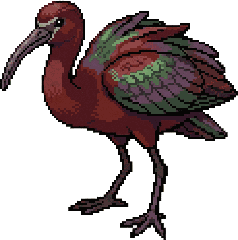
Morito comúnGlossy Ibis
Plegadis falcinellus
Por qué en abrilWhy in April
A principios de abril vuelve de forma masiva a sus colonias, donde cría junto a garzas y cigüeñas. Doñana concentra la gran mayoría de la población española.In early April it returns en masse to its colonies, where it nests alongside herons and storks. Doñana holds the great majority of the Spanish population.
- Dato claveKey figure
- 14.900 invernaban en Doñana en enero de 202614,900 were wintering in Doñana in January 2026
- Régimen de desplazamientoType of movement
- Migradora y dispersiva (regreso a las colonias)Migrant and dispersive (return to the colonies)
Su mejor mes: 578 cuadrículas de 10 km con registros.Its best month: 578 grid squares (10 km) with records. Fuentes:Sources: [5][10]Ficha de especieSpecies page
- Gran concentraciónBig gathering
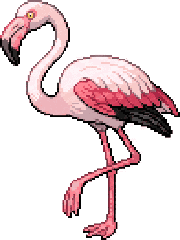
Flamenco comúnGreater Flamingo
Phoenicopterus roseus
Por qué en abrilWhy in April
La cría empieza a partir de abril, en colonias de cientos o miles de parejas con los nidos muy juntos. Tras la cría se dispersa por humedales ibéricos, del norte de África y del Mediterráneo.Breeding starts from April, in colonies of hundreds or thousands of pairs with nests packed close together. After breeding it disperses across wetlands in Iberia, North Africa and the Mediterranean.
- Dato claveKey figure
- Fuente de Piedra: más de 33.900 parejas en 2025, récord desde 1984Fuente de Piedra: more than 33,900 pairs in 2025, a record since 1984
- Régimen de desplazamientoType of movement
- Parcialmente migratoria (cría)Partial migrant (breeding)
En abril, 288 cuadrículas de 10 km con registros; su mejor mes es septiembre, con 313.In April, 288 grid squares (10 km) with records; its best month is September, with 313. Fuentes:Sources: [6][7]Ficha de especieSpecies page
Enclaves ornitológicos recomendados en abrilRecommended birding sites in April
- Cádiz (Tarifa)Cádiz (Tarifa)
Cerro de Cazalla y Punta Paloma
Observatorios fijos del conteo de primavera de 2007: desde Cazalla se controló el sector central del Estrecho y desde Punta Paloma, el occidental.Fixed watchpoints of the spring 2007 count: Cazalla covered the central sector of the Strait and Punta Paloma the western one. [9]
- CáceresCáceres
Parque Nacional de Monfragüe
Cría de la cigüeña negra, que vuelve de África en primavera; Extremadura acoge el 75 % de sus parejas en España.Breeding site of the Black Stork, which returns from Africa in spring; Extremadura holds 75% of its pairs in Spain. [11]
- TarragonaTarragona
Delta del Ebro
Uno de los principales lugares de invernada del correlimos común, que vuelve hacia el norte entre abril y mayo.One of the main wintering sites of the Dunlin, which heads back north between April and May. [12]
Dinámica de vientos en el Estrecho: en el conteo de primavera de 2007, los días de levante el paso se siguió en el sector occidental, de la playa de Los Lances a Bolonia, y los de poniente, en el oriental, hacia la bahía de AlgecirasWinds at the Strait: in the spring 2007 count, on easterly (levante) days the passage was followed in the western sector, from Los Lances beach to Bolonia, and on westerly (poniente) days in the eastern sector, towards the Bay of Algeciras [9].
FuentesSources
Cada cifra y cada fecha de esta página remite a una de estas fuentes. Datos comprobados el 30 de septiembre de 2026.Every figure and date on this page points to one of these sources. Data checked on 30 September 2026.
- SEO/BirdLife (24/03/2023). Ya están aquí: golondrinas, aviones y vencejos.SEO/BirdLife (24/03/2023). They are back: swallows, martins and swifts (in Spanish). Ver fuenteView source
- SEO/BirdLife. Guía de aves de España: ficha del vencejo común.SEO/BirdLife. Guide to the birds of Spain: Common Swift (in Spanish). Ver fuenteView source
- SEO/BirdLife. Guía de aves de España: ficha del abejaruco europeo.SEO/BirdLife. Guide to the birds of Spain: European Bee-eater (in Spanish). Ver fuenteView source
- SEO/BirdLife. Guía de aves de España: ficha del aguilucho cenizo.SEO/BirdLife. Guide to the birds of Spain: Montagu's Harrier (in Spanish). Ver fuenteView source
- SEO/BirdLife. Guía de aves de España: ficha del morito común.SEO/BirdLife. Guide to the birds of Spain: Glossy Ibis (in Spanish). Ver fuenteView source
- SEO/BirdLife. Guía de aves de España: ficha del flamenco común.SEO/BirdLife. Guide to the birds of Spain: Greater Flamingo (in Spanish). Ver fuenteView source
- Junta de Andalucía (09/08/2025). La Junta anilla 600 pollos de flamenco en la Laguna de Fuente de Piedra en la campaña de 2025.Government of Andalusia (09/08/2025). 600 flamingo chicks ringed at Fuente de Piedra Lagoon in the 2025 season. In Spanish. Ver fuenteView source
- SEO/BirdLife (López-Jiménez, N., ed.) (2021). Libro Rojo de las Aves de España. Tabla 14: categoría de cada especie en la Lista Roja de 2021. SEO/BirdLife, Madrid.SEO/BirdLife (López-Jiménez, N., ed.) (2021). Red Book of the Birds of Spain. Table 14: category of each species in the 2021 Red List. SEO/BirdLife, Madrid (in Spanish). Ver fuenteView source
- De la Cruz, A., Ramírez, J., Onrubia, A., Cuenca, D., Carrero, M. y Muñoz, G. (2008). Seguimiento de la migración prenupcial de las aves planeadoras en el estrecho de Gibraltar: resultados de la campaña 2007. Almoraima, 37: 293-305.De la Cruz, A., Ramírez, J., Onrubia, A., Cuenca, D., Carrero, M. and Muñoz, G. (2008). Seguimiento de la migración prenupcial de las aves planeadoras en el estrecho de Gibraltar: resultados de la campaña 2007. Almoraima, 37: 293-305. (in Spanish) Ver fuenteView source
- Delegación del CSIC en Andalucía (19/02/2026). La invernada de aves en Doñana repunta en 2026 tras años de mínimos históricos, aunque las cifras siguen por debajo de la media.CSIC in Andalusia (19/02/2026). Wintering birds in Doñana recover in 2026 after years of record lows, though still below average. In Spanish. Ver fuenteView source
- Ministerio para la Transición Ecológica. Parque Nacional de Monfragüe: cigüeña negra.Spanish Ministry for the Ecological Transition. Monfragüe National Park: Black Stork. In Spanish. Ver fuenteView source
- SEO/BirdLife. Guía de aves de España: ficha del correlimos común.SEO/BirdLife. Guide to the birds of Spain: Dunlin (in Spanish). Ver fuenteView source
 Herramienta de campoField tool
Avistamientos recientes en tu provinciaRecent sightings in your area
BirdPedy reúne en un mapa los avistamientos recientes de eBird, iNaturalist y MINKA junto a los de su propia comunidad, y su planificador añade el histórico de Observation.org y del Institut Català d'Ornitologia, a través de GBIF, para consultar en qué puntos de tu provincia se ha citado cada especie en este mes durante los últimos cinco años.BirdPedy brings together on one map the recent sightings from eBird, iNaturalist and MINKA and those of its own community, and its planner adds historical data from Observation.org and the Institut Català d'Ornitologia, through GBIF, so you can see where each species has been recorded in your area in this month over the last five years.