 BirdPedy
Flamenco comúnGreater Flamingo
En 43 provincias en septiembre y en 29 en abrilIn 43 provinces in September and 29 in April
Reporte de rarezaRarity report
Por qué es poco comúnWhy it is uncommonEntre 2020 y 2024 se vio en España en 1.467 ocasiones distintas, que suman 1.827 días, todos los años (datos de Observation.org, eBird, iNaturalist y el ICO publicados en GBIF). En la provincia mediana, 1 de cada 2.400 registros de aves es suyo. En la guía de aves de SEO/BirdLife figura como habitual en España.Between 2020 and 2024 it was seen in Spain on 1,467 separate occasions, adding up to 1,827 days, every year (data from Observation.org, eBird, iNaturalist and ICO published on GBIF). In the median province, 1 in every 2,400 bird records is of this species. SEO/BirdLife's bird guide lists it as regular in Spain.
Cada carrizo es un mes: su altura, las provincias con registros de 2020 a 2024.Each reed is a month: its height, the provinces with records from 2020 to 2024.- Provincias con registrosProvinces with records
- 47 de 52of 52
- En la appIn the app
- Todo el añoAll year
- EnvergaduraWingspan
- 140-170 cm140-170 cm
- LongitudLength
- 125-145 cm125-145 cm
- Lista Roja de EspañaSpanish Red List
- NT Casi amenazadaNear Threatened

Información generalGeneral Information
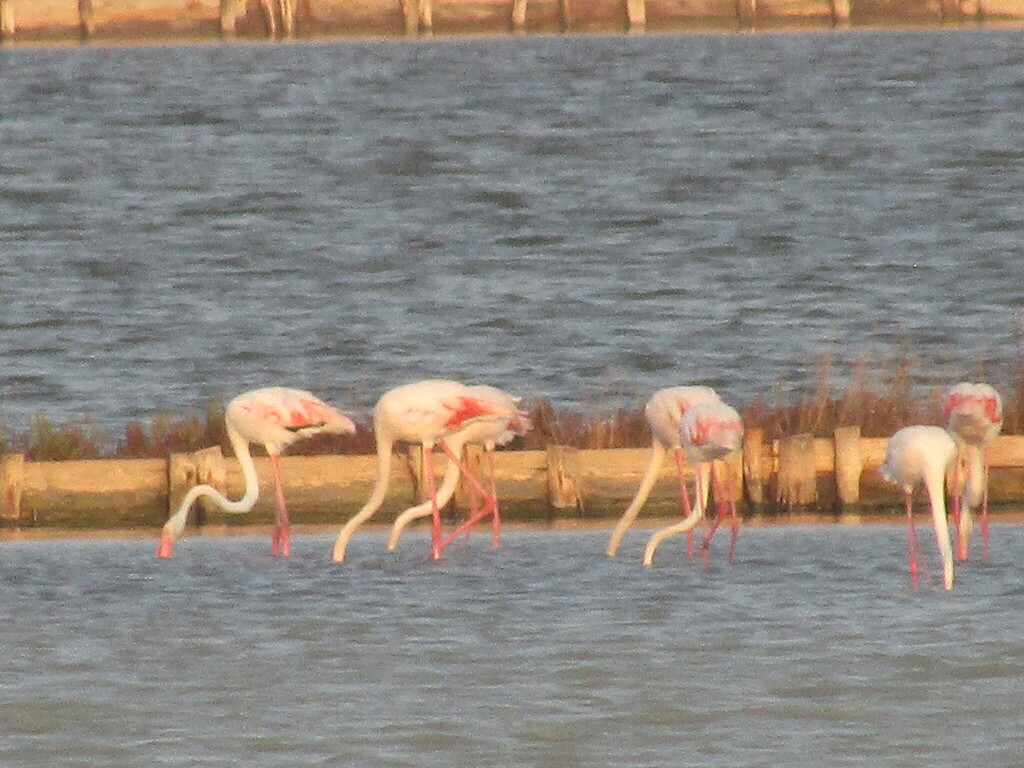
Por su notable tamaño y su peculiar aspecto, el flamenco común resulta posiblemente la más espectacular de todas las aves acuáticas que pueblan nuestros humedales. Su estilizada silueta puede ser vista en muchos de nuestros mejores enclaves húmedos costeros mediterráneos y suratlánticos, en algunas lagunas del interior, como la malagueña de Fuente de Piedra, donde se asienta su principal colonia de cría en España y una de las más importantes de todo el Mediterráneo, o algunas localidades manchegas.Possibly the most spectacular waterbird in our wetlands. Its stylized silhouette is seen in many Mediterranean and South Atlantic coastal wetlands and inland lagoons like Fuente de Piedra (Málaga), the main breeding colony in Spain and one of the most important in the Mediterranean.
IdentificaciónIdentification
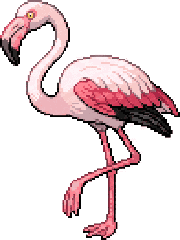
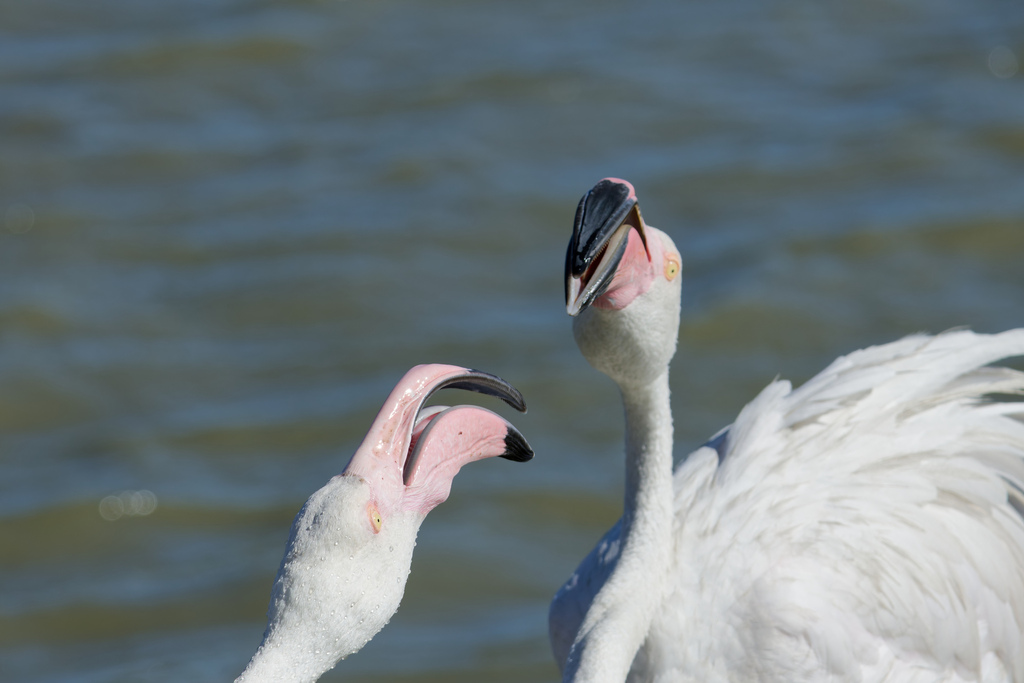
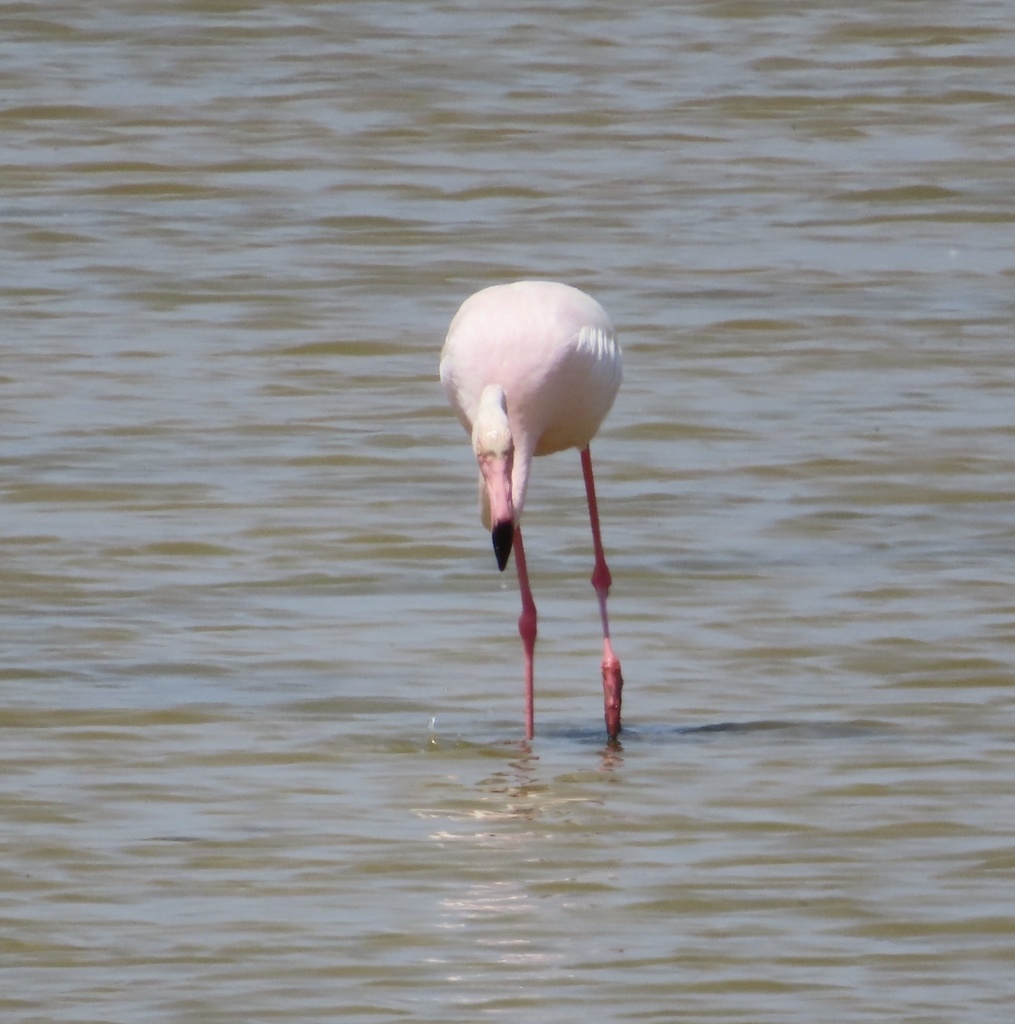
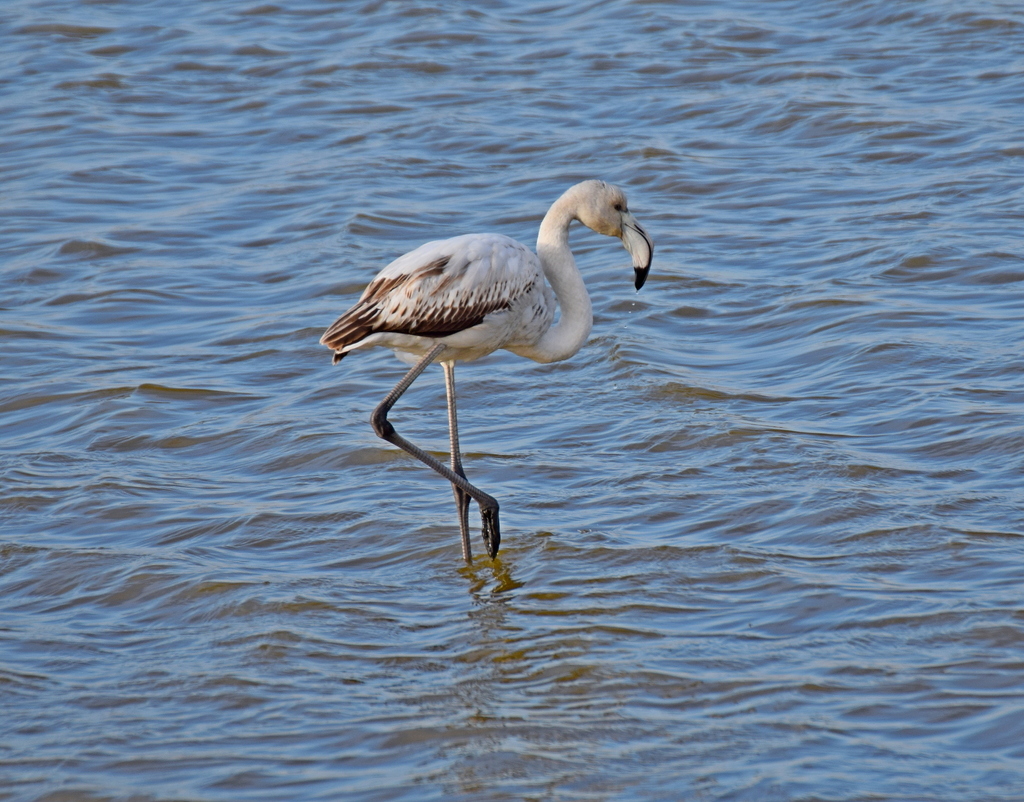
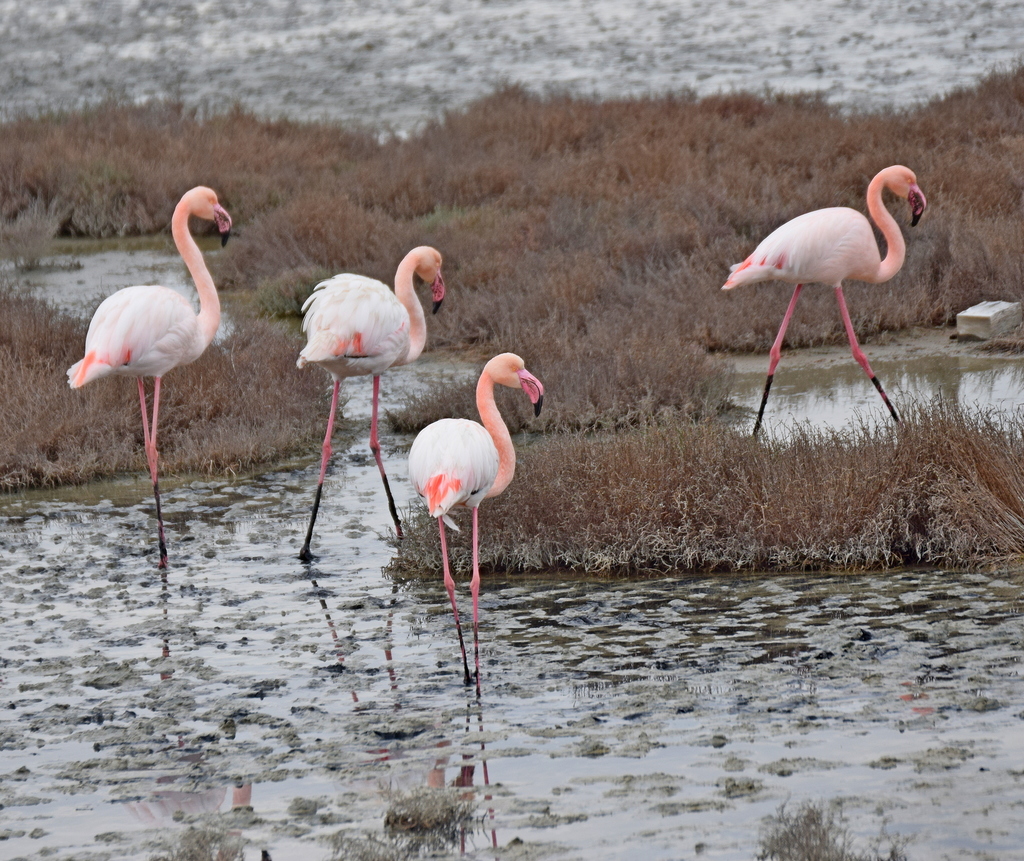
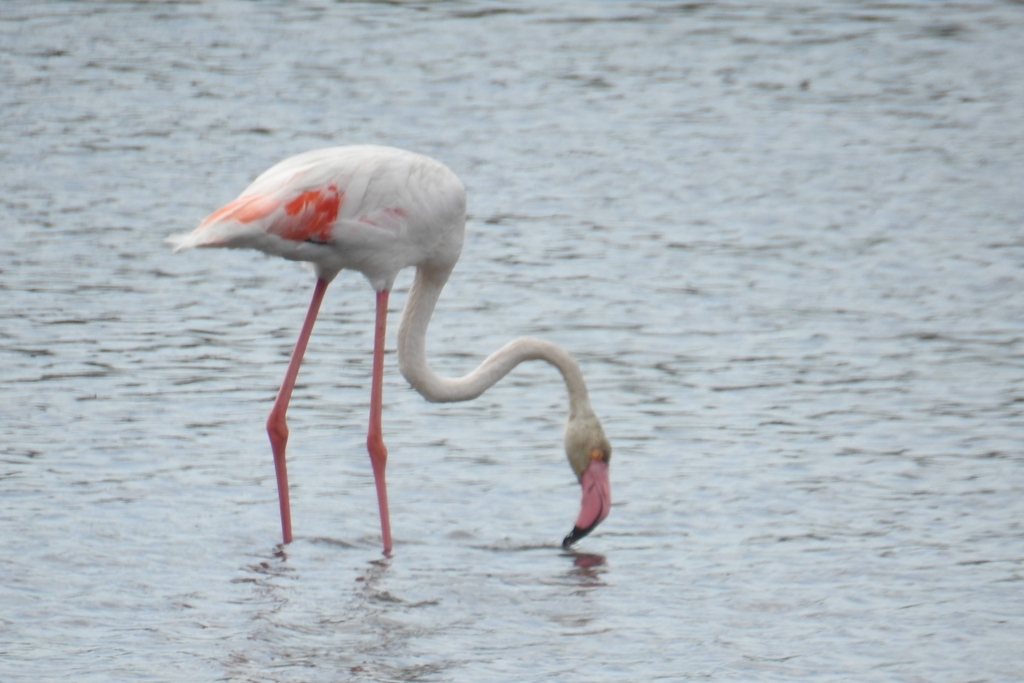
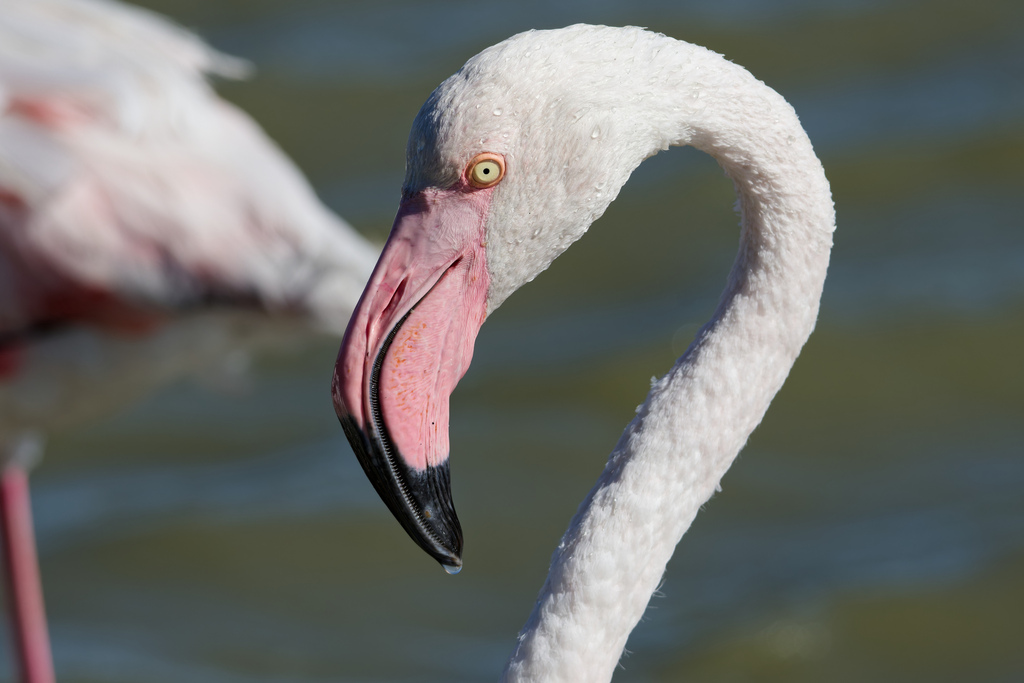
El flamenco común, de aspecto inconfundible, destaca por su gran tamaño y sus largas patas y cuello. Cuerpo, cuello y cabeza exhiben una coloración blanquecina con tonos rosados, mientras que las plumas coberteras e infracoberteras alares presentan un intenso rosa carmesí. Sin embargo, las plumas de vuelo o rémiges son de color negro. En reposo, estas plumas negras aparecen ocultas bajo las coberteras y las largas plumas escapulares. El pico, curvado hacia la mitad de su longitud casi en ángulo recto, es también de color rosa, salvo en el extremo terminal, donde se torna negro. Las patas lucen asimismo tonos rosados. En vuelo presenta una silueta muy estilizada en la que mantiene el largo cuello y las patas estirados. El dimorfismo sexual se manifiesta en el tamaño de las aves, mayor en el macho. Los jóvenes contrastan notablemente con los adultos por presentar una coloración pardo-grisácea, sin ningún tono rosado (tampoco en el pico o las patas). Sus patas resultan además mucho más cortas.Unmistakable appearance with large size, long legs, and a long neck. Body, neck, and head are whitish with pink tones; wing coverts/underwing coverts are vibrant crimson pink. Flight feathers (remiges) are black (hidden at rest). The bill is curved almost at a right angle, pink with a black tip. Legs are also pink. Sexes differ in size (males larger). Juveniles are brownish-gray without pink tones and have shorter legs.
DistribuciónDistribution
El flamenco común presenta una distribución asociada a los humedales someros, salinos o salobres del arco atlántico andaluz, el litoral mediterráneo (incluidas las Baleares) y lagunas interiores de Andalucía y de Castilla-La Mancha. En Canarias resulta accidental.Distribution associated with shallow saline/brackish wetlands in the Andalusian Atlantic arc, Mediterranean coast (including Balearics), and inland lagoons of Andalusia and Castile-La Mancha.
Textos reproducidos con permiso de laTexts translated and reproduced with permission from the Guía de Aves de España © SEO/BirdLife
Estado de conservaciónConservation Status
- EX
- RE
- CR
- EN
- VU
- NT
- LC
Casi amenazadaNear Threatened
Qué significa cada categoríaWhat each category means
- LC
- Preocupación menor: Taxón evaluado que no califica para categorías amenazadas. Especies abundantes y ampliamente distribuidasLeast Concern - Evaluated taxon that does not qualify for threatened categories. Widespread and abundant taxa
- NT
- Casi amenazada: No califica actualmente como amenazada, pero está cerca de calificar o es probable que califique en el futuro cercanoNear Threatened - Does not currently qualify as threatened, but is close to qualifying or likely to qualify in the near future
- VU
- Vulnerable: Enfrenta un alto riesgo de extinción en estado silvestre según los criterios A a E de IUCNVulnerable - Facing a high risk of extinction in the wild based on IUCN criteria A to E
- EN
- En peligro: Enfrenta un riesgo muy alto de extinción en estado silvestre según los criterios A a E de IUCNEndangered - Facing a very high risk of extinction in the wild based on IUCN criteria A to E
- CR
- En peligro crítico: Enfrenta un riesgo extremadamente alto de extinción en estado silvestre según los criterios A a E de IUCNCritically Endangered - Facing an extremely high risk of extinction in the wild based on IUCN criteria A to E
- DD
- Datos insuficientes: Información inadecuada para evaluar el riesgo de extinción basándose en distribución o estado poblacionalData Deficient - Inadequate information to assess extinction risk based on distribution and/or population status
- NE
- No evaluada: No ha sido evaluada aún contra los criterios de la Lista Roja de IUCNNot Evaluated - Has not yet been assessed against the IUCN Red List criteria
- RE
- Extinta regionalmente: El taxón ya no existe en la región específica, aunque puede sobrevivir en otros lugaresRegionally Extinct - Taxon no longer exists in the specific region, though it may survive elsewhere
- EX
- Extinta - No existe duda razonable de que ha muerto el último individuo del taxónExtinct - No reasonable doubt that the last individual of the taxon has died
TaxonomíaTaxonomy
- OrdenOrder
- Phoenicopteriformes
- FamiliaFamily
- Phoenicopteridae
Presencia en EspañaPresence in Spain
- HabitualRegular
- InvernanteWinter visitor
- ResidenteResident
En la app: todo el año.In the app: all year.
Dónde verlaWhere to see it
621 cuadrículas de 10 km con registros de 2020 a 2024. Toca un mes para ver dónde se ha visto.621 10 km squares with records from 2020 to 2024. Pick a month to see where it has been seen.
Cargando el mapa…Loading the map…
Dónde es regularWhere it is regular
Provincias con registros en al menos 3 de los 5 años algún mes, de más a menos frecuente, y sus mejores meses.Provinces with records in at least 3 of the 5 years in some month, from most to least frequent, and their best months.
- AlmeríaAlmeríaseptiembre, agosto, octubreSeptember, August, October
- AlicanteAlicanteoctubre, septiembre, eneroOctober, September, January
- TarragonaTarragonamarzo, abril, septiembreMarch, April, September
- Ciudad RealCiudad Realfebrero, enero, mayoFebruary, January, May
- HuelvaHuelvaabril, enero, julioApril, January, July
- ValenciaValenciaagosto, julio, septiembreAugust, July, September
- CuencaCuencafebrero, enero, diciembreFebruary, January, December
- AlbaceteAlbaceteseptiembre, mayo, abrilSeptember, May, April
- BalearesBalearic Islandsjulio, agosto, septiembreJuly, August, September
- ToledoToledoseptiembre, octubre, noviembreSeptember, October, November
Ver las 30 provinciasSee all 30 provinces
- SevillaSevillaabril, agosto, febreroApril, August, February
- CádizCádizmayo, abril, eneroMay, April, January
- MálagaMálagamarzo, abril, eneroMarch, April, January
- GironaGironaseptiembre, mayo, abrilSeptember, May, April
- MurciaMurciaagosto, septiembre, octubreAugust, September, October
- CastellónCastellónabril, agosto, septiembreApril, August, September
- TeruelTeruelfebrero, marzo, noviembreFebruary, March, November
- ZaragozaZaragozafebrero, noviembre, diciembreFebruary, November, December
- BarcelonaBarcelonamarzo, abril, febreroMarch, April, February
- ZamoraZamoranoviembre, diciembre, junioNovember, December, June
- BadajozBadajozseptiembre, octubre, agostoSeptember, October, August
- GranadaGranadaenero, septiembre, octubreJanuary, September, October
- CórdobaCórdobafebrero, abril, eneroFebruary, April, January
- JaénJaénoctubre, septiembre, noviembreOctober, September, November
- SalamancaSalamancaoctubreOctober
- CáceresCáceresseptiembre, agosto, octubreSeptember, August, October
- HuescaHuescaseptiembre, octubre, noviembreSeptember, October, November
- Las PalmasLas Palmasdiciembre, enero, febreroDecember, January, February
- PontevedraPontevedraoctubre, septiembre, diciembreOctober, September, December
- MadridMadridseptiembre, noviembreSeptember, November
Datos: registros en GBIF de 2020 a 2024 de Observation.org, eBird, iNaturalist y el ICO, descargados el 23/10/2026.Data: GBIF records from 2020 to 2024 from Observation.org, eBird, iNaturalist and the ICO, downloaded on 23/10/2026. GBIF.org (23 October 2026) GBIF Occurrence Download · doi:10.15468/dl.r5sf2a · CC BY-NC 4.0
GaleríaGallery
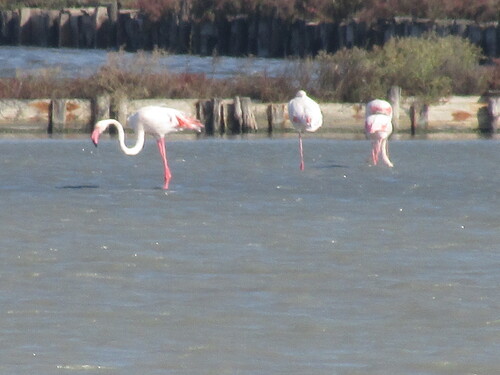
© SteveM4560 · CC BY · iNaturalist 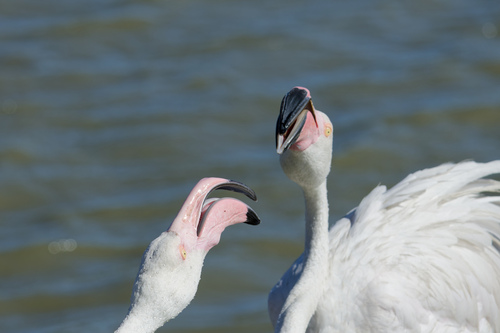
© Donald Davesne · CC BY · iNaturalist 
© Nelson Balcar · CC BY · iNaturalist 
© Nuno Fialho · CC BY · iNaturalist 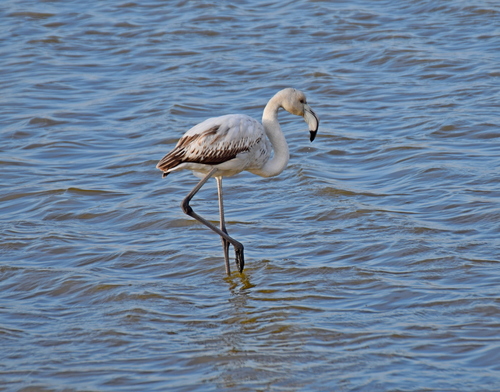
© Kostas Zontanos · CC BY · iNaturalist 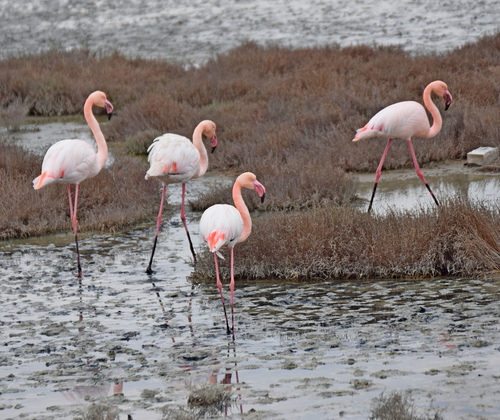
© Kostas Zontanos · CC BY · iNaturalist 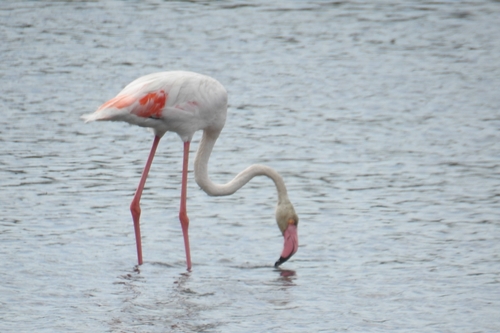
© David Pereira · CC BY · iNaturalist 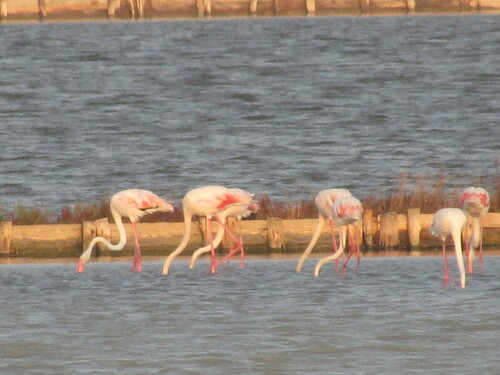
© SteveM4560 · CC BY · iNaturalist 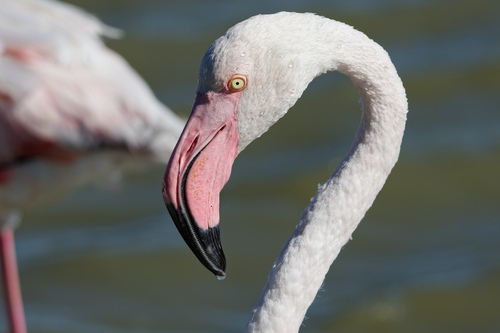
© Donald Davesne · CC BY · iNaturalist


Especies relacionadasRelated species
Otras aves de la familia Phoenicopteridae y de órdenes cercanos.Other birds from the Phoenicopteridae family and nearby orders.
- RaroRare
 Flamenco enanoLesser FlamingoPhoeniconaias minor
- ComúnCommon
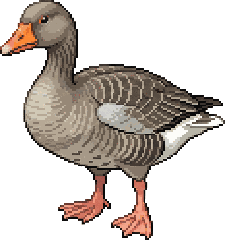 Ánsar comúnGreylag GooseAnser anser
- Poco comúnUncommon
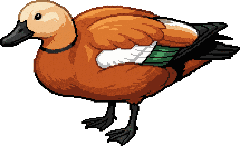 Tarro caneloRuddy ShelduckTadorna ferruginea
- Poco comúnUncommon
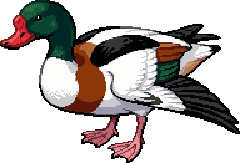 Tarro blancoCommon ShelduckTadorna tadorna
- ComúnCommon
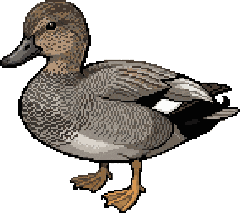 Ánade frisoGadwallMareca strepera
- ComúnCommon
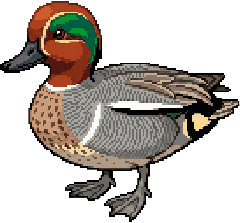 Cerceta comúnEurasian TealAnas crecca
- ComúnCommon
 Ánade azulónMallardAnas platyrhynchos
- Poco comúnUncommon
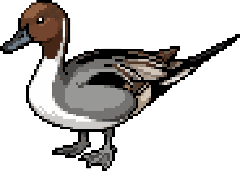 Ánade rabudoNorthern PintailAnas acuta
 Gratis, sin anuncios ni comprasFree, no ads, no purchases