 BirdPedy
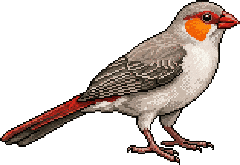
Estrilda carinaranjaOrange-cheeked Waxbill
En 2 provincias en mayo y sin registros un mes del añoIn 2 provinces in May, and no records in one month of the year
Reporte de rarezaRarity report
Por qué es raroWhy it is rarePequeño estríldido africano escapado de jaula. Sus núcleos asilvestrados son muy escasos y se concentran en humedales del este peninsular —Castellón, Valencia, Barcelona— y en Canarias.A small African waxbill escaped from captivity. Its feral groups are very scarce and cluster in wetlands of eastern Spain — Castellón, Valencia, Barcelona — and in the Canaries.
Cada carrizo es un mes: su altura, las provincias con registros de 2020 a 2024.Each reed is a month: its height, the provinces with records from 2020 to 2024.- Provincias con registrosProvinces with records
- 2 de 52of 52
- En la appIn the app
- Todo el añoAll year
- EnvergaduraWingspan
- 13 cm13 cm
- LongitudLength
- 11 cm11 cm
- Lista Roja de EspañaSpanish Red List
- NE No evaluada en EspañaNot assessed in Spain

Información generalGeneral Information
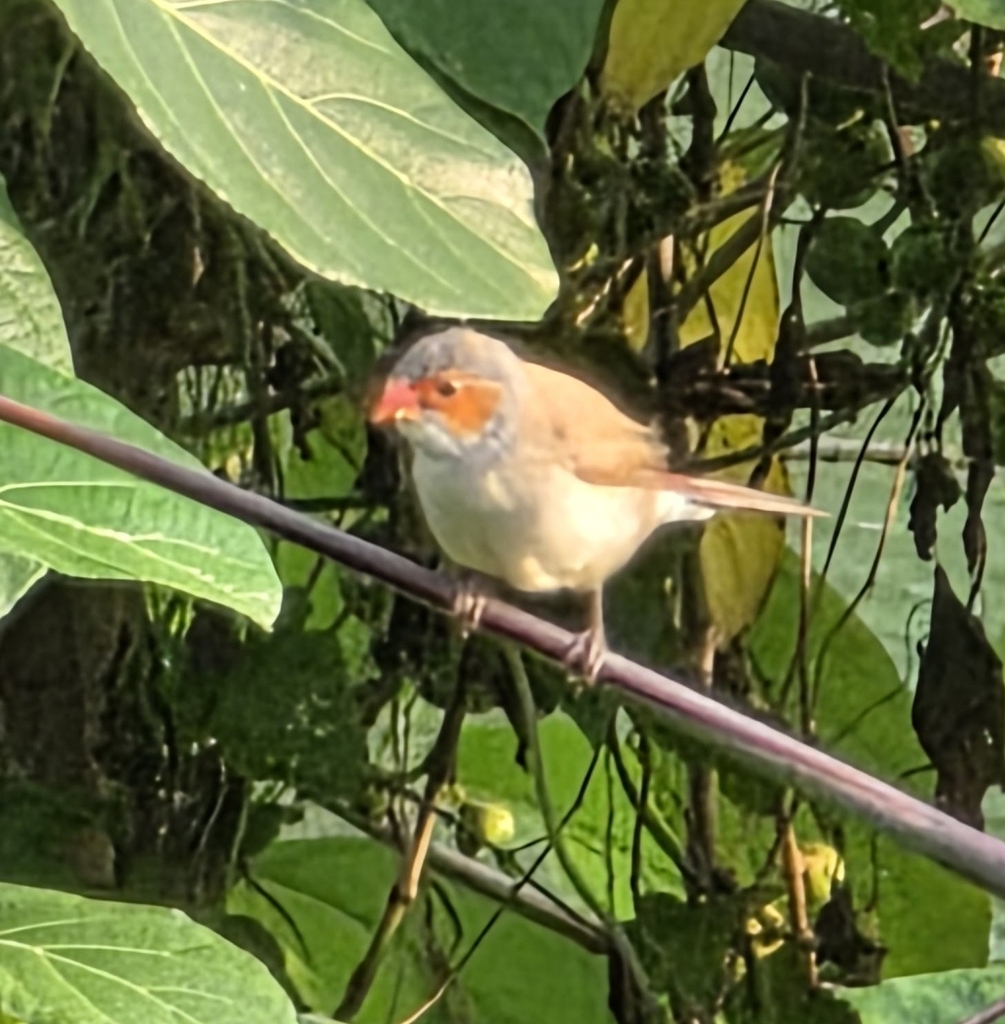
La estrilda carinaranja es una pequeña y colorida ave introducida en Europa como especie ornamental. Su presencia en humedales del este peninsular es consecuencia de escapes de ejemplares mantenidos en cautividad, y se considera especie invasora, por lo que su población ha de ser controlada.The Orange-cheeked Waxbill is a 'gray-and-orange' jewel of the riverbanks. Originally from Africa, its presence in Spain is due to escapes from captivity. It has formed small wild groups in the Mediterranean coast and Andalusia. Its tiny size and bright 'orange' face make it a beautiful representative of the waxbill family. While its impact is small, it is considered an invasive species. It represents the delicate and colorful arrivals from the tropics to our Mediterranean reed-beds. It is a symbol of the African garden guest.
IdentificaciónIdentification
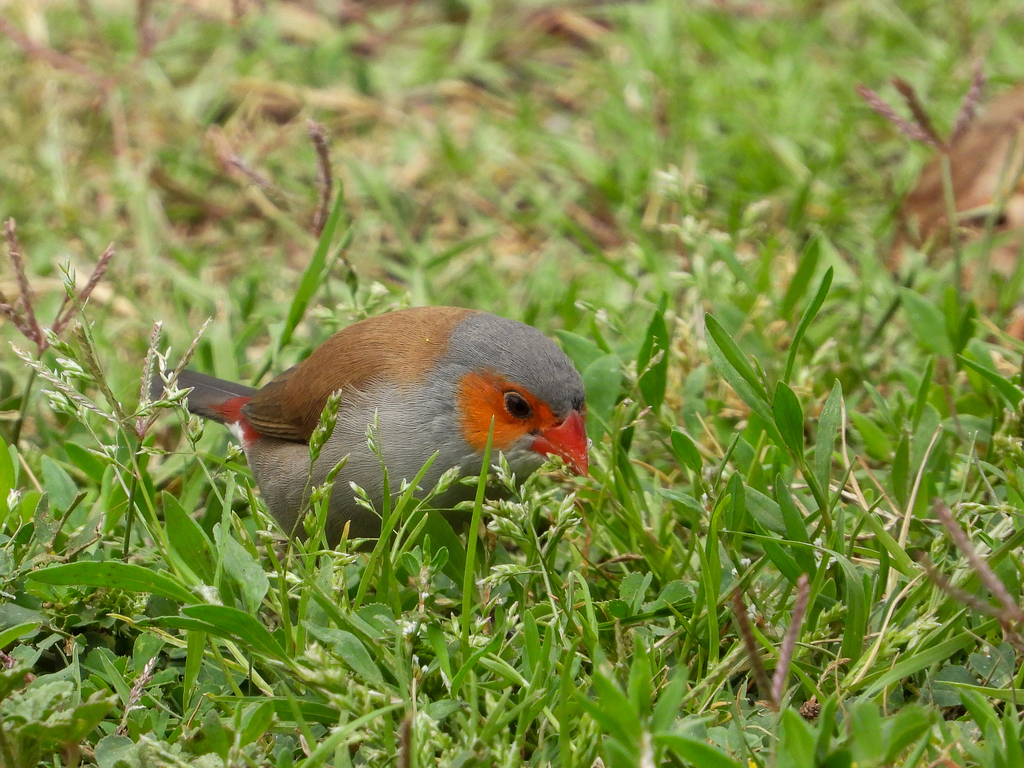
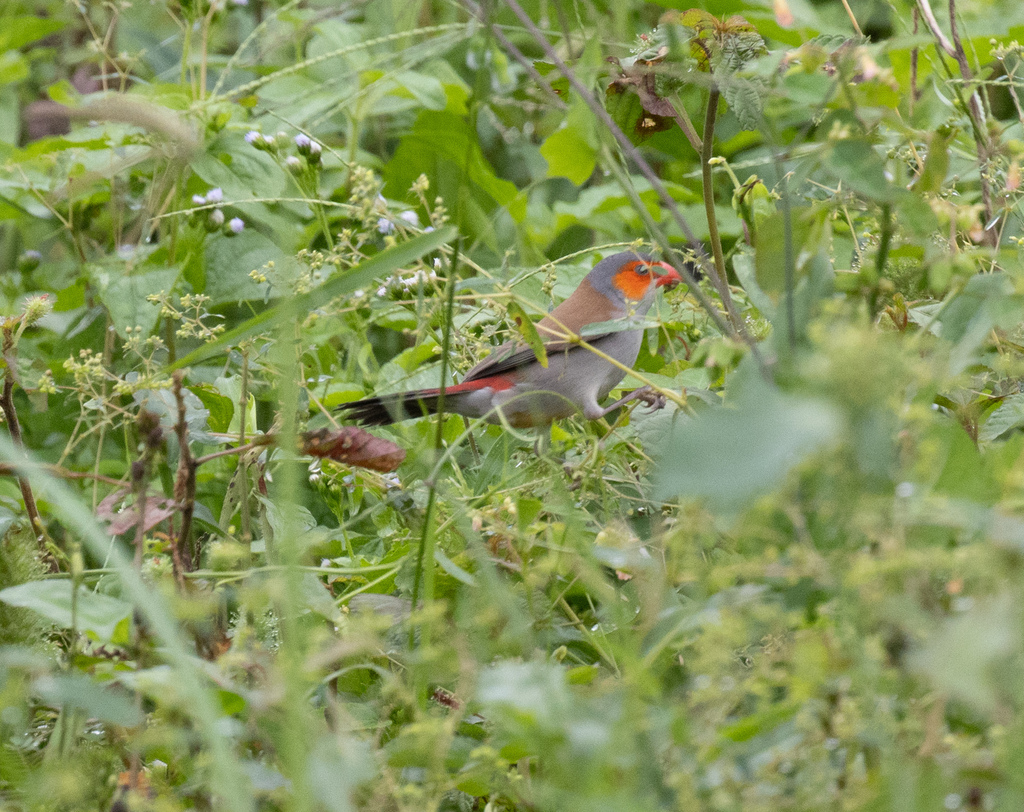
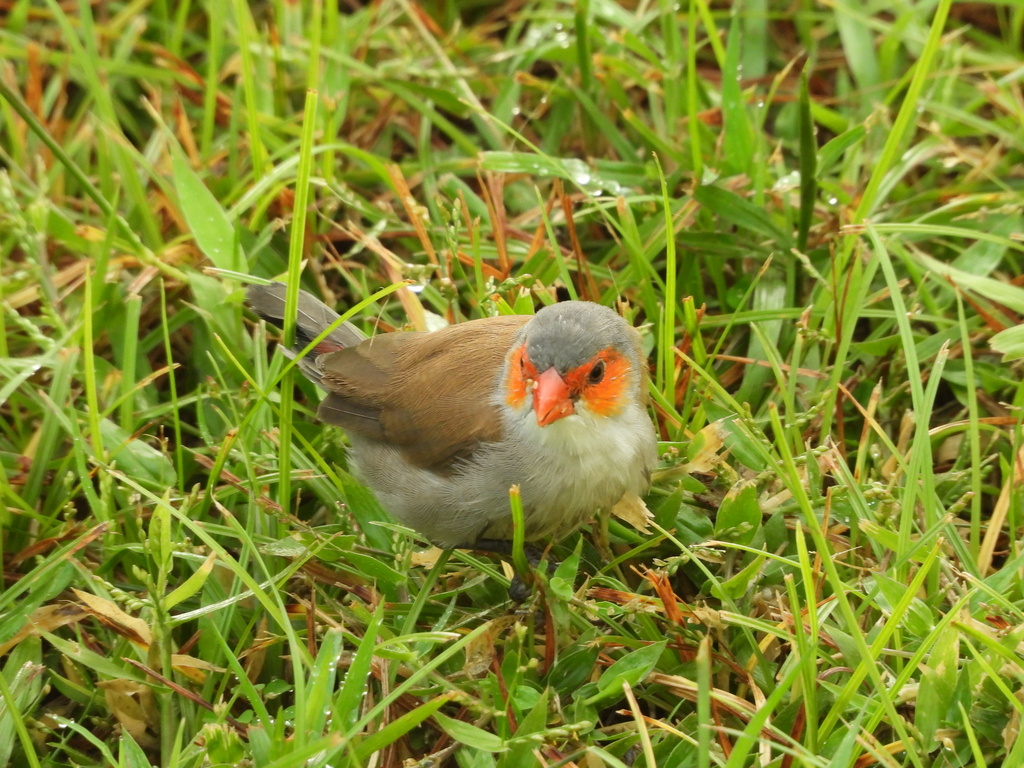
La estrilda carinaranja es un ave menuda similar a la estrilda común. Tiene el pico rojo y un tono gris (más parduzco en las hembras) desde la frente hasta la nuca, donde se funde con el marrón del manto. La rabadilla y coberteras supracaudales son rojas y la cola pardo negruzca con franjas basales rojas en algunas timoneras. Garganta y pecho son grises y el vientre blanquecino con un tinte beige. La mancha naranja que le da nombre cubre el entorno del ojo y es más intensa en los machos.A tiny and delicate bird from the African savannahs. It has a diagnostic soft gray head with a bright, oval orange-red patch behind the eye (the 'cheek'). Its bill is bright red and its rump is a deep vinous red. The rest of the body is brownish-gray with a pale belly. Both sexes are similar. It is very active and social, often traveling in small, restless groups.
DistribuciónDistribution
Los ejemplares de estrilda carinaranja residentes en nuestro territorio son resultado de escapes de individuos mantenidos en cautividad. Si bien existen capturas resultantes de campañas de anillamiento en diferentes puntos de la Península (Sevilla, Málaga o Murcia), durante el periodo de realización del III Atlas de las aves en época de reproducción en España solo se localizó su presencia en el tramo bajo del río Mijares (provincia de Castellón).Scarce resident/breeder (invasive exotic). Localized presence in the Mijares river (Castellón) and records in Sevilla, Málaga, and Murcia.
Textos reproducidos con permiso de laTexts translated and reproduced with permission from the Guía de Aves de España © SEO/BirdLife
Estado de conservaciónConservation Status
- EX
- RE
- CR
- EN
- VU
- NT
- LC
NE
No evaluada en EspañaNot assessed in Spain
Sin categoría en el Libro Rojo de las Aves de España 2021No category in the Red Book of the Birds of Spain 2021
Qué significa cada categoríaWhat each category means
- LC
- Preocupación menor: Taxón evaluado que no califica para categorías amenazadas. Especies abundantes y ampliamente distribuidasLeast Concern - Evaluated taxon that does not qualify for threatened categories. Widespread and abundant taxa
- NT
- Casi amenazada: No califica actualmente como amenazada, pero está cerca de calificar o es probable que califique en el futuro cercanoNear Threatened - Does not currently qualify as threatened, but is close to qualifying or likely to qualify in the near future
- VU
- Vulnerable: Enfrenta un alto riesgo de extinción en estado silvestre según los criterios A a E de IUCNVulnerable - Facing a high risk of extinction in the wild based on IUCN criteria A to E
- EN
- En peligro: Enfrenta un riesgo muy alto de extinción en estado silvestre según los criterios A a E de IUCNEndangered - Facing a very high risk of extinction in the wild based on IUCN criteria A to E
- CR
- En peligro crítico: Enfrenta un riesgo extremadamente alto de extinción en estado silvestre según los criterios A a E de IUCNCritically Endangered - Facing an extremely high risk of extinction in the wild based on IUCN criteria A to E
- DD
- Datos insuficientes: Información inadecuada para evaluar el riesgo de extinción basándose en distribución o estado poblacionalData Deficient - Inadequate information to assess extinction risk based on distribution and/or population status
- NE
- No evaluada: No ha sido evaluada aún contra los criterios de la Lista Roja de IUCNNot Evaluated - Has not yet been assessed against the IUCN Red List criteria
- RE
- Extinta regionalmente: El taxón ya no existe en la región específica, aunque puede sobrevivir en otros lugaresRegionally Extinct - Taxon no longer exists in the specific region, though it may survive elsewhere
- EX
- Extinta - No existe duda razonable de que ha muerto el último individuo del taxónExtinct - No reasonable doubt that the last individual of the taxon has died
TaxonomíaTaxonomy
- OrdenOrder
- Passeriformes
- FamiliaFamily
- Estrildidae
Presencia en EspañaPresence in Spain
- HabitualRegular
- ResidenteResident
En la app: todo el año.In the app: all year.
Dónde verlaWhere to see it
7 cuadrículas de 10 km con registros de 2020 a 2024. Toca un mes para ver dónde se ha visto.7 10 km squares with records from 2020 to 2024. Pick a month to see where it has been seen.
Cargando el mapa…Loading the map…
Dónde es regularWhere it is regular
Provincias con registros en al menos 3 de los 5 años algún mes, de más a menos frecuente, y sus mejores meses.Provinces with records in at least 3 of the 5 years in some month, from most to least frequent, and their best months.
- CastellónCastellónnoviembre, octubre, diciembreNovember, October, December
Datos: registros en GBIF de 2020 a 2024 de Observation.org, eBird, iNaturalist y el ICO, descargados el 23/10/2026.Data: GBIF records from 2020 to 2024 from Observation.org, eBird, iNaturalist and the ICO, downloaded on 23/10/2026. GBIF.org (23 October 2026) GBIF Occurrence Download · doi:10.15468/dl.r5sf2a · CC BY-NC 4.0
GaleríaGallery
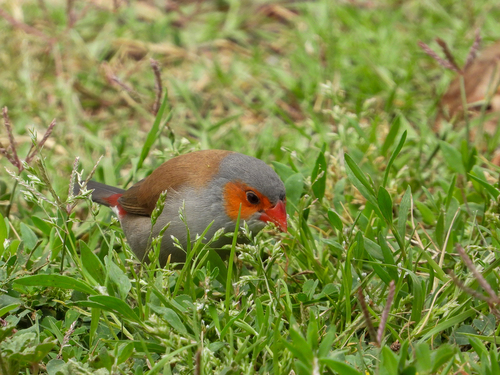
© James M. Maley · CC BY · iNaturalist 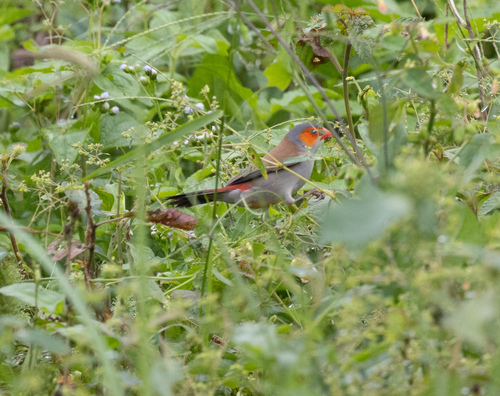
© avocat · CC BY · iNaturalist 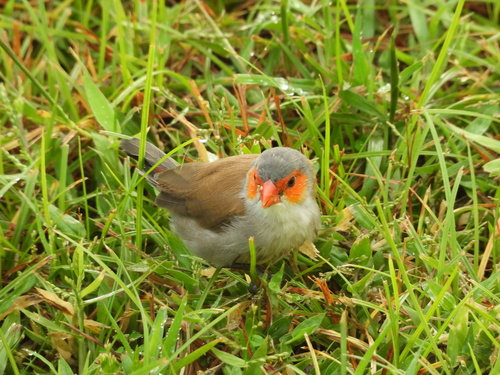
© fletchermoore · CC BY · iNaturalist 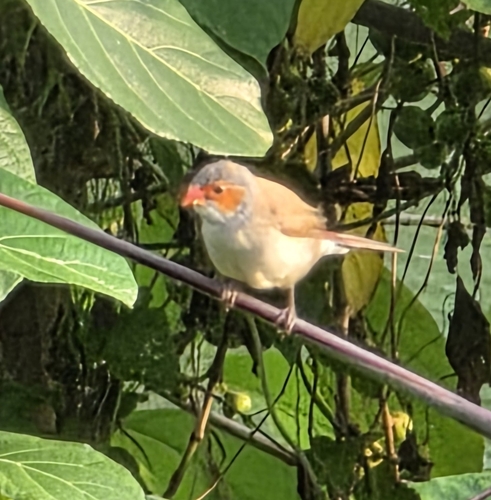
© Doreen · CC BY · iNaturalist
Especies relacionadasRelated species
Otras aves de la familia Estrildidae y de órdenes cercanos.Other birds from the Estrildidae family and nearby orders.
- RaroRare
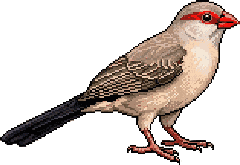 Estrilda culinegraBlack-rumped WaxbillEstrilda troglodytes
- Poco comúnUncommon
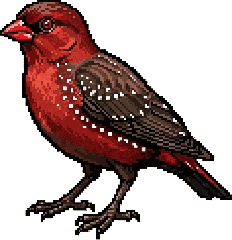 Bengalí rojoRed AvadavatAmandava amandava
- Poco comúnUncommon
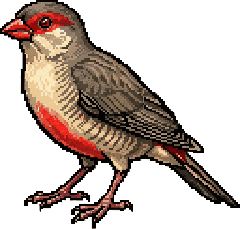 Estrilda comúnCommon WaxbillEstrilda astrild
- RaroRare
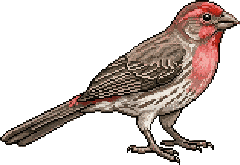 Camachuelo mexicanoHouse FinchHaemorhous mexicanus
- RaroRare
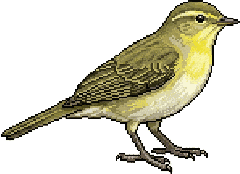 Mosquitero canarioCanary Islands ChiffchaffPhylloscopus canariensis
- RaroRare
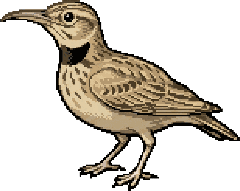 Alondra ricotíDupont's LarkChersophilus duponti
- Poco comúnUncommon
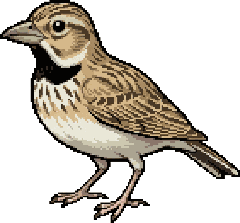 Calandria comúnCalandra LarkMelanocorypha calandra
- Poco comúnUncommon
 Terrera comúnGreater Short-toed LarkCalandrella brachydactyla
 Gratis, sin anuncios ni comprasFree, no ads, no purchases