 BirdPedy
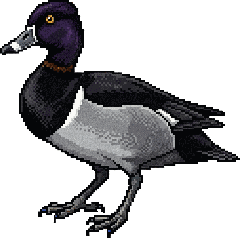
Porrón acollaradoRing-necked Duck
En 18 provincias en diciembre y en 1 en julioIn 18 provinces in December and 1 in July
Reporte de rarezaRarity report
Por qué es raroWhy it is rareEspecie americana que ha pasado de ser accidental a invernante regular aunque escasa en embalses y lagunas del noroeste peninsular y fachada atlántica.American species that has gone from accidental to regular but scarce winterer in reservoirs and lagoons.
Cada carrizo es un mes: su altura, las provincias con registros de 2020 a 2024.Each reed is a month: its height, the provinces with records from 2020 to 2024.- Provincias con registrosProvinces with records
- 29 de 52of 52
- En la appIn the app
- Noviembre a marzoNovember to March
- EnvergaduraWingspan
- 61-75 cm61-75 cm
- LongitudLength
- 37-46 cm37-46 cm
- Lista Roja de EspañaSpanish Red List
- NE No evaluada en EspañaNot assessed in Spain

Información generalGeneral Information
El porrón acollarado era un divagante muy raro en Europa, pero se hizo habitual a partir de finales de los setenta, sobre todo en las islas Británicas, donde un pequeño número de individuos se comporta ya como invernante regular. Además, las aves tienden a verse invierno tras invierno en las mismas localidades. Un par de recuperaciones de aves anilladas demuestran la existencia de movimientos desde o hacia Norteamérica. En España, este porrón cuenta con citas cada año desde 1989.Formerly a very rare accidental, it has become a regular winter visitor to Europe since the 1970s. Some individuals stay for long periods and return to the same wetlands annually. It is a diving duck that prefers freshwater lagoons and reservoirs. Its recent increase in Europe might be linked to population growth in its North American core. In Spain, it is now an expected 'rarity' in the right habitats.
IdentificaciónIdentification
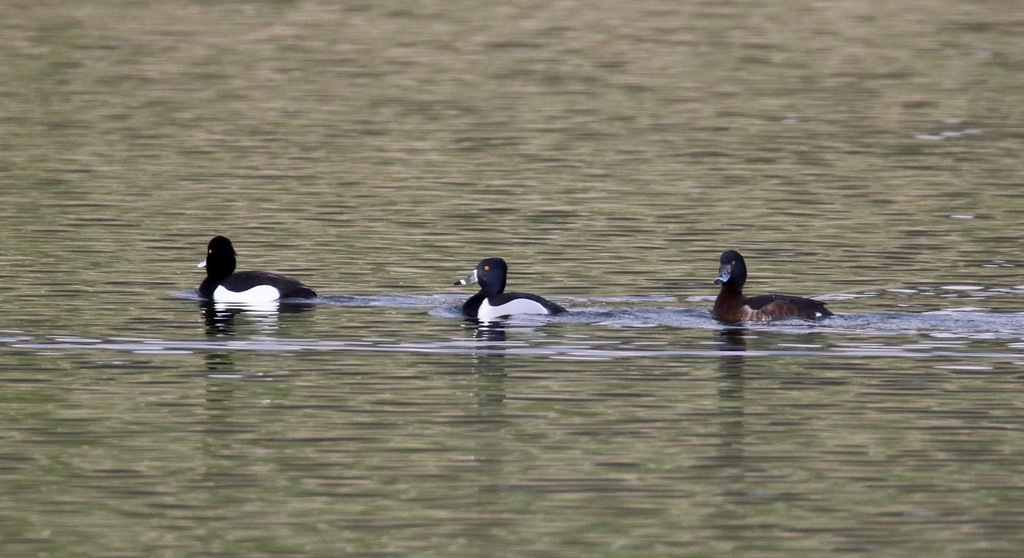
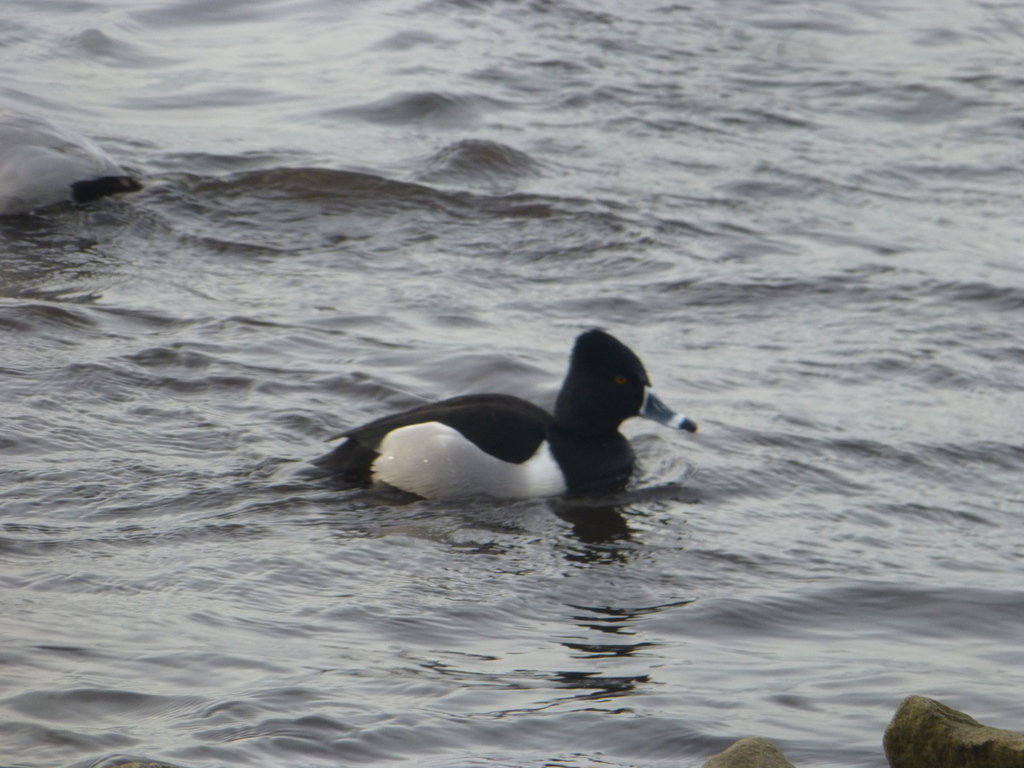
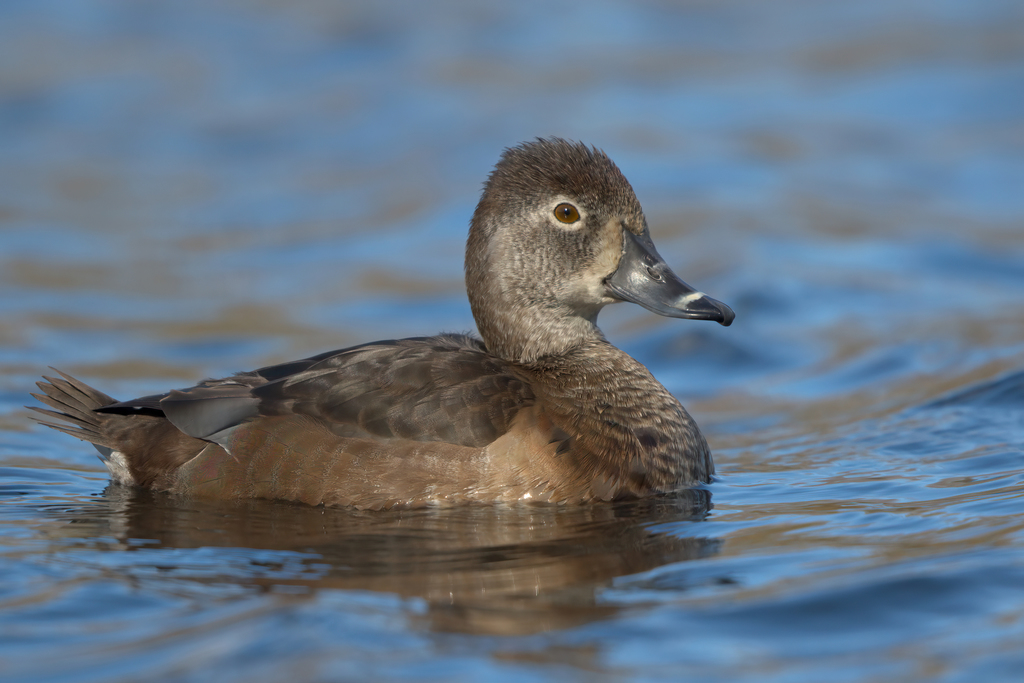
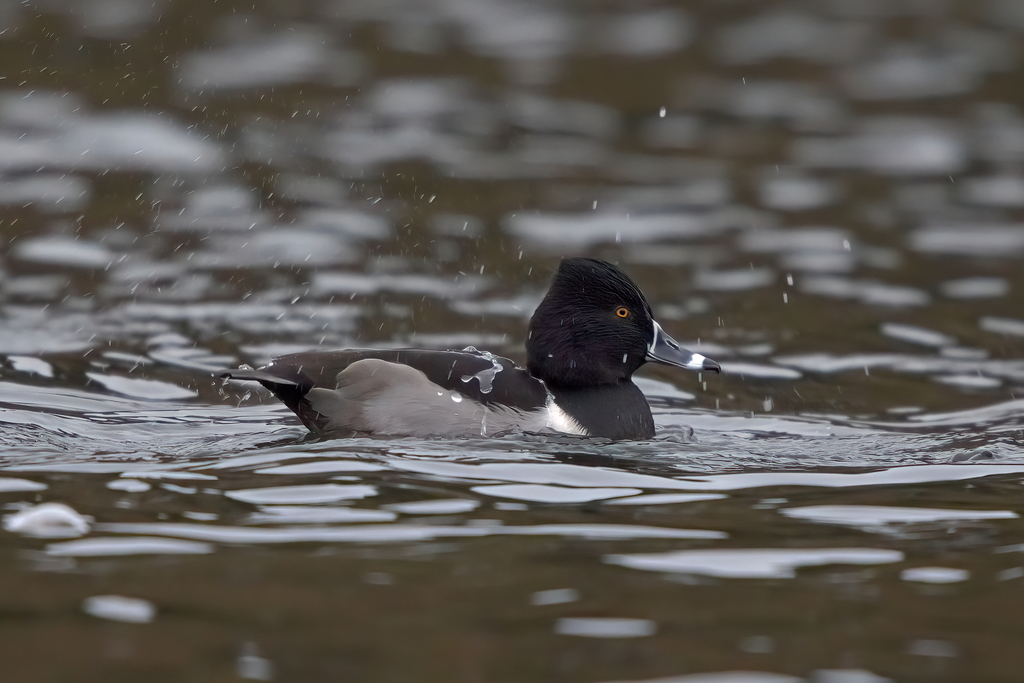
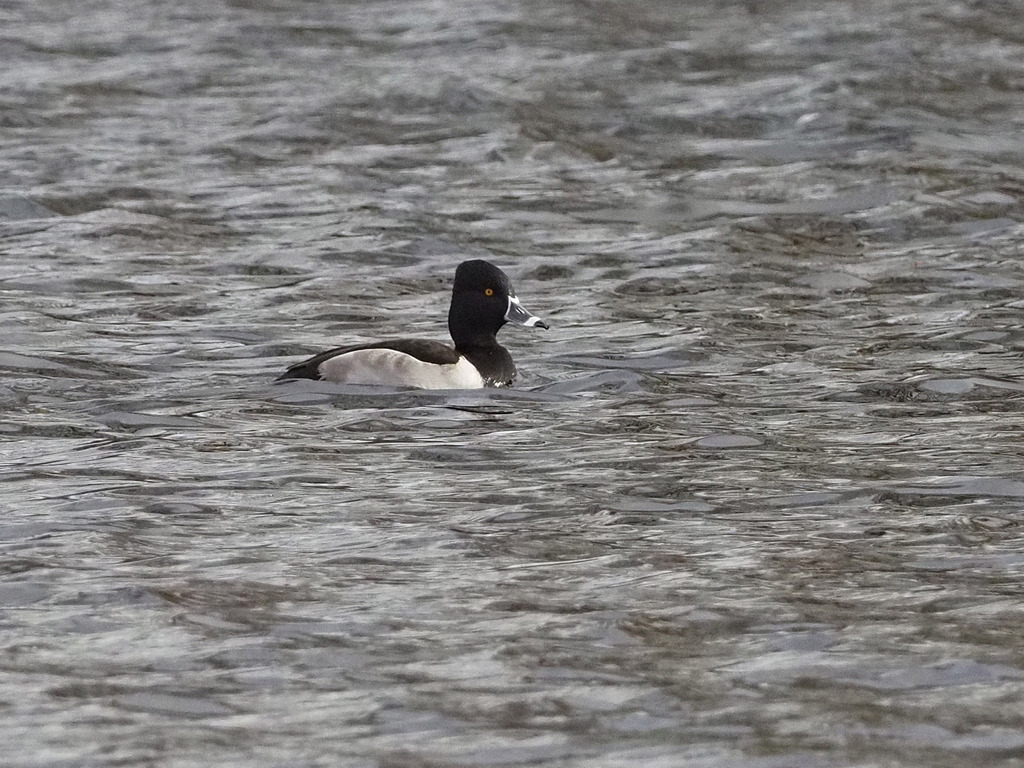
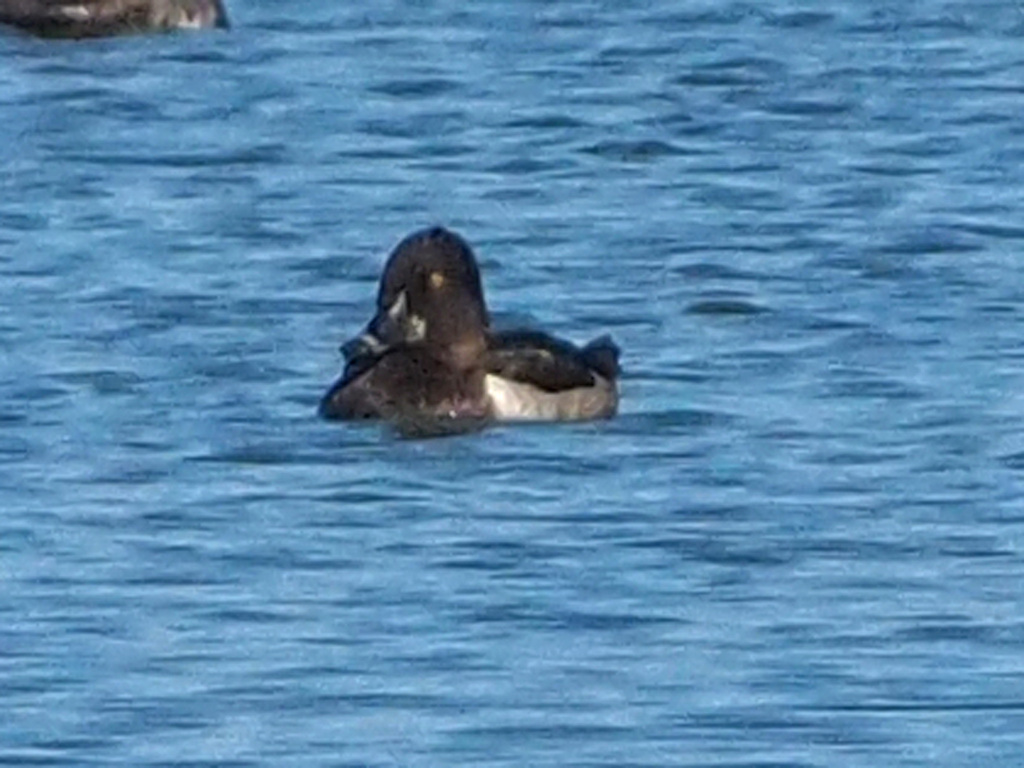
De tamaño y aspecto parecido al del porrón moñudo, se diferencia de este por carecer de moño, tener el perfil de la cabeza triangular, y exhibir en vuelo una franja alar gris en lugar de blanca. Los flancos de los machos adultos son grises, salvo por una cuña blanca vertical en la zona de contacto con el pecho. Asímismo, el pico muestra dos llamativas franjas verticales blancas, una en la base y otra junto a la punta. Curiosamente, apenas se aprecia en el campo el collar ocre, muy fino, que da nombre a la especie. La hembra se asemeja a la del porrón europeo, aunque posee un distintivo anillo blanco en torno al ojo, que se prolonga por una delgada línea hacia atrás.Similar in shape to a Tufted Duck but with a more peaked, triangular head profile and no crest. Males have a gray flank with a distinct white vertical wedge near the breast. The bill is diagnostic: dark with two bold white rings (one at the base, one near the tip). Despite its name, the chestnut 'ring' on the neck is almost impossible to see in the field. Females have a greyish-brown head with a white eye-ring.
DistribuciónDistribution
En España, como ha ocurrido en otros países de Europa, es un invernante regular, aunque mucho más escaso que en el resto del continente. Aparece con más frecuencia en los territorios atlánticos (Canarias, Galicia y Asturias, principalmente), pero son posibles sus observaciones en cualquier punto peninsular o de ambos archipiélagos.Regular winter visitor (rarity). Found most frequently in the Atlantic regions: Canarias, Galicia, and Asturias, but possible anywhere in the Peninsula or Balearics. Increasing records.
Textos reproducidos con permiso de laTexts translated and reproduced with permission from the Guía de Aves de España © SEO/BirdLife
Estado de conservaciónConservation Status
- EX
- RE
- CR
- EN
- VU
- NT
- LC
NE
No evaluada en EspañaNot assessed in Spain
Sin categoría en el Libro Rojo de las Aves de España 2021No category in the Red Book of the Birds of Spain 2021
Qué significa cada categoríaWhat each category means
- LC
- Preocupación menor: Taxón evaluado que no califica para categorías amenazadas. Especies abundantes y ampliamente distribuidasLeast Concern - Evaluated taxon that does not qualify for threatened categories. Widespread and abundant taxa
- NT
- Casi amenazada: No califica actualmente como amenazada, pero está cerca de calificar o es probable que califique en el futuro cercanoNear Threatened - Does not currently qualify as threatened, but is close to qualifying or likely to qualify in the near future
- VU
- Vulnerable: Enfrenta un alto riesgo de extinción en estado silvestre según los criterios A a E de IUCNVulnerable - Facing a high risk of extinction in the wild based on IUCN criteria A to E
- EN
- En peligro: Enfrenta un riesgo muy alto de extinción en estado silvestre según los criterios A a E de IUCNEndangered - Facing a very high risk of extinction in the wild based on IUCN criteria A to E
- CR
- En peligro crítico: Enfrenta un riesgo extremadamente alto de extinción en estado silvestre según los criterios A a E de IUCNCritically Endangered - Facing an extremely high risk of extinction in the wild based on IUCN criteria A to E
- DD
- Datos insuficientes: Información inadecuada para evaluar el riesgo de extinción basándose en distribución o estado poblacionalData Deficient - Inadequate information to assess extinction risk based on distribution and/or population status
- NE
- No evaluada: No ha sido evaluada aún contra los criterios de la Lista Roja de IUCNNot Evaluated - Has not yet been assessed against the IUCN Red List criteria
- RE
- Extinta regionalmente: El taxón ya no existe en la región específica, aunque puede sobrevivir en otros lugaresRegionally Extinct - Taxon no longer exists in the specific region, though it may survive elsewhere
- EX
- Extinta - No existe duda razonable de que ha muerto el último individuo del taxónExtinct - No reasonable doubt that the last individual of the taxon has died
TaxonomíaTaxonomy
- OrdenOrder
- Anseriformes
- FamiliaFamily
- Anatidae
Presencia en EspañaPresence in Spain
- HabitualRegular
- InvernanteWinter visitor
En la app: noviembre a marzo.In the app: November to March.
Dónde verlaWhere to see it
90 cuadrículas de 10 km con registros de 2020 a 2024. Toca un mes para ver dónde se ha visto.90 10 km squares with records from 2020 to 2024. Pick a month to see where it has been seen.
Cargando el mapa…Loading the map…
Dónde es regularWhere it is regular
Provincias con registros en al menos 3 de los 5 años algún mes, de más a menos frecuente, y sus mejores meses.Provinces with records in at least 3 of the 5 years in some month, from most to least frequent, and their best months.
- A CoruñaA Coruñaenero, diciembre, noviembreJanuary, December, November
- LeónLeónfebrero, noviembre, diciembreFebruary, November, December
- ÁlavaÁlavadiciembreDecember
- SalamancaSalamancaeneroJanuary
- BurgosBurgosmarzoMarch
- Las PalmasLas PalmasmarzoMarch
Datos: registros en GBIF de 2020 a 2024 de Observation.org, eBird, iNaturalist y el ICO, descargados el 23/10/2026.Data: GBIF records from 2020 to 2024 from Observation.org, eBird, iNaturalist and the ICO, downloaded on 23/10/2026. GBIF.org (23 October 2026) GBIF Occurrence Download · doi:10.15468/dl.r5sf2a · CC BY-NC 4.0
GaleríaGallery
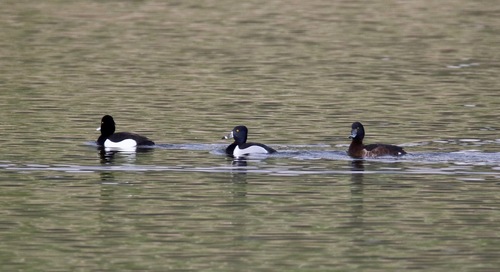
© Jerry Lanfear · CC BY · iNaturalist 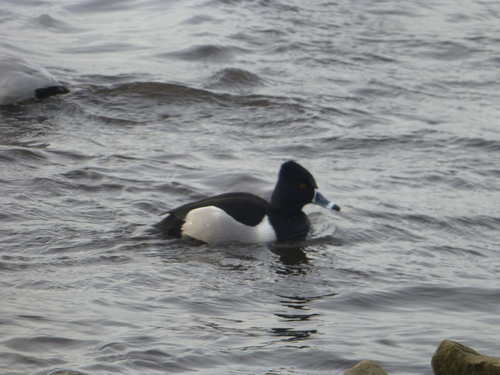
© Sheelagh Halsey · CC BY · iNaturalist 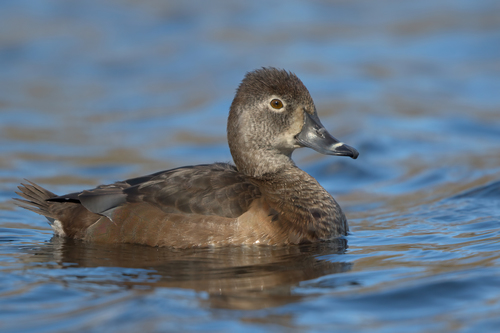
© Nigel Voaden · CC BY · iNaturalist 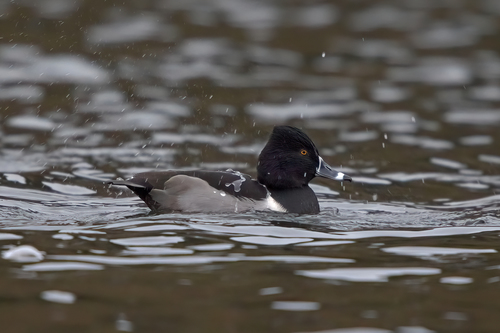
© Nigel Voaden · CC BY · iNaturalist 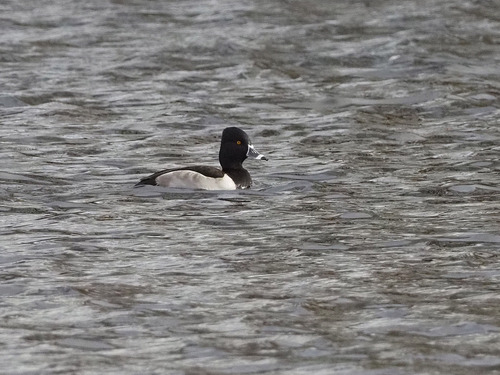
© gwynmwilliams · CC BY · iNaturalist 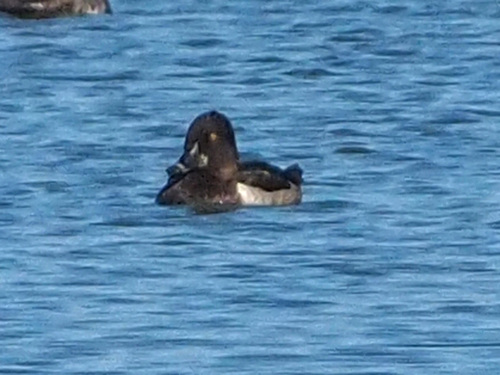
© gwynmwilliams · CC BY · iNaturalist
Especies relacionadasRelated species
Otras aves de la familia Anatidae y de órdenes cercanos.Other birds from the Anatidae family and nearby orders.
- RaroRare
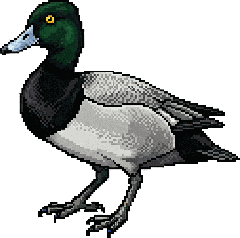 Porrón bastardoGreater ScaupAythya marila
- ÉpicoEpic
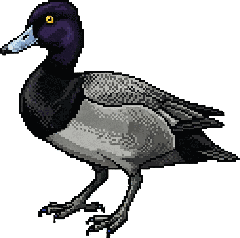 Porrón bolaLesser ScaupAythya affinis
- LegendarioLegendary
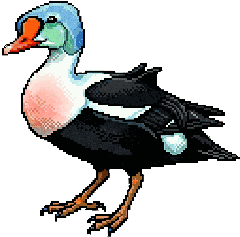 Éider realKing EiderSomateria spectabilis
- RaroRare
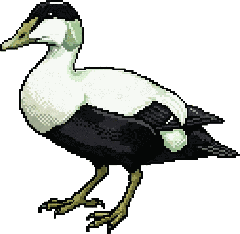 Éider comúnCommon EiderSomateria mollissima
- LegendarioLegendary
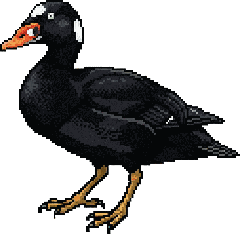 Negrón caretoSurf ScoterMelanitta perspicillata
- RaroRare
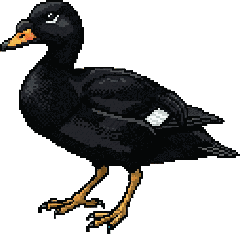 Negrón especuladoVelvet ScoterMelanitta fusca
- LegendarioLegendary
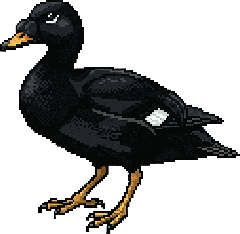 Negrón siberianoStejneger's ScoterMelanitta stejnegeri
- Poco comúnUncommon
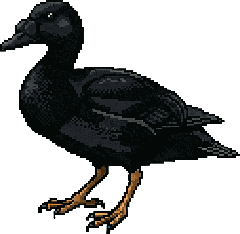 Negrón comúnCommon ScoterMelanitta nigra
 Gratis, sin anuncios ni comprasFree, no ads, no purchases