 BirdPedy
Fulmar borealNorthern Fulmar
En 4 provincias en junio y sin registros 3 meses del añoIn 4 provinces in June, and no records in 3 months of the year
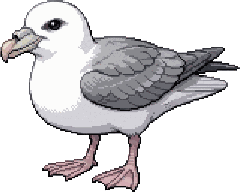
Reporte de rarezaRarity report
Por qué es raroWhy it is rareEntre 2020 y 2024 se vio en España y sus aguas en 69 ocasiones distintas, que suman 92 días, todos los años (datos de Observation.org, eBird y iNaturalist publicados en GBIF). Se cuentan también los registros en el mar: es un ave marina que, salvo para criar, pasa su vida en alta mar, lejos de la costa. En la guía de aves de SEO/BirdLife figura como habitual en España.Between 2020 and 2024 it was seen in Spain and its waters on 69 separate occasions, adding up to 92 days, every year (data from Observation.org, eBird and iNaturalist published on GBIF). Records at sea are counted too: it is a seabird that, except when breeding, spends its life on the open sea, far from the coast. SEO/BirdLife's bird guide lists it as regular in Spain.
Cada carrizo es un mes: su altura, las provincias con registros de 2020 a 2024.Each reed is a month: its height, the provinces with records from 2020 to 2024.- Provincias con registrosProvinces with records
- 6 de 52of 52
- En la appIn the app
- Todo el añoAll year
- EnvergaduraWingspan
- 102-112 cm102-112 cm
- LongitudLength
- 45-50 cm45-50 cm
- Lista Roja de EspañaSpanish Red List
- NE No evaluada en EspañaNot assessed in Spain

Información generalGeneral Information
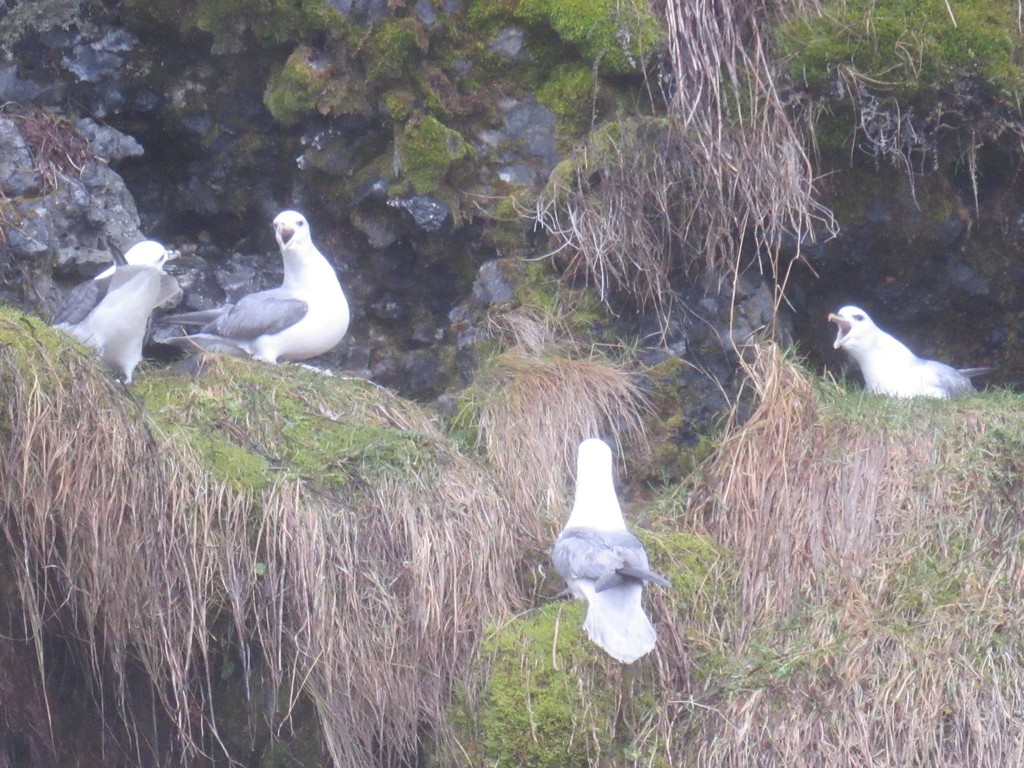
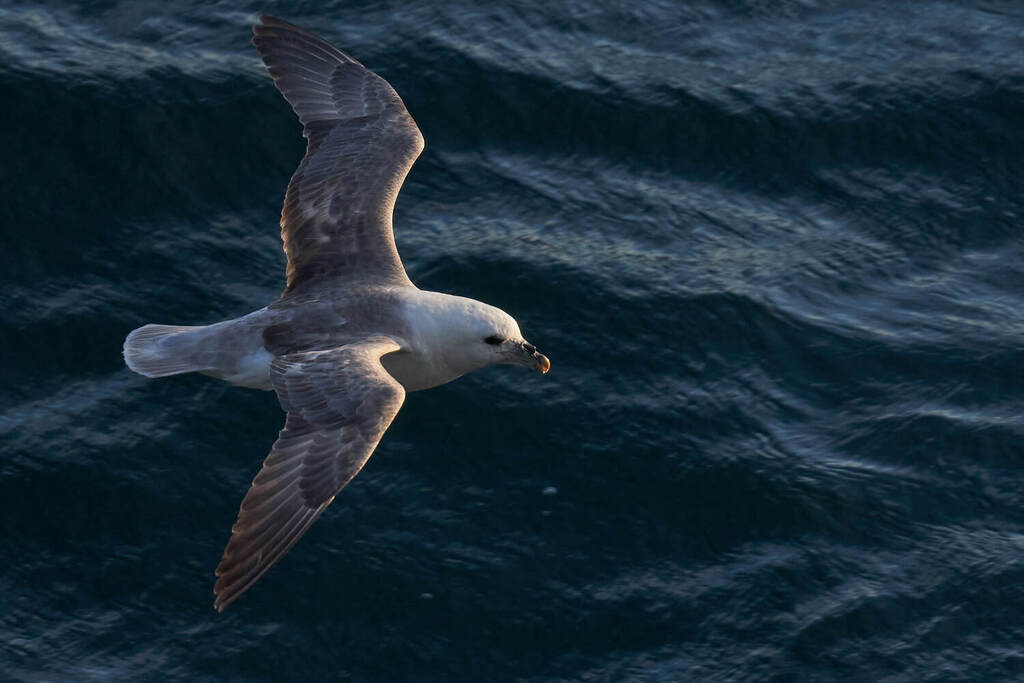
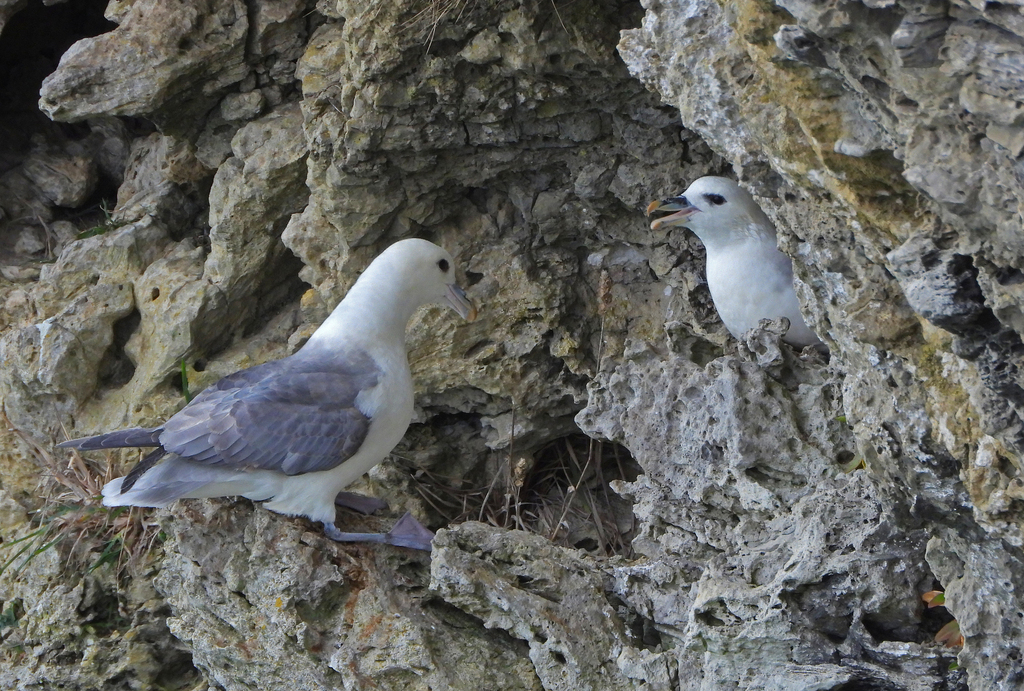
Fuera del periodo reproductor, el fulmar boreal es un ave pelágica, que se desplaza por mar abierto en busca de los crustáceos, cefalópodos y pequeños peces que constituyen su alimento. En la época de reproducción, sin embargo, estos procelariformes se reúnen en nutridas y ruidosas colonias, normalmente en compañía de otras aves marinas, como gaviotas tridáctilas y araos. En nuestro país aparece durante la dispersión y la invernada, si bien su presencia no resulta fácil de detectar.The Northern Fulmar is the 'master glider' of the northern seas. While a common breeder in Northern Europe, it is a regular but scarce visitor to our Atlantic and Cantabrian waters in winter. It is often seen following fishing boats far offshore. Its stiff-winged flight and the unique 'tubes' on its bill make it unmistakable. It is a powerful, social bird that brings the energy of the Arctic breeding cliffs to our winter seas.
IdentificaciónIdentification
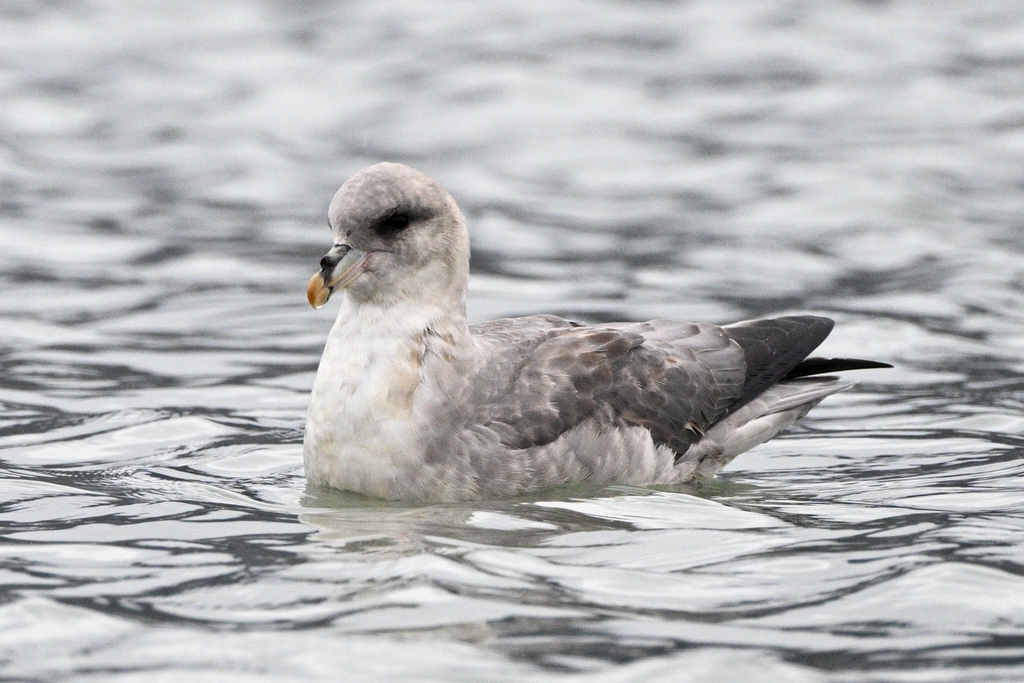
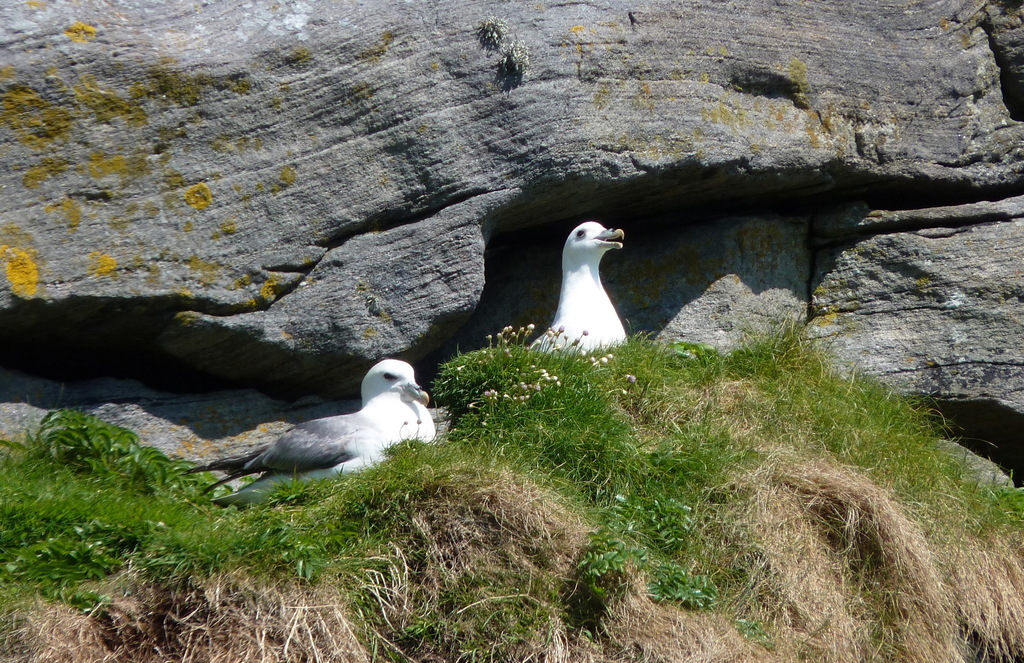
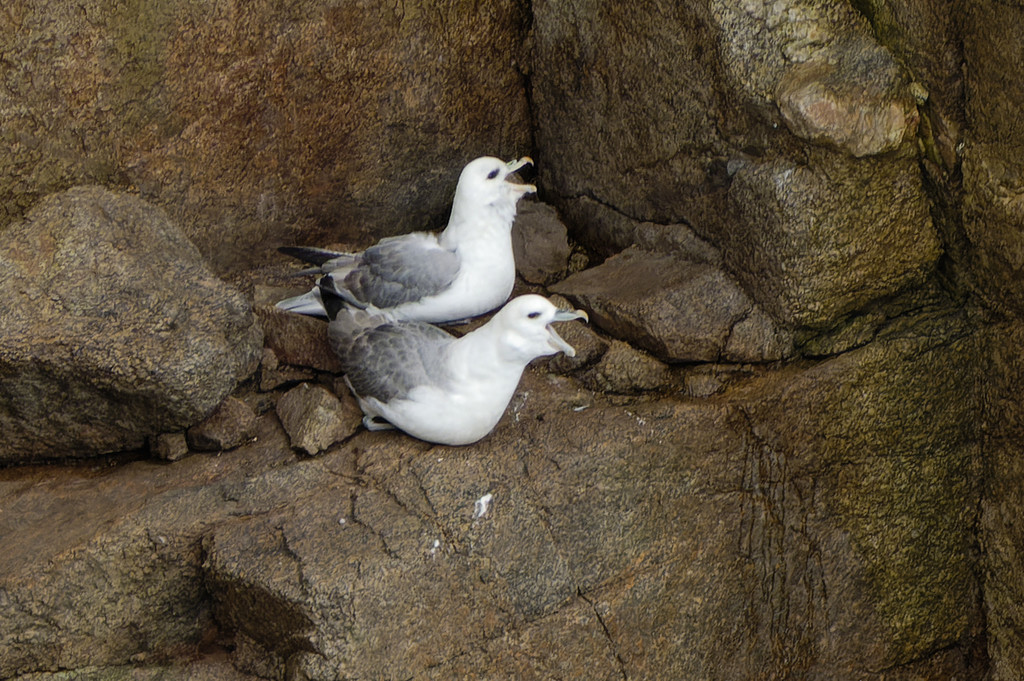
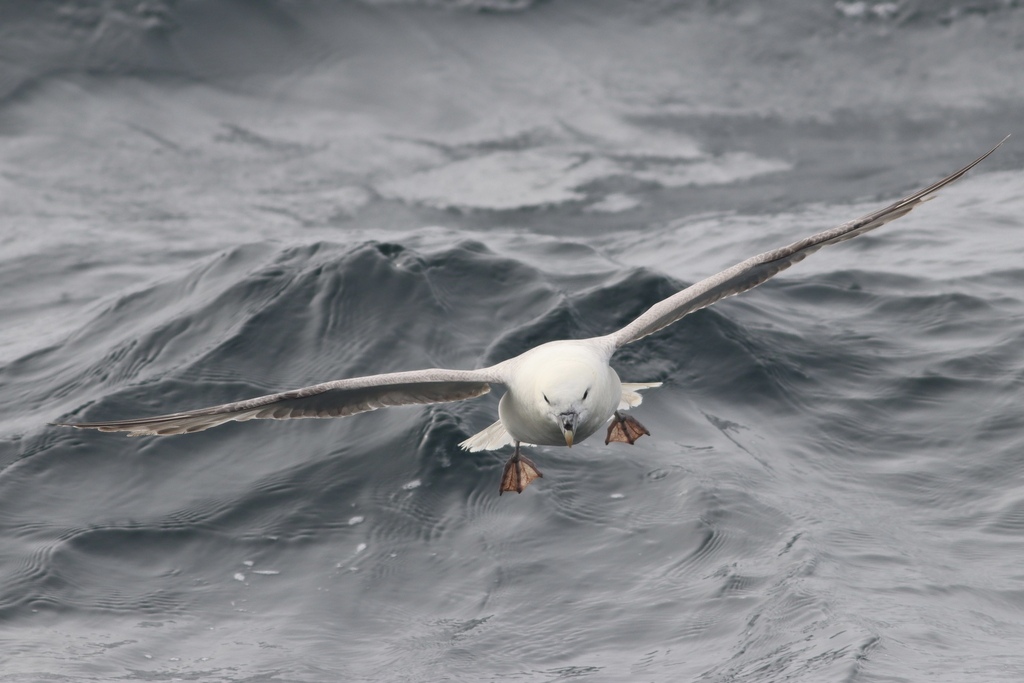
El fulmar boreal tiene un aspecto similar al de una gaviota pequeña y compacta. Posee cabeza grande, cuello grueso y pico corto, con narinas patentes. Además, el extremo de sus alas es más romo que el de las gaviotas. Exhibe coloración general gris pálida en las partes superiores, donde destacan unas zonas más claras en las plumas primarias. Visto desde abajo, el fulmar boreal puede mostrar una coloración clara o ligeramente grisácea, puesto que hay individuos con formas claras, oscuras e intermedias. Planea sobre el mar, con series alternadas de aleteos rígidos, poco profundos y rápidos, que recuerdan más a una pardela que a una gaviota. No existen diferencias apreciables entre sexos ni edades.A stocky, powerful seabird, similar to a small gull but with a thick neck and a short, tube-nosed bill. Its wings are stiff and straight, held rigid during its diagnostic master-gliding flight. It comes in light, dark, and intermediate color phases. It is highly social and nests in massive, noisy colonies on northern cliffs. It is famous for its habit of spitting foul-smelling oil at intruders.
DistribuciónDistribution
El fulmar boreal es una especie de aparición regular, aunque en bajo número, en alta mar en aguas cántabro-atlánticas, principalmente de Galicia y Asturias. Aparece en dispersión e invernada, aunque no es fácil de avistar desde la costa. En aguas cantábricas hay evidencia de paso otoñal entre los meses de julio y noviembre, aunque también se observa en primavera. Las aves presentes en nuestras aguas corresponden a la subespecie glacialis, que cría en el Atlántico norte.Regular but scarce winter visitor (July-November peak). Most frequent far offshore in the Cantabrian and Galician waters. Subspecies 'glacialis'. Occasional from the coast.
Textos reproducidos con permiso de laTexts translated and reproduced with permission from the Guía de Aves de España © SEO/BirdLife
Estado de conservaciónConservation Status
- EX
- RE
- CR
- EN
- VU
- NT
- LC
NE
No evaluada en EspañaNot assessed in Spain
Qué significa cada categoríaWhat each category means
- LC
- Preocupación menor: Taxón evaluado que no califica para categorías amenazadas. Especies abundantes y ampliamente distribuidasLeast Concern - Evaluated taxon that does not qualify for threatened categories. Widespread and abundant taxa
- NT
- Casi amenazada: No califica actualmente como amenazada, pero está cerca de calificar o es probable que califique en el futuro cercanoNear Threatened - Does not currently qualify as threatened, but is close to qualifying or likely to qualify in the near future
- VU
- Vulnerable: Enfrenta un alto riesgo de extinción en estado silvestre según los criterios A a E de IUCNVulnerable - Facing a high risk of extinction in the wild based on IUCN criteria A to E
- EN
- En peligro: Enfrenta un riesgo muy alto de extinción en estado silvestre según los criterios A a E de IUCNEndangered - Facing a very high risk of extinction in the wild based on IUCN criteria A to E
- CR
- En peligro crítico: Enfrenta un riesgo extremadamente alto de extinción en estado silvestre según los criterios A a E de IUCNCritically Endangered - Facing an extremely high risk of extinction in the wild based on IUCN criteria A to E
- DD
- Datos insuficientes: Información inadecuada para evaluar el riesgo de extinción basándose en distribución o estado poblacionalData Deficient - Inadequate information to assess extinction risk based on distribution and/or population status
- NE
- No evaluada: No ha sido evaluada aún contra los criterios de la Lista Roja de IUCNNot Evaluated - Has not yet been assessed against the IUCN Red List criteria
- RE
- Extinta regionalmente: El taxón ya no existe en la región específica, aunque puede sobrevivir en otros lugaresRegionally Extinct - Taxon no longer exists in the specific region, though it may survive elsewhere
- EX
- Extinta - No existe duda razonable de que ha muerto el último individuo del taxónExtinct - No reasonable doubt that the last individual of the taxon has died
TaxonomíaTaxonomy
- OrdenOrder
- Procellariiformes
- FamiliaFamily
- Procellariidae
Presencia en EspañaPresence in Spain
- De pasoPassage migrant
- HabitualRegular
En la app: todo el año.In the app: all year.
Dónde verlaWhere to see it
14 cuadrículas de 10 km con registros de 2020 a 2024. Toca un mes para ver dónde se ha visto.14 10 km squares with records from 2020 to 2024. Pick a month to see where it has been seen.
Cargando el mapa…Loading the map…
Dónde es regularWhere it is regular
Provincias con registros en al menos 3 de los 5 años algún mes, de más a menos frecuente, y sus mejores meses.Provinces with records in at least 3 of the 5 years in some month, from most to least frequent, and their best months.
- A CoruñaA Coruñaagosto, septiembreAugust, September
Datos: registros en GBIF de 2020 a 2024 de Observation.org, eBird, iNaturalist y el ICO, descargados el 23/10/2026.Data: GBIF records from 2020 to 2024 from Observation.org, eBird, iNaturalist and the ICO, downloaded on 23/10/2026. GBIF.org (23 October 2026) GBIF Occurrence Download · doi:10.15468/dl.r5sf2a · CC BY-NC 4.0
GaleríaGallery
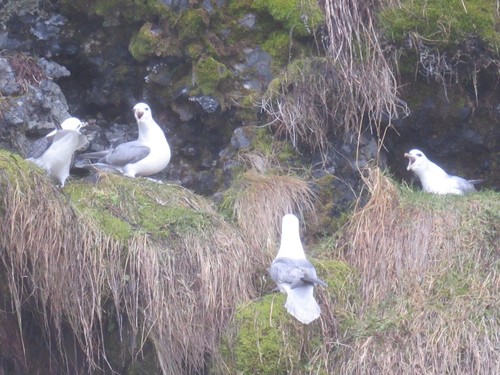
© Justin Johnsen · CC BY · iNaturalist 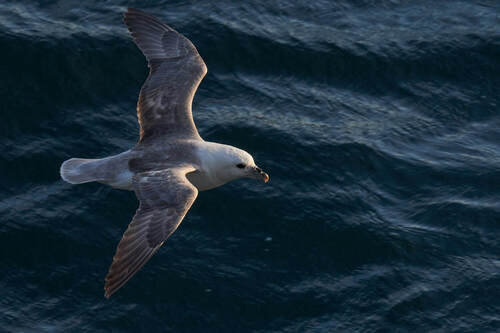
© andygpos · CC BY · iNaturalist 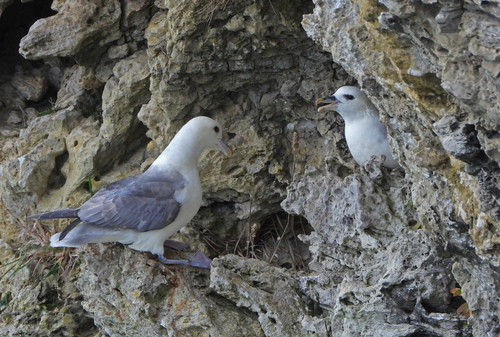
© Paul Lewis · CC BY · iNaturalist 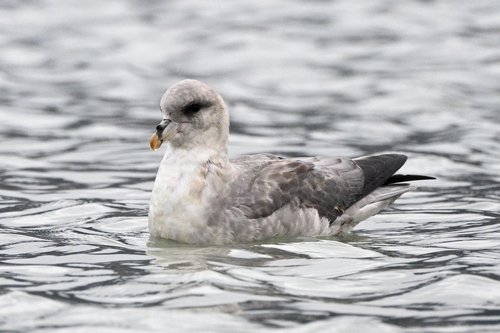
© Charlotte Kirchner · CC BY · iNaturalist 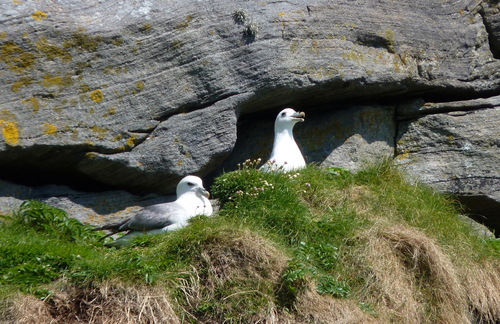
© Bob · CC BY · iNaturalist 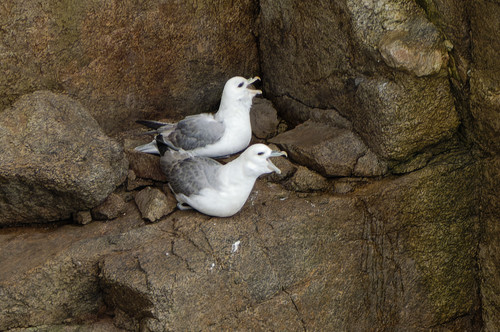
© Donald Davesne · CC BY · iNaturalist 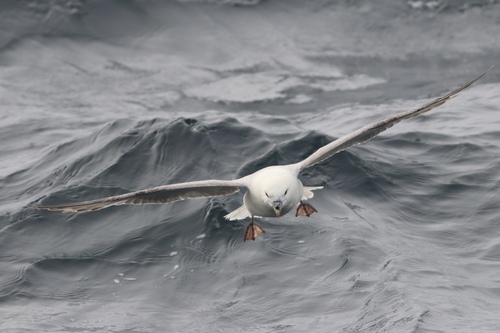
© Vsevolod Rudyi · CC BY · iNaturalist
Especies relacionadasRelated species
Otras aves de la familia Procellariidae y de órdenes cercanos.Other birds from the Procellariidae family and nearby orders.
- LegendarioLegendary
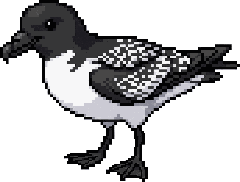 Petrel dameroPintado PetrelDaption capense
- LegendarioLegendary
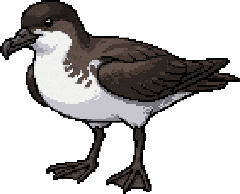 Petrel de TrinidadTrindade PetrelPterodroma arminjoniana
- LegendarioLegendary
 Petrel aligrandeGreat-winged PetrelPterodroma macroptera
- LegendarioLegendary
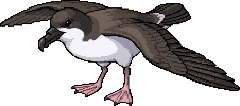 Petrel freiraZino's PetrelPterodroma madeira
- ÉpicoEpic
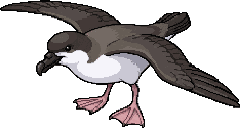 Petrel gongónFea's PetrelPterodroma feae
- LegendarioLegendary
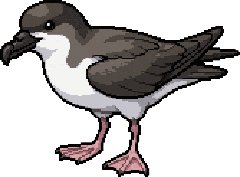 Petrel de las DesertasDesertas PetrelPterodroma deserta
- LegendarioLegendary
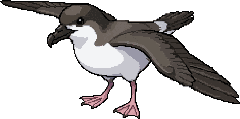 Petrel antillanoBlack-capped PetrelPterodroma hasitata
- LegendarioLegendary
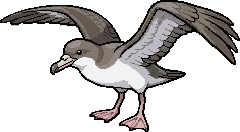 Pardela cenicienta de Cabo VerdeCape Verde ShearwaterCalonectris edwardsii
 Gratis, sin anuncios ni comprasFree, no ads, no purchases