 BirdPedy
Correlimos zarapitínCurlew Sandpiper
En 47 provincias en septiembre y en 14 en eneroIn 47 provinces in September and 14 in January
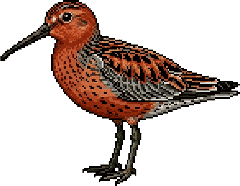
Reporte de rarezaRarity report
Por qué es poco comúnWhy it is uncommonMigrador de largo recorrido que destaca por su plumaje rojizo ladrillo durante el paso primaveral. Es frecuente en marismas y salinas costeras, a menudo en grupos compactos.Long-distance migrant that stands out for its brick-red plumage during spring migration. It is frequent in coastal marshes and salt pans, often in tight flocks.
Cada carrizo es un mes: su altura, las provincias con registros de 2020 a 2024.Each reed is a month: its height, the provinces with records from 2020 to 2024.- Provincias con registrosProvinces with records
- 48 de 52of 52
- En la appIn the app
- Abril a septiembreApril to September
- EnvergaduraWingspan
- 42-46 cm42-46 cm
- LongitudLength
- 18-19 cm18-19 cm
- Lista Roja de EspañaSpanish Red List
- LC Preocupación menorLeast Concern

Información generalGeneral Information
El curioso nombre de este correlimos hace referencia a su largo y ligeramente curvado pico, que se asemeja lejanamente al de sus parientes, los zarapitos. Especie muy viajera y capaz de enfrentarse a largas travesías, esta limícola es un ave de paso en nuestro territorio, en el que también acogemos un pequeño contingente de invernantes, cuya cuantía resulta bastante fluctuante.The Curlew Sandpiper is a specialist of the saltpans and tidal mudflats. While some stay for winter, most are seen during their epic journeys between Siberia and Africa. They are incredibly successful flyers. The male's transformation from gray to bright red in spring is one of the most drastic and beautiful plumage changes in the world of waders. They are a highlight of the Spanish Mediterranean marshes from April to August.
IdentificaciónIdentification
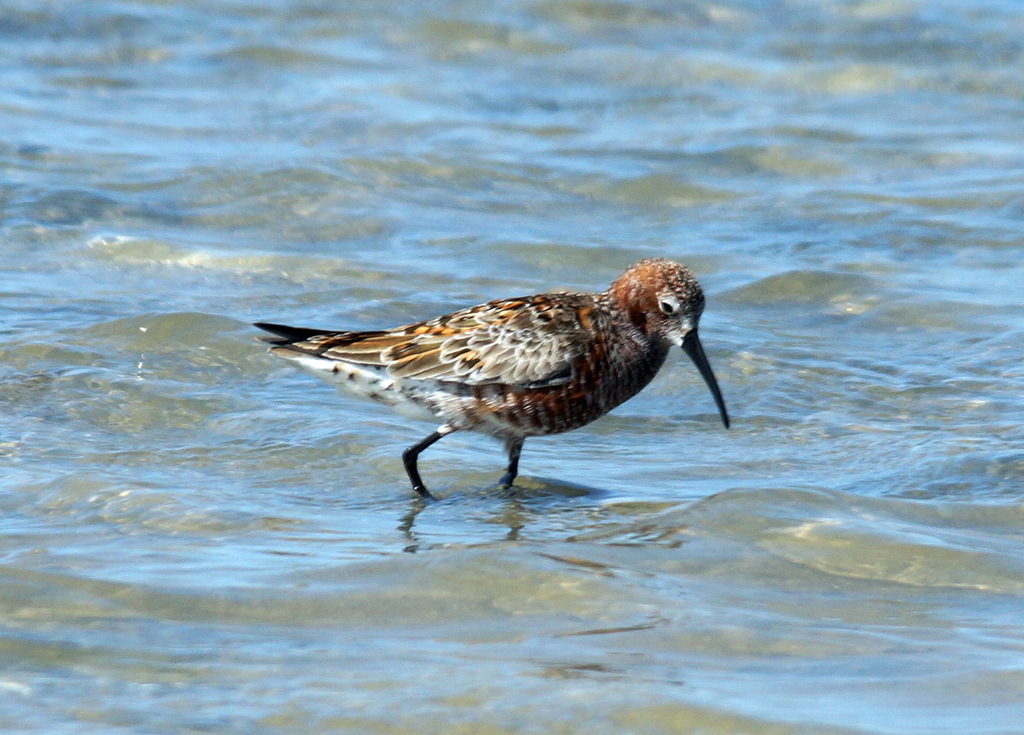
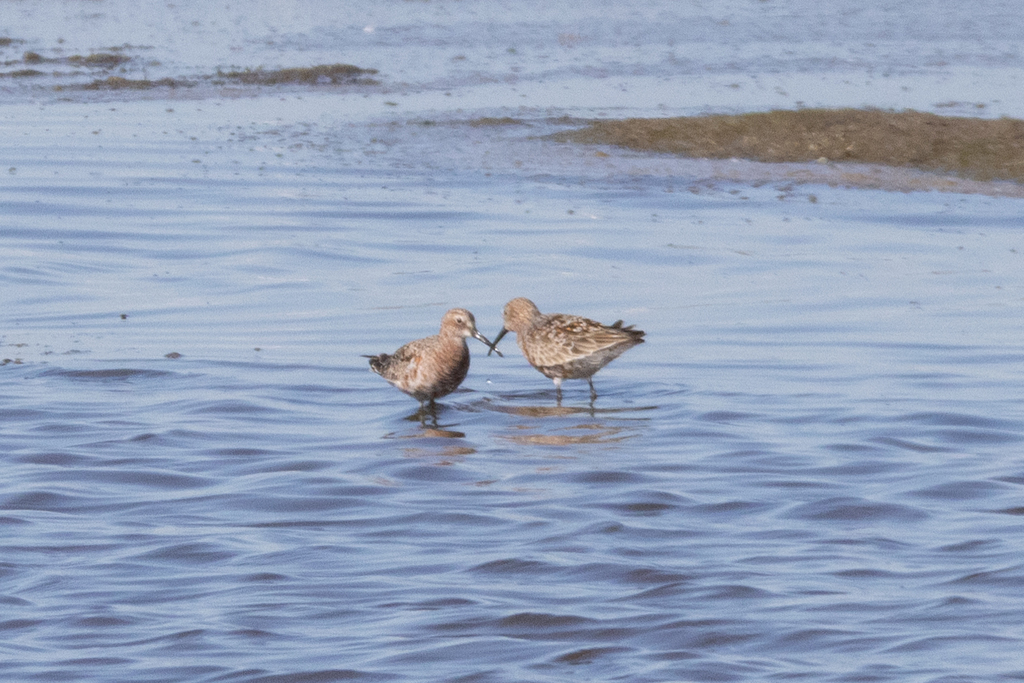
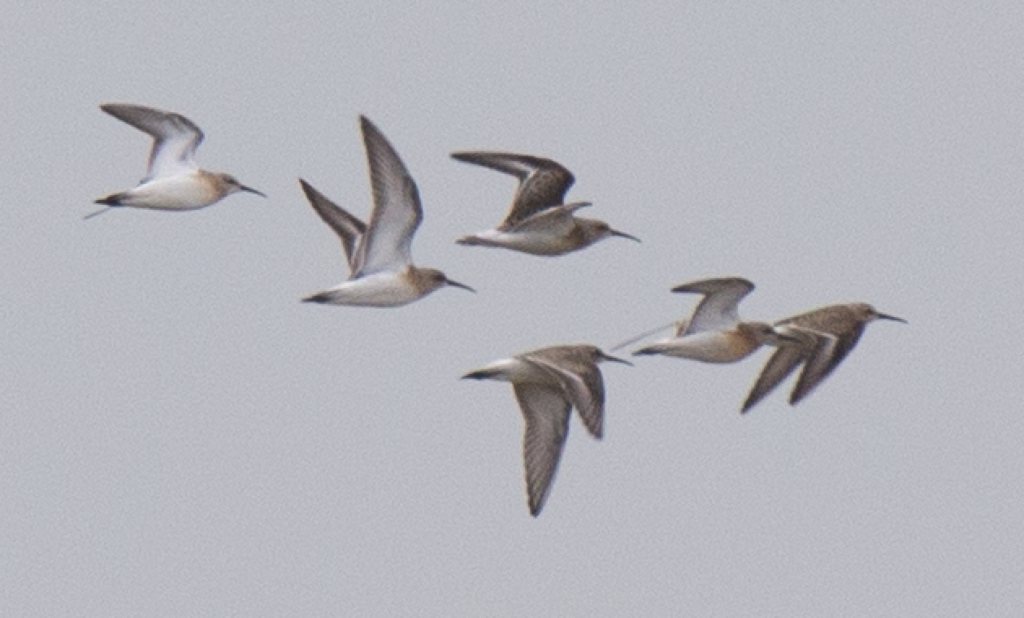
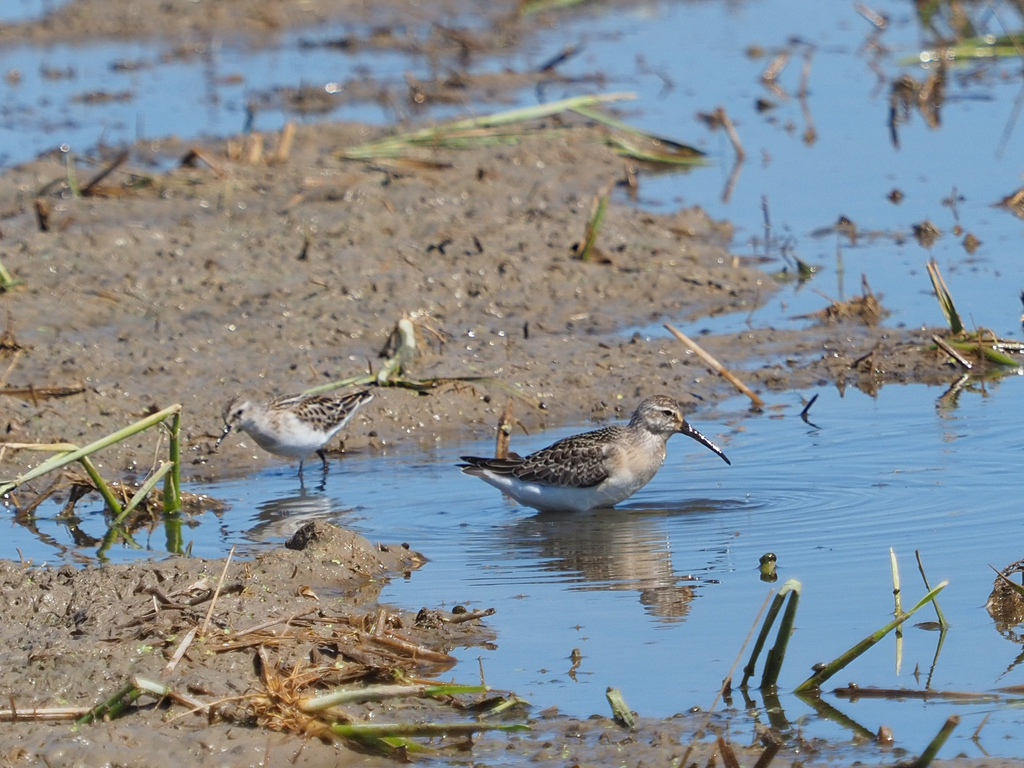
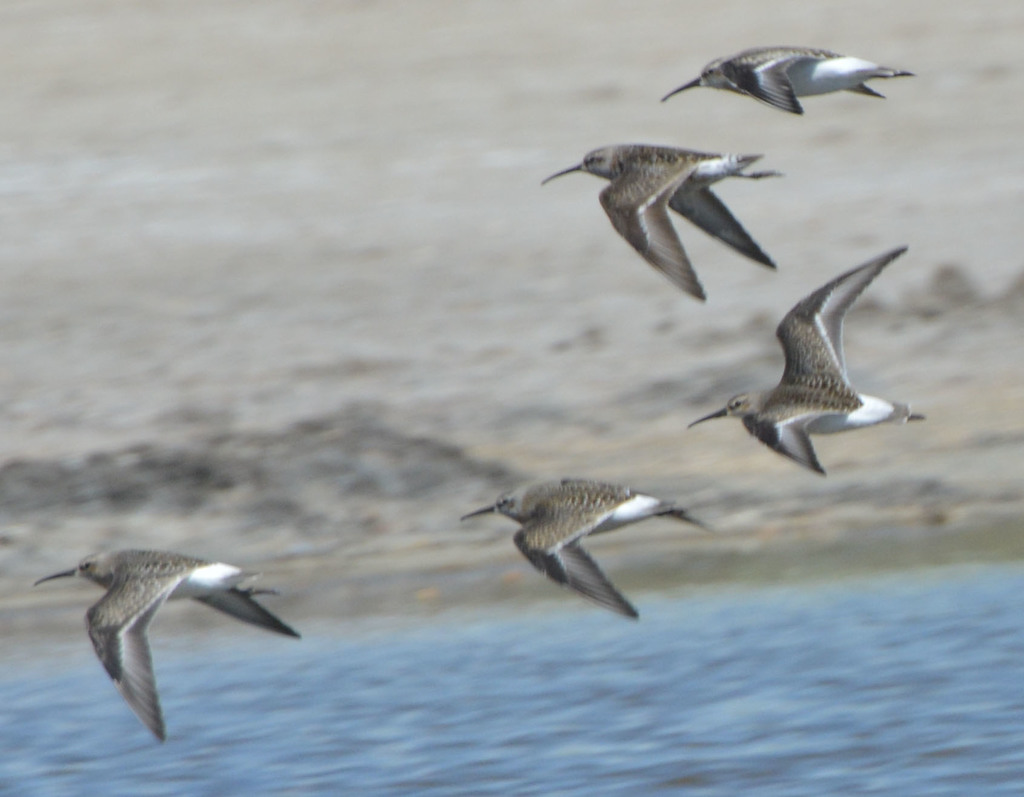
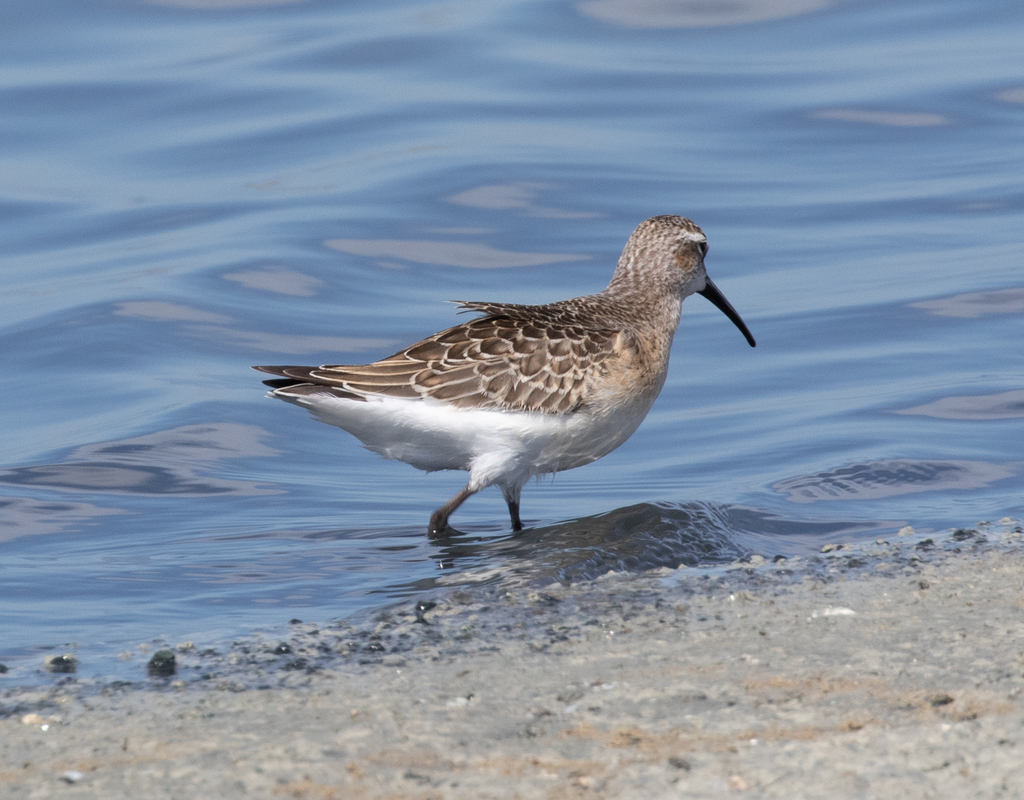
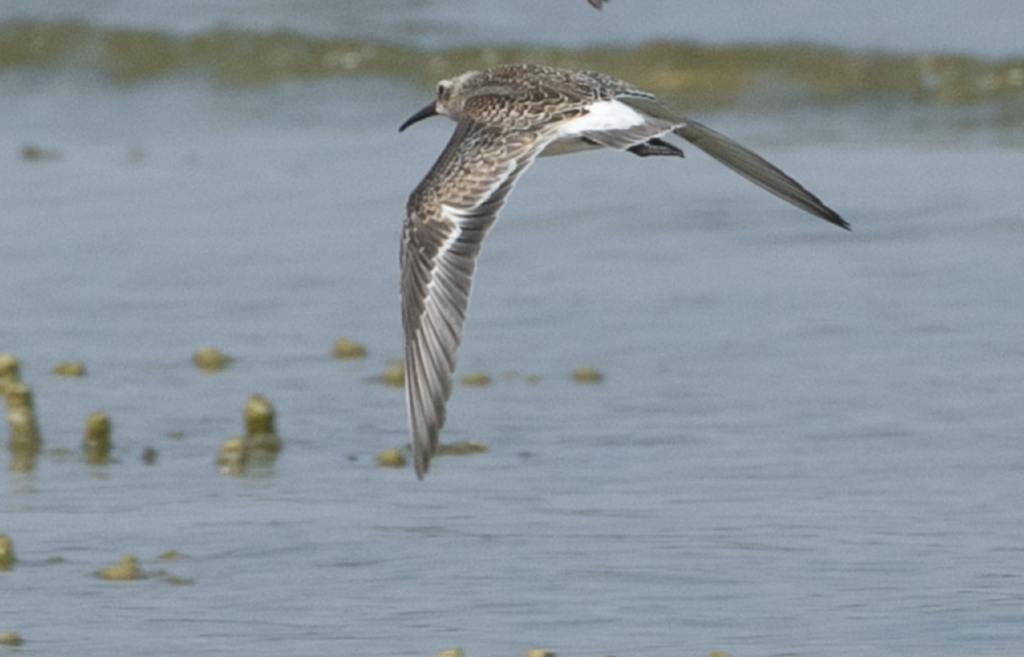
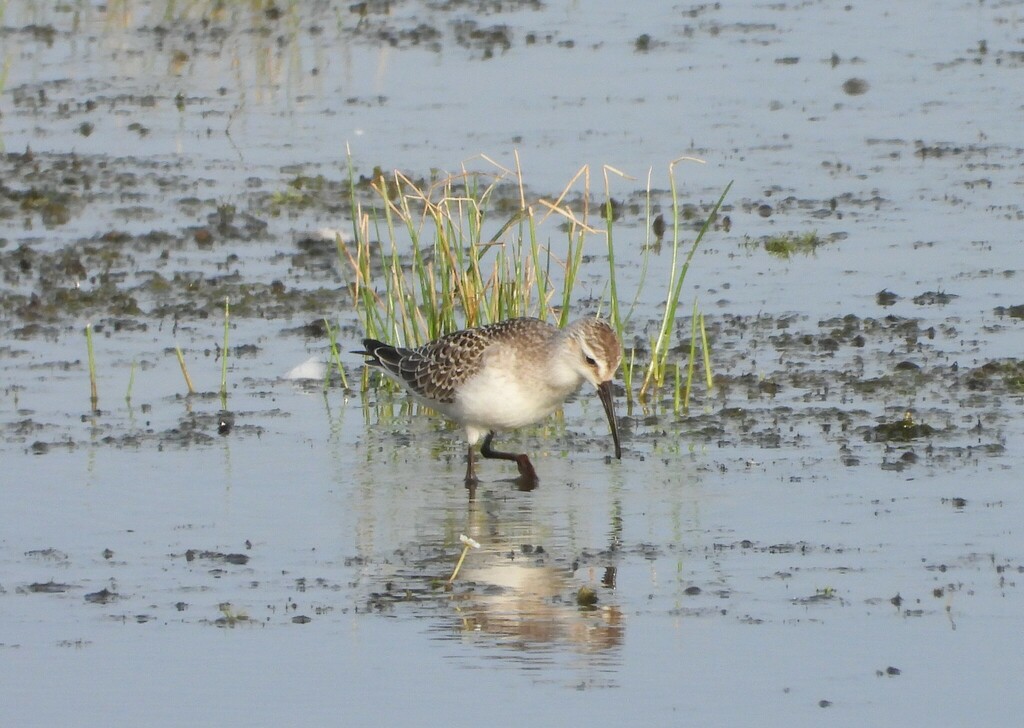
El correlimos zarapitín, limícola relativamente grande y bastante estilizada, se caracteriza por tener un pico largo y algo curvado hacia abajo. El adulto en plumaje nupcial presenta la cara y las partes inferiores rojas, el píleo estriado de oscuro y las plumas de las partes superiores negras y provistas de muescas rojizas y bordes grises. El no reproductor, en cambio, es de un tono gris uniforme, luce una larga ceja blanca que contrasta con una línea ocular oscura y posee las partes inferiores blancas con los lados del pecho grises. El juvenil, por su parte, exhibe las plumas de las partes superiores de color marrón grisáceo con una banda subapical oscura y márgenes ante. Las partes inferiores son blancas y el cuello y el pecho aparecen teñidos de ante y sutilmente estriados. En vuelo muestra el obispillo completamente blanco —sin ninguna barra vertical como es común en otros correlimos—, rectrices grisáceas y estrechas bandas alares longitudinales.A medium-sized, elegant shorebird with a long, arched bill (resembling a miniaturized Curlew). In summer, adults are a breathtaking and uniform brick-red from head to tail. In winter, they are an elegant pale gray with pure white underparts. It is distinguished from the Dunlin by its longer legs, more arched bill, and a diagnostic pure white rump that is very visible in flight. It is a long-distance migrant from the Russian high Arctic.
DistribuciónDistribution
El correlimos zarapitín aparece, tanto durante la invernada como a lo largo del paso primaveral, en las costas mediterráneas de la Península y es poco frecuente en el litoral cántabroatlántico. También se cita en el interior y en Baleares, así como en Canarias.Common passage migrant and scarce winter visitor. Most frequent along the Mediterranean coast and Andalusia (Doñana, Cadiz). Occasional in the north and the archipelagos. Widespread.
Textos reproducidos con permiso de laTexts translated and reproduced with permission from the Guía de Aves de España © SEO/BirdLife
Estado de conservaciónConservation Status
- EX
- RE
- CR
- EN
- VU
- NT
- LC
Preocupación menorLeast Concern
Qué significa cada categoríaWhat each category means
- LC
- Preocupación menor: Taxón evaluado que no califica para categorías amenazadas. Especies abundantes y ampliamente distribuidasLeast Concern - Evaluated taxon that does not qualify for threatened categories. Widespread and abundant taxa
- NT
- Casi amenazada: No califica actualmente como amenazada, pero está cerca de calificar o es probable que califique en el futuro cercanoNear Threatened - Does not currently qualify as threatened, but is close to qualifying or likely to qualify in the near future
- VU
- Vulnerable: Enfrenta un alto riesgo de extinción en estado silvestre según los criterios A a E de IUCNVulnerable - Facing a high risk of extinction in the wild based on IUCN criteria A to E
- EN
- En peligro: Enfrenta un riesgo muy alto de extinción en estado silvestre según los criterios A a E de IUCNEndangered - Facing a very high risk of extinction in the wild based on IUCN criteria A to E
- CR
- En peligro crítico: Enfrenta un riesgo extremadamente alto de extinción en estado silvestre según los criterios A a E de IUCNCritically Endangered - Facing an extremely high risk of extinction in the wild based on IUCN criteria A to E
- DD
- Datos insuficientes: Información inadecuada para evaluar el riesgo de extinción basándose en distribución o estado poblacionalData Deficient - Inadequate information to assess extinction risk based on distribution and/or population status
- NE
- No evaluada: No ha sido evaluada aún contra los criterios de la Lista Roja de IUCNNot Evaluated - Has not yet been assessed against the IUCN Red List criteria
- RE
- Extinta regionalmente: El taxón ya no existe en la región específica, aunque puede sobrevivir en otros lugaresRegionally Extinct - Taxon no longer exists in the specific region, though it may survive elsewhere
- EX
- Extinta - No existe duda razonable de que ha muerto el último individuo del taxónExtinct - No reasonable doubt that the last individual of the taxon has died
TaxonomíaTaxonomy
- OrdenOrder
- Charadriiformes
- FamiliaFamily
- Scolopacidae
Presencia en EspañaPresence in Spain
- De pasoPassage migrant
- HabitualRegular
- InvernanteWinter visitor
En la app: abril a septiembre.In the app: April to September.
Dónde verlaWhere to see it
451 cuadrículas de 10 km con registros de 2020 a 2024. Toca un mes para ver dónde se ha visto.451 10 km squares with records from 2020 to 2024. Pick a month to see where it has been seen.
Cargando el mapa…Loading the map…
Dónde es regularWhere it is regular
Provincias con registros en al menos 3 de los 5 años algún mes, de más a menos frecuente, y sus mejores meses.Provinces with records in at least 3 of the 5 years in some month, from most to least frequent, and their best months.
- ValenciaValenciaagosto, septiembre, julioAugust, September, July
- HuelvaHuelvaagosto, septiembre, julioAugust, September, July
- AlmeríaAlmeríaagosto, julio, septiembreAugust, July, September
- AlicanteAlicanteagosto, septiembre, abrilAugust, September, April
- CádizCádizagosto, abril, mayoAugust, April, May
- MálagaMálagaagosto, abril, mayoAugust, April, May
- SalamancaSalamancaseptiembre, agosto, octubreSeptember, August, October
- BalearesBalearic Islandsagosto, julio, septiembreAugust, July, September
- TarragonaTarragonaagosto, septiembre, julioAugust, September, July
- GironaGironaagosto, mayo, septiembreAugust, May, September
Ver las 46 provinciasSee all 46 provinces
- Las PalmasLas Palmasseptiembre, octubre, abrilSeptember, October, April
- CastellónCastellónagosto, mayo, abrilAugust, May, April
- A CoruñaA Coruñaseptiembre, octubre, agostoSeptember, October, August
- MurciaMurciaagosto, septiembre, abrilAugust, September, April
- GuipúzcoaGuipúzcoaseptiembre, agosto, julioSeptember, August, July
- CantabriaCantabriaseptiembre, agosto, octubreSeptember, August, October
- ZamoraZamoraseptiembre, octubre, agostoSeptember, October, August
- HuescaHuescaseptiembre, agosto, mayoSeptember, August, May
- AlbaceteAlbaceteseptiembre, mayo, agostoSeptember, May, August
- SevillaSevillaagosto, abril, mayoAugust, April, May
- ToledoToledomayo, agosto, septiembreMay, August, September
- Ciudad RealCiudad Realseptiembre, agosto, mayoSeptember, August, May
- AsturiasAsturiasseptiembre, mayo, agostoSeptember, May, August
- BadajozBadajozseptiembre, agosto, julioSeptember, August, July
- Santa Cruz de TenerifeSanta Cruz de Tenerifeseptiembre, eneroSeptember, January
- LugoLugoseptiembre, mayo, agostoSeptember, May, August
- BarcelonaBarcelonaseptiembre, agosto, mayoSeptember, August, May
- TeruelTeruelagosto, julio, septiembreAugust, July, September
- BurgosBurgosseptiembre, octubre, mayoSeptember, October, May
- ZaragozaZaragozaseptiembre, agosto, julioSeptember, August, July
- PontevedraPontevedraseptiembre, octubreSeptember, October
- CuencaCuencamayo, abril, agostoMay, April, August
- La RiojaLa RiojaagostoAugust
- VizcayaVizcayaagosto, septiembre, abrilAugust, September, April
- LeónLeónseptiembre, octubre, mayoSeptember, October, May
- PalenciaPalenciaseptiembre, agosto, mayoSeptember, August, May
- NavarraNavarraseptiembre, agosto, mayoSeptember, August, May
- CáceresCáceresagosto, septiembre, julioAugust, September, July
- JaénJaénjulioJuly
- SegoviaSegoviaagosto, septiembreAugust, September
- CórdobaCórdobaagostoAugust
- ÁvilaÁvilamayo, agosto, septiembreMay, August, September
- GranadaGranadaagostoAugust
- SoriaSoriaseptiembreSeptember
- MadridMadridagosto, septiembre, julioAugust, September, July
- LleidaLleidamayoMay
Datos: registros en GBIF de 2020 a 2024 de Observation.org, eBird, iNaturalist y el ICO, descargados el 23/10/2026.Data: GBIF records from 2020 to 2024 from Observation.org, eBird, iNaturalist and the ICO, downloaded on 23/10/2026. GBIF.org (23 October 2026) GBIF Occurrence Download · doi:10.15468/dl.r5sf2a · CC BY-NC 4.0
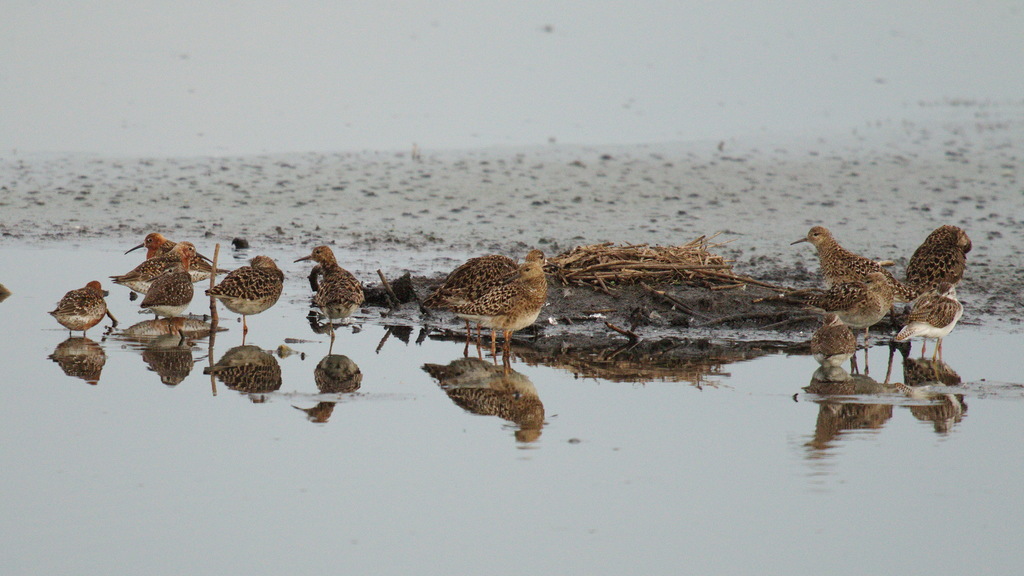
GaleríaGallery
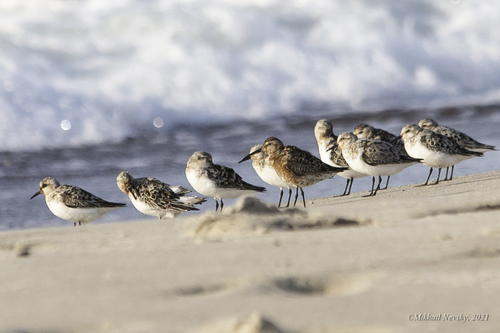
© Mikhail Nevsky · CC BY · iNaturalist 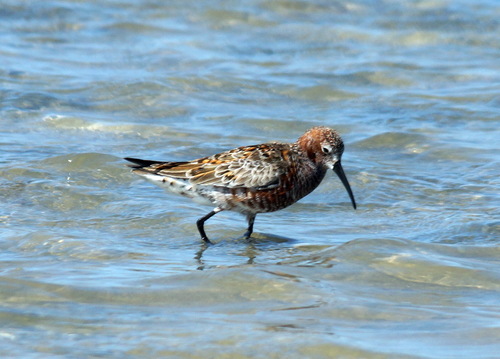
© SIA · CC BY · iNaturalist 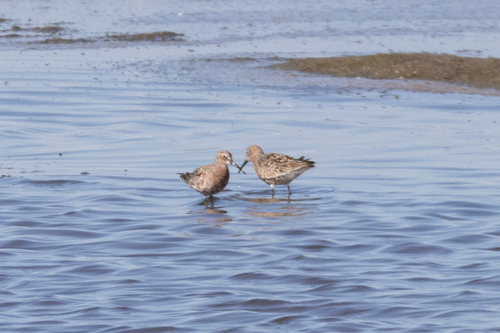
© Jakob Horz · CC BY · iNaturalist 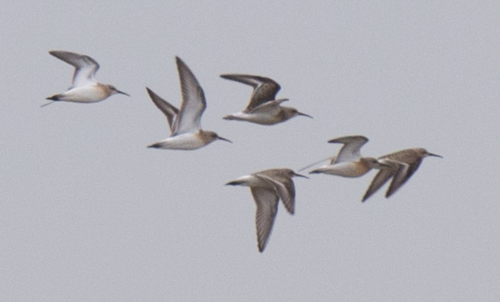
© Paolo Zucca · CC BY · iNaturalist 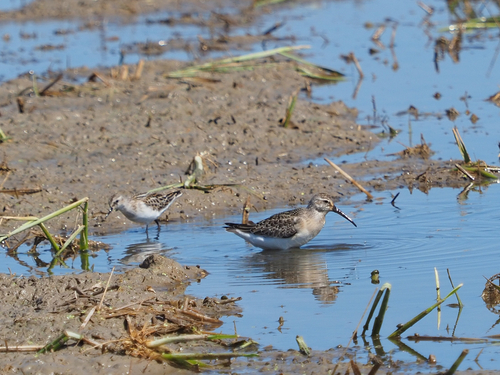
© S. Menéndez · CC BY · iNaturalist 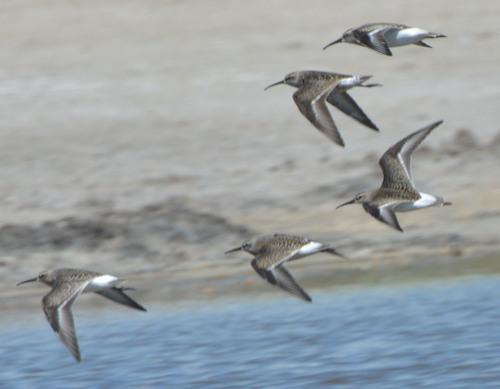
© Ульяна Лалак · CC BY · iNaturalist 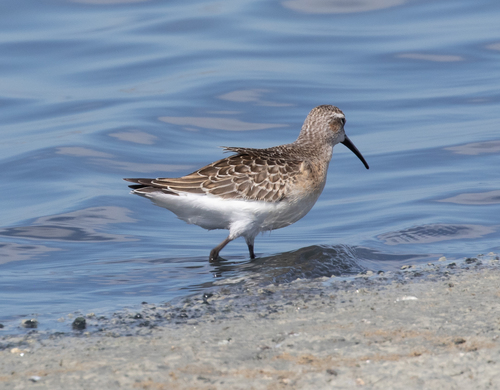
© avocat · CC BY · iNaturalist 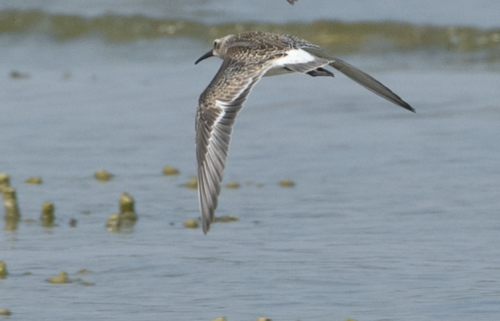
© Paolo Zucca · CC BY · iNaturalist 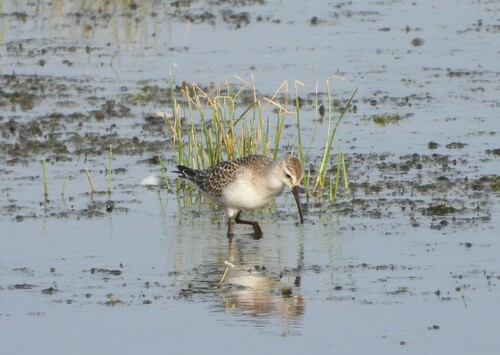
© Maria · CC BY · iNaturalist 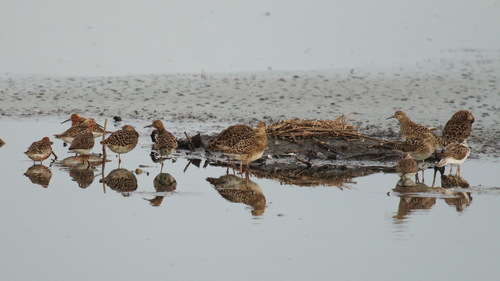
© Вячеслав Юсупов · CC BY · iNaturalist
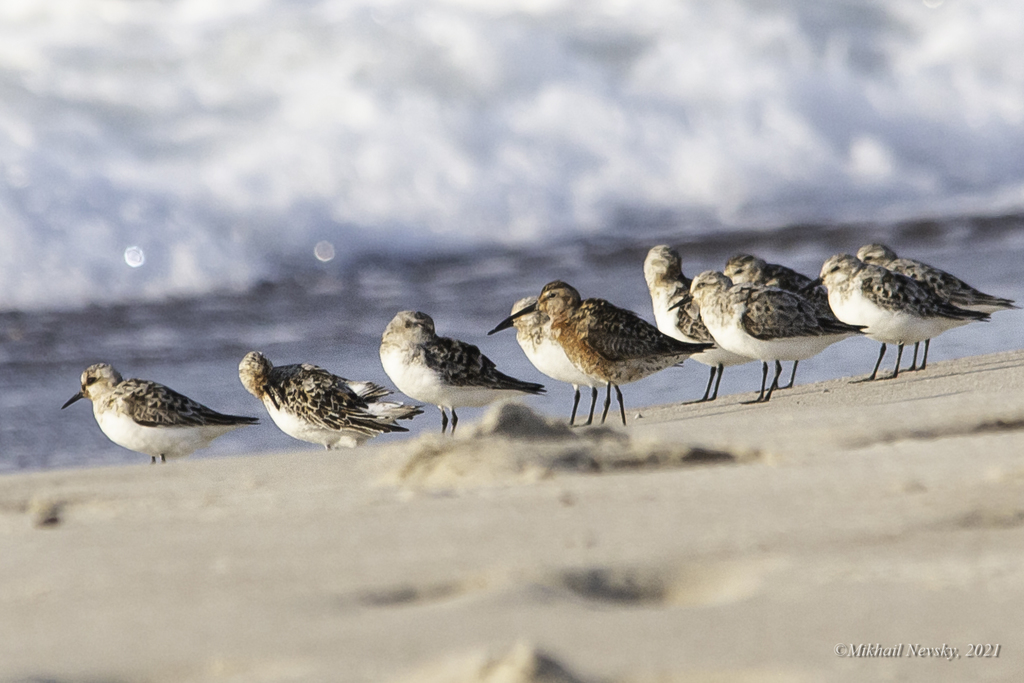
Especies relacionadasRelated species
Otras aves de la familia Scolopacidae y de órdenes cercanos.Other birds from the Scolopacidae family and nearby orders.
- Poco comúnUncommon
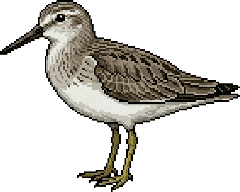 Correlimos de TemminckTemminck's StintCalidris temminckii
- LegendarioLegendary
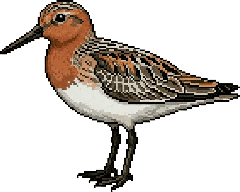 Correlimos cuellirrojoRed-necked StintCalidris ruficollis
- Poco comúnUncommon
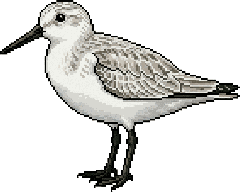 Correlimos tridáctiloSanderlingCalidris alba
- Poco comúnUncommon
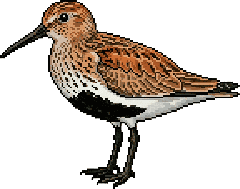 Correlimos comúnDunlinCalidris alpina
- RaroRare
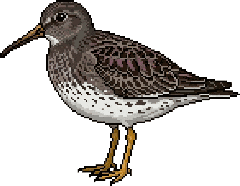 Correlimos oscuroPurple SandpiperCalidris maritima
- ÉpicoEpic
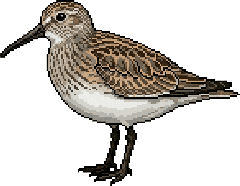 Correlimos de BairdBaird's SandpiperCalidris bairdii
- Poco comúnUncommon
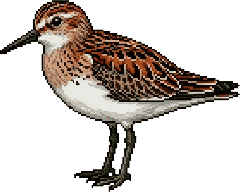 Correlimos menudoLittle StintCalidris minuta
- LegendarioLegendary
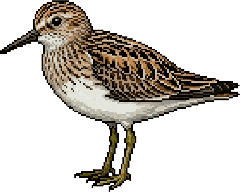 Correlimos menudilloLeast SandpiperCalidris minutilla
 Gratis, sin anuncios ni comprasFree, no ads, no purchases